
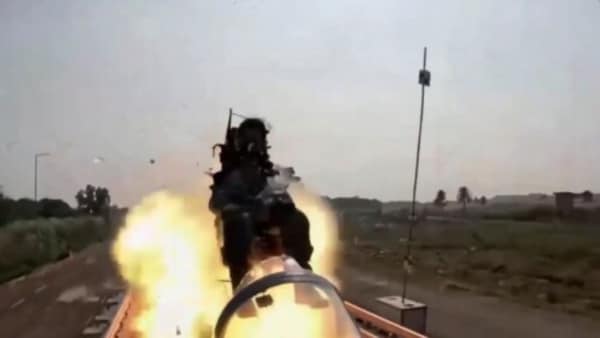
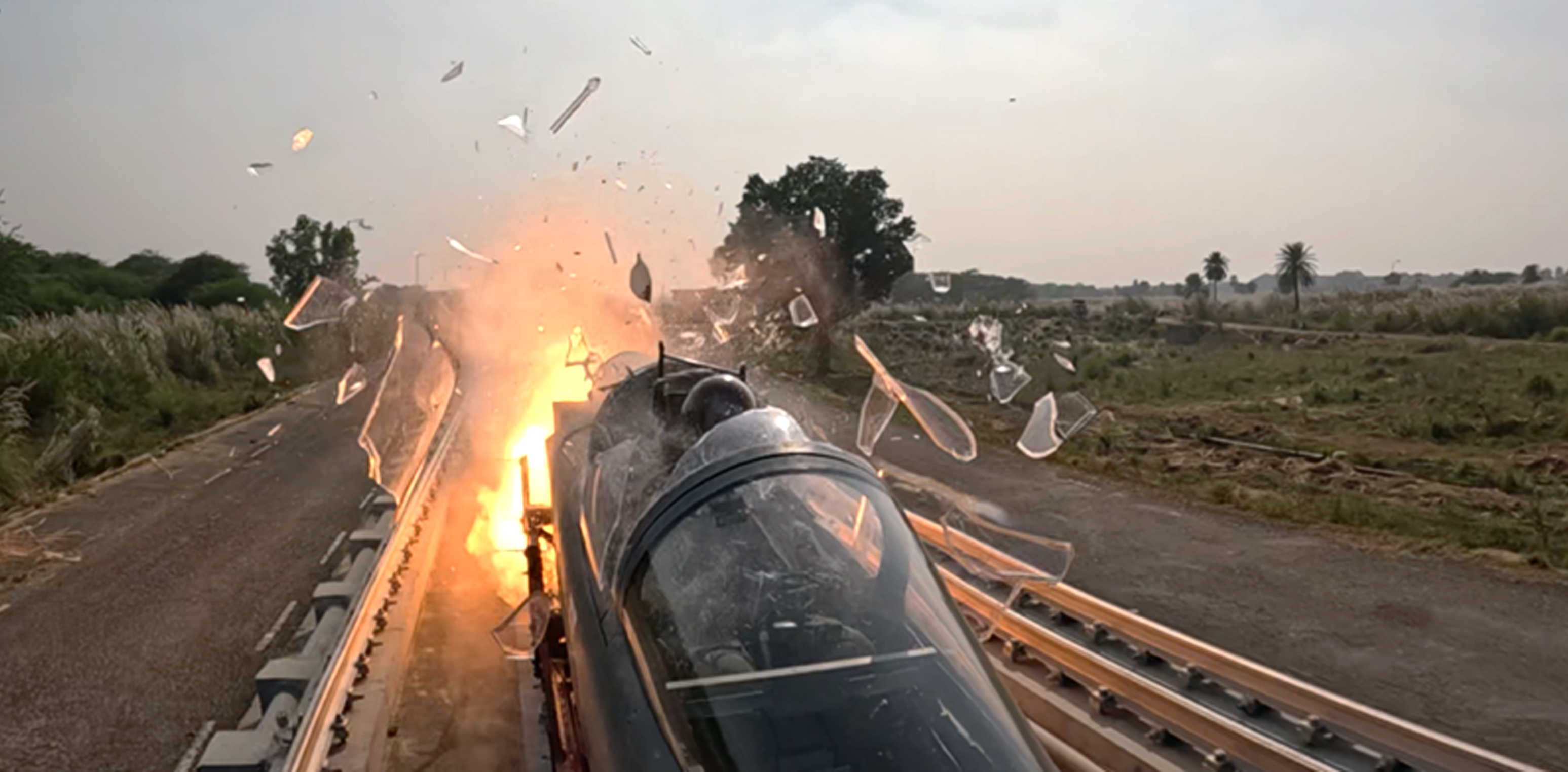

Dynamic ejection tests are far more demanding than static trials because they replicate the aircraft’s motion, airflow, structural loads and sequencing under controlled high-velocity conditions. DRDO’s test used a dual-sled configuration with the forebody of a Light Combat Aircraft (LCA) propelled to a precisely controlled velocity by phased firing of multiple solid-propellant rocket motors. The setup simulated the real-world kinematics an aircrew would face during an in-flight emergency ejection.
Engineers monitored the canopy fragilisation pattern and the timing of ejection sequence, ensuring that canopy disruption, seat propulsion and dummy separation occurred within safety thresholds. Instrumentation logged critical loads, moments and accelerations to assess potential injury biomechanics and seat performance.
Collaboration with ADA, HAL and IAF
The test was executed in close collaboration with the Aeronautical Development Agency (ADA) and Hindustan Aeronautics Limited (HAL), with witness teams from the Indian Air Force (IAF) and the Institute of Aerospace Medicine participating in evaluation and certification processes. This whole-of-ecosystem approach linking design, manufacturing, and medical assessment was essential for credible validation and future certification of ejection systems.
Onboard and ground-based high-speed imaging captured the sequence in detail, enabling post-test forensic analysis of canopy fragmentation, seat trajectory and dummy kinematics. Such datasets guide iterative design refinements and human-factors improvements for pilot survivability.
Anthropomorphic Test Dummy & Biomechanical Data
The instrumented Anthropomorphic Test Dummy used in the trial recorded accelerations, angular rates and load magnitudes to recreate the mechanical stresses a real pilot would undergo. Analyzing these metrics helps engineers validate that the ejection seat and restraint systems limit peak loads to survivable levels and that the parachute-deployment sequence and recovery parameters meet safety margins.
Data from the test will feed into certification dossiers and refine seat-stroking profiles, head and neck protection strategies, and harness design components crucial to reducing spinal or cranial injury risk during high-speed ejections.
Leadership Endorsement and Strategic Significance
Raksha Mantri Shri Rajnath Singh congratulated DRDO, ADA, HAL, IAF and industry partners for the successful demonstration, calling it “a significant milestone for India’s indigenous defence capability towards self-reliance.” Dr Samir V. Kamat, Secretary, Department of Defence R&D and Chairman, DRDO, also lauded the teams responsible for the achievement.
Beyond validating a life-saving system, the test signals maturity in India’s aerospace testing infrastructure and accelerates the pathway to certifying home-grown ejection seats for operational combat aircraft. It also reduces dependence on foreign test facilities and expertise, strengthening national design-test-manufacture loops.
Next Steps and Certification Trajectory
Post-test analysis will involve multi-disciplinary review—structural engineers, aerodynamics specialists, human-factors experts and medical certifiers—before final endorsements are issued. The Institute of Aerospace Medicine and IAF certification authorities will evaluate the biomechanical outcomes to confirm compliance with survivability thresholds and operational requirements.
Successful certification will enable integration of the validated escape system into future iterations and retrofit programmes across indigenous fighter platforms, elevating aircrew safety standards across the Indian Air Force.
Strategic and Industrial Takeaways
The rocket-sled trial underscores DRDO’s growing competence in complex dynamic testing and highlights productive collaboration between defence research, aerospace manufacturing and the armed forces. For HAL and ADA, the validation accelerates technology maturation and supports domestic supply chains for safety-critical components. For the IAF, indigenously validated escape systems enhance operational readiness and lifecycle sustainment options.