
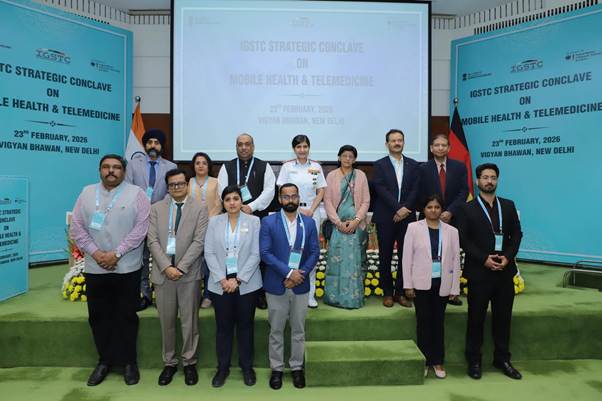
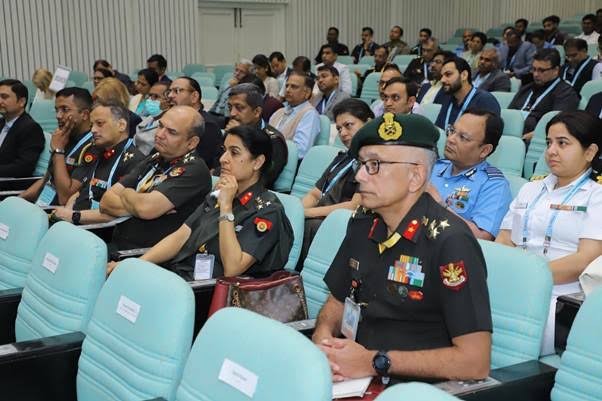
Surg VAdm Dr. Arti Sarin, Director General Armed Forces Medical Services (DGAFMS), underlined the strategic importance of telehealth in the armed forces. She noted that the healthcare system caters to nearly 1.6 crore personnel, veterans and their families.
Tracing the evolution of telemedicine, she highlighted its transition from basic real-time consultations to advanced satellite-enabled platforms supporting maritime missions and high-altitude deployments. She stressed the need for encrypted communication systems, wearable health trackers, AI-enabled diagnostics and strong regulatory safeguards to maintain resilience in sensitive operational environments.
Innovation Ecosystem and Startup Support
Dr. Arindam Bhattacharyya from the Department of Science and Technology (DST) emphasised the need to build robust innovation ecosystems that align science and technology with public health priorities. He said telemedicine must move beyond pilot stages and become scalable and sustainable across underserved regions.
Dr. Jitendra Kumar, Managing Director of BIRAC, highlighted the importance of biotechnology-driven innovation in digital health delivery. He stressed structured funding, mentorship and regulatory support for startups working in diagnostics, digital platforms and medical devices.
He added that international collaboration, particularly Indo-German partnerships facilitated by IGSTC, can help co-create solutions tailored to India’s diverse healthcare needs while adhering to global standards.
Strengthening Digital Health Integration
Dr. Sunita Sharma, Director General Health Services (DGHS), spoke about the integration of telemedicine into India’s expanding digital health architecture under the National Digital Health Mission. She noted that telemedicine services have reached the Ayushman Mandir level, expanding access in rural and underserved areas.
She emphasised the growing role of artificial intelligence, machine learning and point-of-care technologies in public health programmes such as tuberculosis elimination. However, she cautioned that strong data privacy frameworks, regulatory oversight and sustainable financing are essential for responsible adoption.
Industry Perspective and Translational Research
Representing industry stakeholders, Pavan Chaudhary, Chairman of the Medical Technology Association of India, called for focused translational research and incentive-based policy frameworks. He emphasised the need to bridge laboratory research with market-ready healthcare solutions.
Dr. Kusumita Arora, Director of IGSTC, described the conclave as a platform to bring government, academia and industry onto a common forum. She said collaborative dialogue among these pillars of the science and technology ecosystem would help move from research discussions to co-creation of practical solutions.
Emerging Technologies and Future Roadmap
The conclave deliberated on emerging technologies such as AI-enabled diagnostics, remote patient monitoring systems, wearable devices and chip-based laboratory services. Discussions also addressed regulatory frameworks, data protection measures and financing mechanisms.
Participants acknowledged the challenges posed by the digital divide and stressed the need for structured R&D roadmaps to accelerate deployment of deep-tech healthcare solutions suited to India’s geographic and socio-economic diversity.
Commitment to Inclusive Digital Healthcare
The event concluded with a reaffirmation of commitment from DST, BIRAC and partner institutions to advance mobile health and telemedicine as secure, inclusive and innovation-driven pillars of India’s future-ready healthcare system.
Officials reiterated that sustained bilateral collaboration, startup engagement and regulatory clarity will be critical in translating research into accessible and ethical healthcare delivery models.