 Addressing Heat Management Challenges in Aviation Batteries
High-energy lithium batteries in aviation generate significant heat during high-power operation, affecting efficiency, lifespan, and safety. While Phase Change Materials (PCMs) offer passive cooling benefits, conventional PCMs suffer from poor thermal conductivity, leading to delayed heat absorption and accelerated battery degradation.
Efforts to enhance PCMs using high-conductivity additives have faced stability issues over repeated thermal cycles, resulting in performance loss. The DST-Industry partnership aims to overcome these challenges by engineering advanced thermal composites that combine high conductivity with long-term stability.
Leveraging Expertise: JNCASR and Dreamfly Innovations
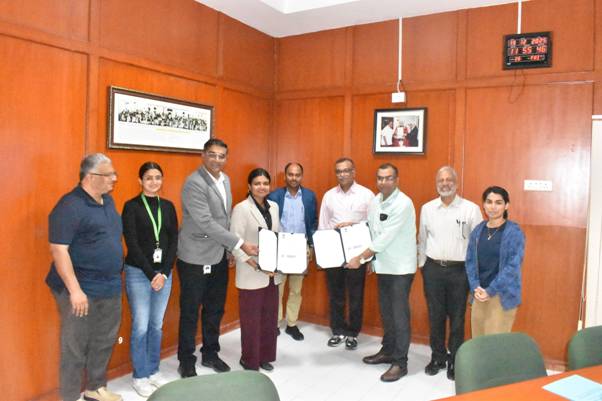
The collaboration merges JNCASR’s expertise in materials design, synthesis, advanced characterization, and thermal transport with Dreamfly Innovations’ proficiency in aviation battery engineering and system integration. Under Prof. Kanishka Biswas’s laboratory leadership, the team will develop thermal materials and thermoelectric devices capable of rapidly absorbing heat while maintaining optimal battery operating temperatures.
The technologies will enable lightweight thermal regulation systems that enhance safety, efficiency, and operational endurance in drones and other aviation platforms.
Impact on Aviation Performance and Safety
The partnership is expected to address critical limitations in current battery technology, ensuring higher performance, prolonged battery lifespan, and reduced risks of overheating. Advanced thermal management will improve drone efficiency and reliability, contributing to safer and more sustainable aviation operations.
By integrating academic innovation with industrial application, the project sets a benchmark for translating research into real-world aviation solutions and fostering next-generation energy-efficient systems.