
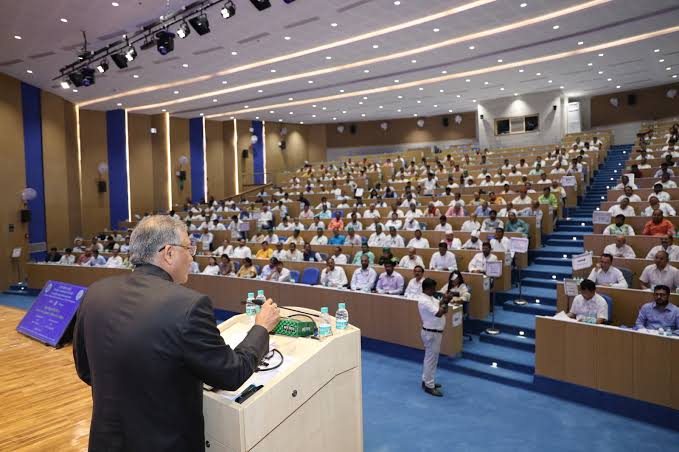
In a significant and compassionate move to deepen democratic participation at the grassroots level, the Election Commission of India (ECI) has, for the first time, launched a dedicated training programme for Booth Level Agents (BLAs). The initiative aims to empower these vital frontline representatives of political parties, ensuring their active and informed involvement in the electoral process.

Chief Election Commissioner Shri Gyanesh Kumar, along with Election Commissioners Dr. Sukhbir Singh Sandhu and Dr. Vivek Joshi, personally addressed the participants. Their presence reflected the Commission’s sincere commitment to inclusive and transparent electoral practices. The training itself was the outcome of a vision shaped during the Chief Electoral Officers’ conference held on March 4, 2025.
Throughout the sessions, the BLAs were given a comprehensive understanding of their legal roles and responsibilities, as outlined in the Representation of the People Acts of 1950 and 1951, the Registration of Electors Rules, 1960, and the Conduct of Elections Rules, 1961. With patience and clarity, officials guided participants through the intricacies of electoral roll management, including its preparation, revision, and the essential forms and formats that support it.
Particularly important was the focus on grievance redressal mechanisms. BLAs were trained in how to navigate the first and second appeal processes under Sections 24(a) and 24(b) of the RP Act, 1950, in situations where discrepancies arise in the final electoral rolls. These sessions not only built awareness but also empowered BLAs with the tools needed to ensure fairness and accuracy.
Recognising that BLAs are appointed by political parties and serve as critical custodians of voter data accuracy, this initiative reflects a growing awareness of the need to equip them with knowledge and confidence. Their work, often underappreciated, forms the bedrock of a clean and inclusive electoral roll—arguably one of the most crucial pillars of any democracy.
By extending formal training to these grassroots actors, the ECI is not only enhancing the quality of elections but also reaffirming its faith in people-driven governance. This thoughtful engagement offers a glimpse into an electoral process that values every voice, no matter how far it echoes from the capital.