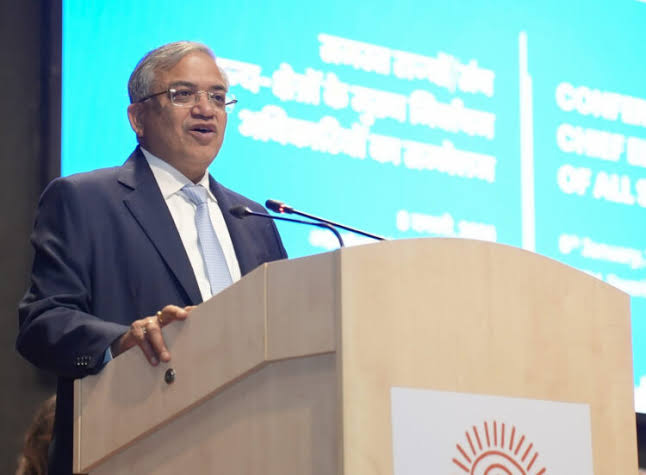
The Election Commission of India (ECI) will host a National Conference of State Election Commissioners (SECs) on February 24, 2026, marking the first such nationwide interaction in over 25 years. The high-level conference will be held at Bharat Mandapam in New Delhi and is expected to bring together election authorities from across the country.
 Top Election Leadership to Chair the Conference
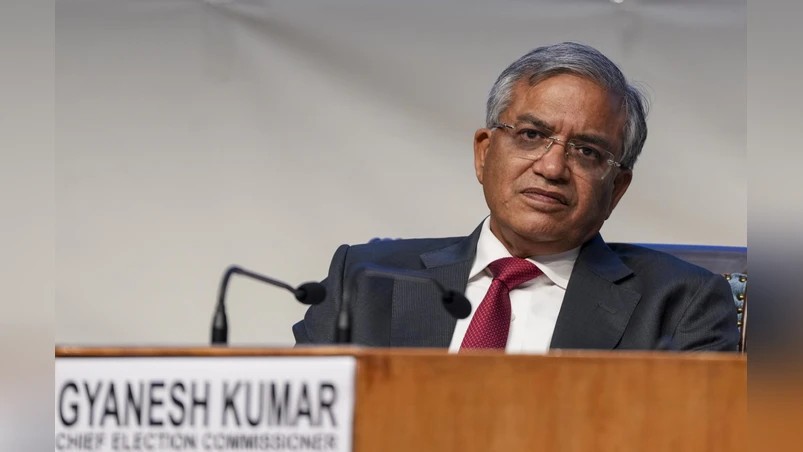
Chief Election Commissioner Shri Gyanesh Kumar will chair the conference and address the participants during the inaugural session. He will be joined by Election Commissioners Dr. Sukhbir Singh Sandhu and Dr. Vivek Joshi, who will also interact with the State Election Commissioners.
The presence of the full ECI leadership highlights the importance being accorded to strengthening coordination between the Election Commission of India and the State Election Commissions, which operate under distinct but complementary constitutional and legal frameworks.
Wide Participation from States and Union Territories
State Election Commissioners will participate in the conference along with their legal and technical experts. Chief Electoral Officers (CEOs) of the Election Commission of India from all 36 States and Union Territories will also attend, ensuring comprehensive representation from the country’s election management ecosystem.
The participation of experts is expected to enrich discussions on legal interpretation, operational challenges, and the adoption of best practices in election management at the grassroots level.
Focus on Synergy and Electoral Reforms
The primary objective of the National SEC Conference is to build synergy between the ECI and the State Election Commissions in managing electoral processes and logistics. While the ECI oversees elections to Parliament and State Legislatures, SECs are responsible for elections to Panchayats and Municipal Bodies.
Despite operating under different legal provisions, both institutions share common challenges related to voter registration, polling logistics, technology adoption, and transparency. The conference aims to create a shared understanding while respecting the autonomy of State Election Commissions.
Key Discussion Areas
Participants will engage in structured discussion sessions covering a wide range of topics. These include electoral laws governing elector eligibility in States and Union Territories, evolving legal interpretations, and practical challenges faced during local body elections.
Technological interventions spearheaded by the ECI will also be a major focus. These include the recently launched ECINET digital platform, use of Electronic Voting Machines, and other technology-driven reforms aimed at improving efficiency, accuracy, and voter confidence.
Sharing ECI’s Institutional Experience
The Election Commission of India will share its experience in preparing electoral rolls and conducting elections under the Constitution of India and the country’s legal framework. This exchange of institutional knowledge is expected to help SECs strengthen their processes and align with nationally accepted standards where appropriate.
Such collaboration is particularly relevant as local body elections increasingly involve large electorates, complex logistics, and heightened public scrutiny.
Constitutional Role of State Election Commissions
State Election Commissions are statutory bodies created by State laws under the enabling provisions of the 73rd and 74th Constitutional Amendments. They are vested with the superintendence, direction, and control of the preparation of electoral rolls and the conduct of elections to Panchayats and Municipal Bodies.
The conference is expected to reaffirm the constitutional importance of SECs while promoting cooperation and consistency in electoral practices across States.
Strengthening India’s Democratic Framework
By convening the National Conference of State Election Commissioners after more than two decades, the ECI aims to strengthen India’s democratic framework at the grassroots level. The initiative reflects a renewed focus on dialogue, coordination, and capacity building among election management bodies.