
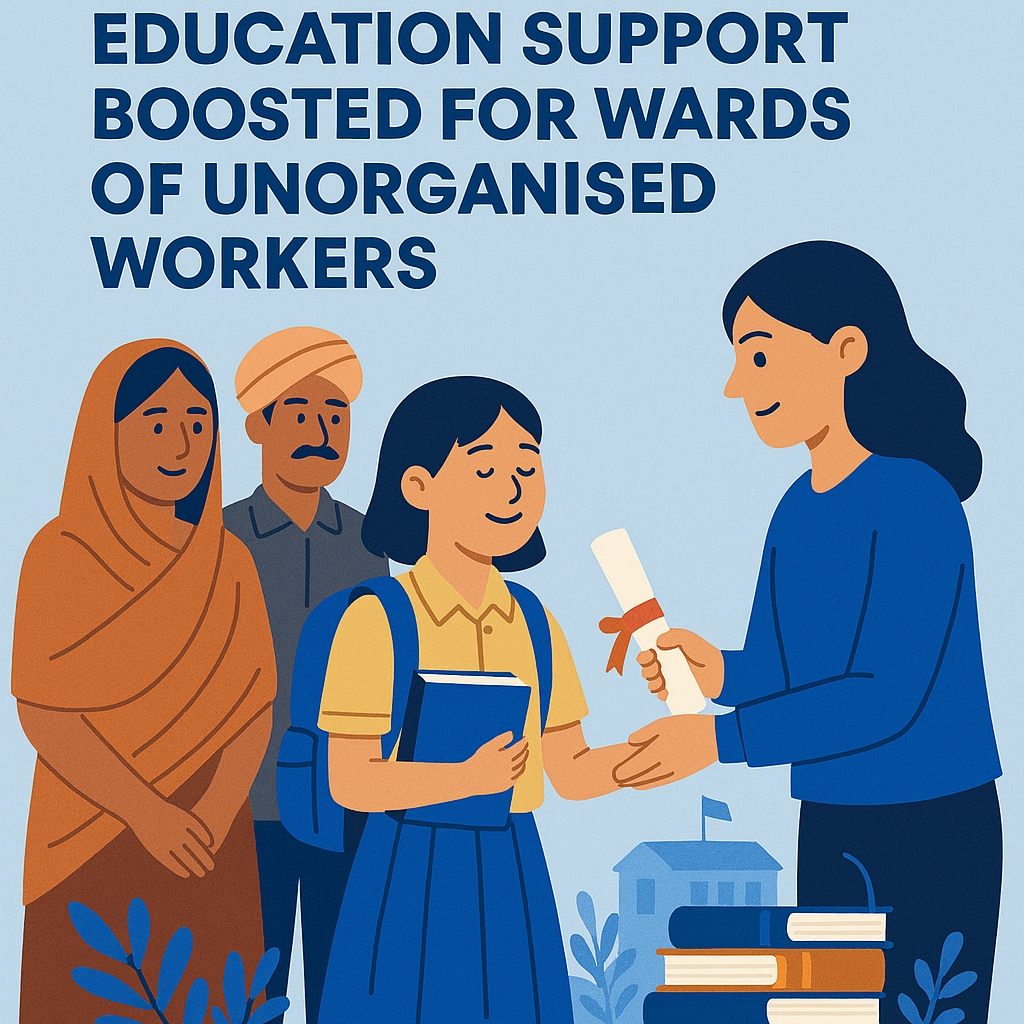
 Welfare-Oriented Scholarships for Education
The Ministry administers the Labour Welfare Scheme (Education Component), providing financial assistance for pre- and post-matric education to children of Beedi, Cine, and Non-Coal Mine workers, including IOMC, LSD, and Mica sectors. Traditionally need-based, the scheme did not impose merit criteria and sought to ensure children from marginalized families could pursue education without financial barriers.
With the latest reform, students availing the Ministry’s welfare scholarship can now also access merit-based scholarships from any Central or State Government agency wherever eligible. This amendment removes previous eligibility restrictions, ensuring that deserving students are not denied educational opportunities due to overlapping conditions.
Enhanced Benefits and Wider Impact
The reform is expected to directly benefit children of Beedi, Cine, and Non-Coal Mine workers by improving access to higher education and reducing dropout rates. The initiative will supplement the existing scheme, which supports approximately one lakh beneficiaries annually, by providing additional financial aid to qualified students through merit-based awards.
By enabling convergence between welfare and merit-based scholarships, the reform offers comprehensive support, allowing students from unorganised worker families to achieve academic excellence while ensuring social equity. The initiative aims to improve long-term livelihood prospects and promote upward mobility for children in these communities.
Alignment with Social Security Objectives
The initiative reinforces the government’s commitment to labour welfare, social justice, and educational empowerment, particularly for workers in the unorganised sector. It exemplifies the practical implementation of the Social Security Code, 2020, which envisions inclusive social protection for workers and their families, encompassing financial, educational, and welfare measures.
By streamlining educational support and enabling students to access multiple scholarships, the Ministry is facilitating a more equitable and meritocratic framework. The reform demonstrates a shift towards empowering families in the unorganised sector, ensuring that financial limitations no longer hinder access to quality education and opportunities for skill development.