Indian Election Commission Leads Proceedings
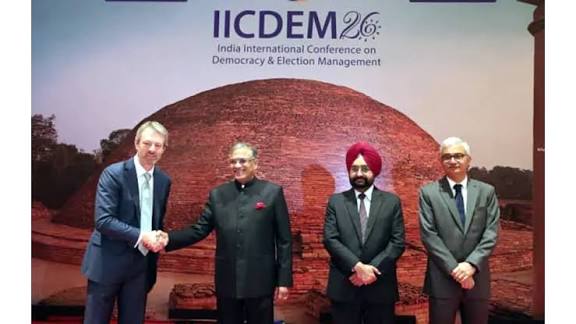
The proceedings were initiated by the Chief Election Commissioner of India, Shri Gyanesh Kumar, along with Election Commissioners Dr. Sukhbir Singh Sandhu and Dr. Vivek Joshi. Addressing the gathering, Indian election authorities highlighted the importance of international cooperation, institutional independence, and public trust as essential pillars for credible electoral processes.
The leadership of the Election Commission of India underscored the country’s long-standing experience in managing elections on an unparalleled scale, often described as the world’s largest democratic exercise. This experience, they noted, offers valuable lessons for election administrators worldwide.
Forum for Global Democratic Exchange
The EMB Leaders’ Plenary serves as a dedicated forum that brings together heads and senior leaders of Election Management Bodies, along with diplomatic representatives, for high-level exchanges on democracy and election management. The platform allows participants to share best practices, discuss policy innovations, and reflect on common challenges affecting electoral integrity.
Discussions during the session covered a wide range of issues, including voter participation, election security, misinformation, technological interventions in elections, and the need to protect democratic institutions from external and internal pressures.
India’s Role as Chair of International IDEA
India shared its thematic priorities for 2026 in its capacity as Chair of International IDEA (Institute for Democracy and Electoral Assistance). These priorities revolve around strengthening institutional resilience, enhancing transparency in election processes, and promoting inclusive participation in democratic systems.
EMB leaders and country representatives from different regions offered their perspectives on how democracies are evolving and the practical challenges election administrators face in maintaining neutrality and credibility amid rapidly changing political and technological landscapes.
Addressing Common Global Challenges
Participants acknowledged that while electoral systems vary across countries, many challenges are shared globally. These include declining public trust, threats to electoral officials, the influence of digital platforms on voter behaviour, and ensuring fair access to the electoral process for all sections of society.
The plenary emphasized that sustained dialogue and collaboration among election management bodies are critical to addressing these concerns effectively. Delegates highlighted the importance of peer learning and capacity building to uphold democratic values worldwide.
India as a Hub for Democratic Dialogue
Hosting IICDEM 2026 further cements India’s position as a hub for global democratic dialogue. By bringing together election leaders and policymakers from diverse political systems, the conference reflects India’s commitment to supporting democratic institutions beyond its borders.
The event also aligns with India’s broader diplomatic and democratic outreach, showcasing its willingness to share institutional knowledge and contribute constructively to global governance discussions.