
A Strong Constitutional Push
In 2023, the Indian Parliament passed the historic Nari Shakti Vandan Adhiniyam. This law, known as the 106th Constitutional Amendment, ensures one-third reservation for women in the Lok Sabha and State Legislative Assemblies.
This change is not just symbolic. It creates space for women at the highest levels of decision-making. Rotational seat reservations will help ensure diverse representation across regions and communities.
This bold move reinforces India’s long-standing constitutional promise of equality and inclusion. It also brings India in line with global democratic standards on gender equity.


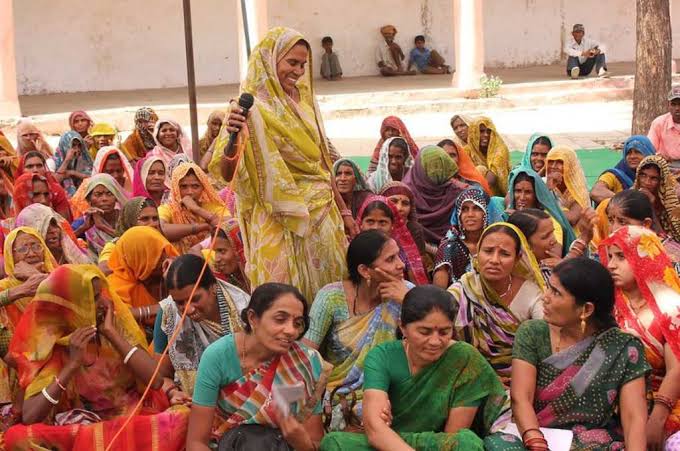
At the grassroots level, India already leads. Over 14.5 lakh women serve as elected representatives in Panchayati Raj Institutions (PRIs). That’s about 46% of all representatives.
In 21 states, the reservation for women in PRIs is set at 50%—exceeding the constitutional minimum of 33%. This is one of the highest levels of women’s participation in local governance globally.
These women are not just placeholders. They are agents of change, shaping development, improving services, and addressing community concerns firsthand.
Empowering Through Capacity Building
The government has launched the Sashakt Panchayat-Netri Abhiyan. It’s a nation-wide training initiative focused on building leadership skills among Women Elected Representatives (WERs).
This program helps them understand legal frameworks, improve governance skills, and address gender-based challenges. A dedicated training manual, including a “Primer on Law Addressing Gender-Based Violence,” has been designed to support them on the ground.
By equipping women leaders with tools and knowledge, India is investing in sustainable leadership—not tokenism.
Model Women-Friendly Gram Panchayats
Another key step is the creation of Model Women-Friendly Gram Panchayats. At least one such Panchayat is being developed in every district.
These Gram Panchayats will be safe, inclusive, and development-focused. They will act as examples for other villages to replicate, promoting gender-sensitive planning and implementation at the village level.
Self Help Groups: The Backbone of Rural Leadership
Today, over 10 crore women are part of 90 lakh Self Help Groups (SHGs). These groups, supported by government initiatives, play a vital role in rural development and economic empowerment.
SHGs help women gain confidence, become financially independent, and step into leadership roles. Many SHG members go on to contest Panchayat elections and take up community responsibilities.
The link between SHGs and local leadership is strong and growing. These women are reshaping rural India from within.
Rising Numbers in Parliament
Women’s representation in Parliament is improving, though gradually. In the 1st Lok Sabha (1952), there were just 22 women. That number rose to 78 in the 17th Lok Sabha and 75 in the current 18th Lok Sabha.
Similarly, the Rajya Sabha now has 42 women members—around 17% of its total strength. This upward trend reflects growing acceptance and encouragement for women in public life.
A Whole-of-Society Approach
The Ministry of Women and Child Development, led by Smt. Savitri Thakur, has emphasized a “whole-of-government” and “whole-of-society” approach.
This means that the responsibility of women’s empowerment isn’t limited to one department. It involves every ministry, local body, civil society group, and citizen.
From training programs to legal reforms, from grassroots representation to national legislation, India is building a support system to ensure that women not only participate but lead effectively.
Conclusion
India’s journey toward gender-equal political representation is gathering momentum. Through a combination of legal reforms, grassroots empowerment, and institutional support, the country is creating real opportunities for women leaders.
The numbers are promising. The policies are strong. The intent is clear. With consistent efforts and societal support, Nari Shakti will continue to rise in every Panchayat and every Parliament seat.