
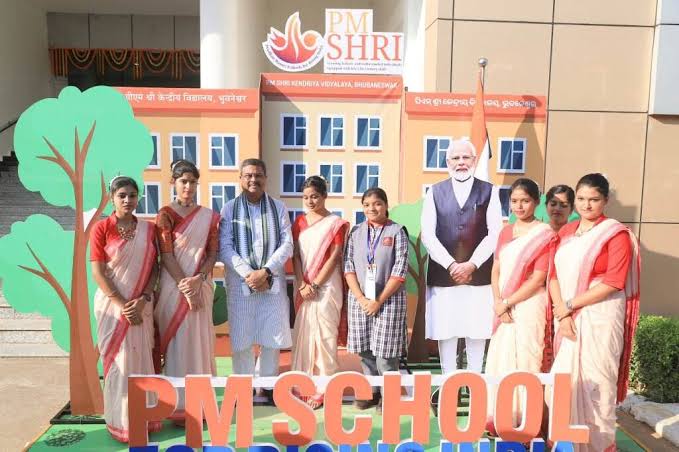
The Government of India strengthens its commitment to tribal education by expanding Eklavya Model Residential Schools (EMRSs) in Odisha’s Kandhamal district.
Quality Education for Tribal Students in Remote Odisha
Union Minister for Tribal Affairs Shri Jual Oram addressed the Lok Sabha in response to a starred question from Shri Sukant Kumar Panigrahi. He confirmed the government’s dedicated efforts to enhance tribal education through EMRSs in Kandhamal district, Odisha.
The EMRS initiative is designed to provide free, quality residential education from Class 6 to 12 for Scheduled Tribe (ST) students in tribal-dominated regions.


Launched in 1997–98, the Eklavya Model Residential School (EMRS) scheme aims to bridge the educational gap between tribal and non-tribal populations.
In the Union Budget 2018–19, the government committed to setting up EMRSs in every block with:
- More than 50% ST population
- At least 20,000 tribal residents (as per Census 2011)
This move ensures that tribal children living in the remotest corners of India can access opportunities at par with others.
EMRS in Kandhamal: 10 Schools Sanctioned
Kandhamal district has 12 administrative blocks. Out of these, the Government has sanctioned 10 EMRSs based on the twin criteria. These schools aim to cater to the tribal population’s specific educational needs.
Here’s a breakdown of progress:
- 2 EMRSs are fully functional
- Construction is completed for 2 more
- Construction is ongoing at 5 sites
- 3 schools are in the pre-construction stage
These schools will offer a safe, fully residential learning environment with trained faculty, modern facilities, and a curriculum designed for holistic development.
National Impact: 728 EMRSs Across India
Nationwide, the scheme has scaled up rapidly. Originally, 288 EMRSs were sanctioned under Article 275(1) of the Constitution.
Post-2018, the government approved an additional 440 EMRSs, taking the total number to 728 schools across India. This expansion is one of the largest tribal education initiatives ever undertaken in the country.
No New EMRS Proposals Under Consideration
While tribal blocks with high ST populations are the primary target areas, the Minister clarified that no new EMRSs are currently under consideration. The Ministry is focused on the effective implementation of the already approved 728 EMRSs.
Priority remains on completing construction, hiring staff, and initiating academic activities in these sanctioned schools to maximize outreach and impact.
Empowering Tribal Youth Through Education
The establishment of EMRSs is more than just building schools. It is about empowering future generations of tribal communities to become skilled, confident, and self-reliant.
By providing education in remote and underserved areas, the government is ensuring that no child is left behind.
A Model for Inclusive Growth
EMRSs serve as a model for inclusive growth by:
- Providing free education, uniforms, meals, and residential facilities
- Offering access to digital education tools and extracurricular activities
- Reducing dropout rates among tribal children
- Enhancing participation of tribal youth in higher education and competitive exams
The schools also promote cultural preservation by incorporating tribal languages and traditions into their curriculum, strengthening identity and pride among students.
Government’s Continued Commitment
The Government of India, through the Ministry of Tribal Affairs, continues to invest in building equitable educational infrastructure for tribal children. The Kandhamal example shows how these efforts are being localized and accelerated in tribal heartlands.
By focusing on execution and quality, the EMRS initiative is set to transform tribal education in Odisha and across India.