
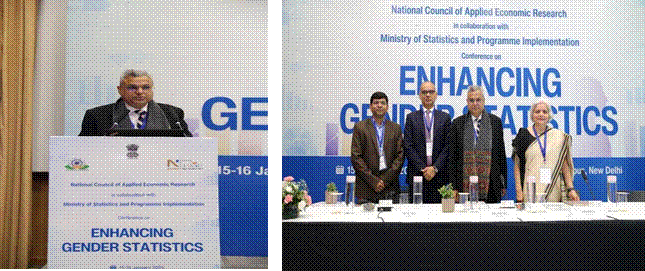
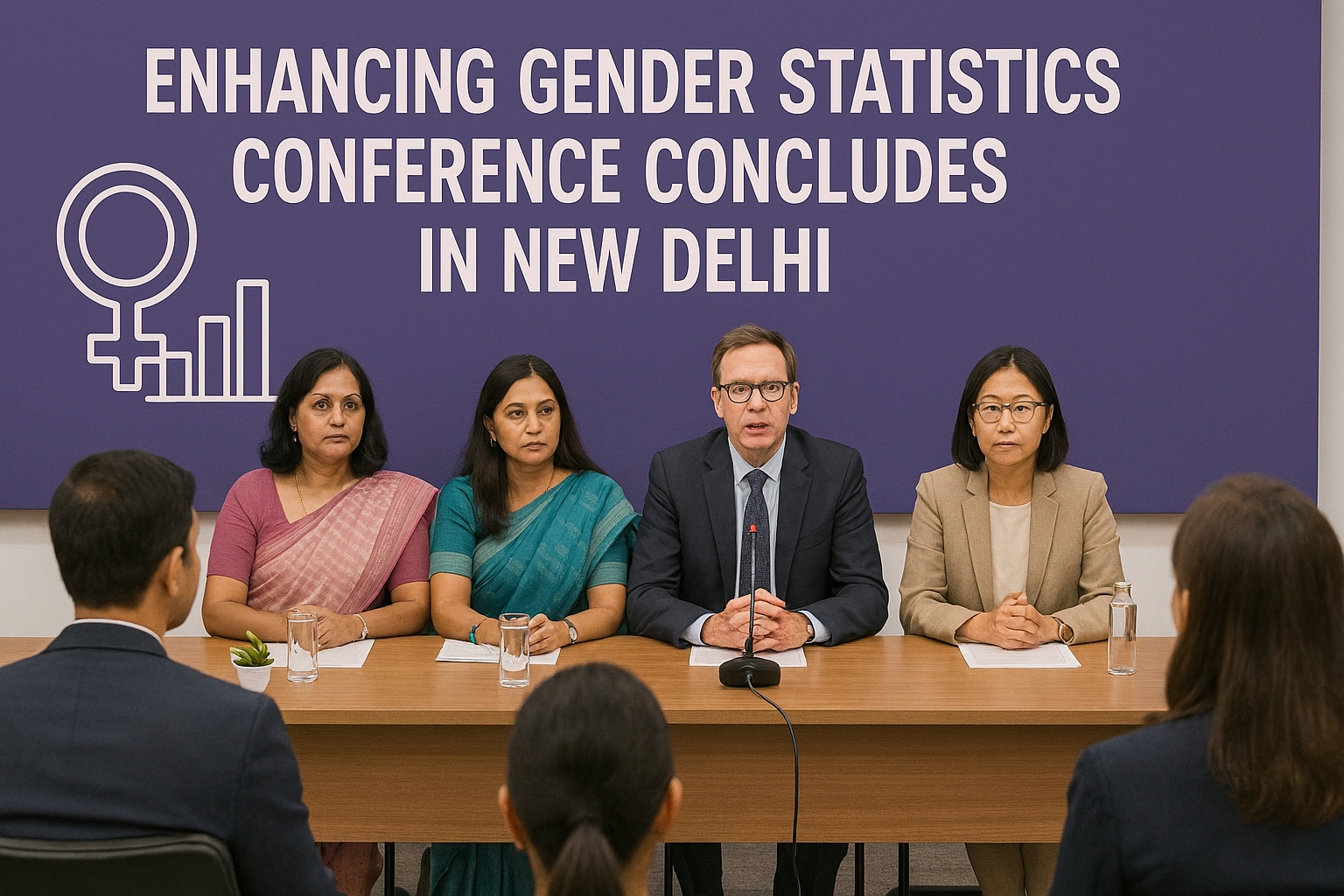

The conference commenced with a welcome address by Shri Suresh Goyal, Director General of NCAER, who greeted Dr. Saurabh Garg, Secretary of MoSPI. Dr. Sonalde Desai, Professor and Centre Director, NDIC, NCAER, emphasised the importance of gender-sensitive data systems to support evidence-based development planning.
In his inaugural speech, Dr. Saurabh Garg highlighted how gender-disaggregated data are essential for designing, monitoring, and evaluating government policies. He cited examples from flagship schemes, underlining the critical role of robust gender statistics in inclusive policymaking.
Conference Objectives and Key Discussions
The primary goal of the conference was to address methodological challenges in collecting accurate data on women and their socio-economic realities. Experts discussed strategies to improve data quality, usability, and relevance for policymaking. Technical sessions covered the evolution, key findings, and emerging challenges in India’s statistical system, while panel discussions focused on gender and emerging policy priorities.
Speakers included Dr. Gurucharan Manna (Senior Adviser, NCAER), Mr. Aloke Kar (Visiting Scientist, ISI), Ms. Shamika Ravi (Member, PM–EAC), Dr. Sonalde Desai (NCAER), Prof. Satish B. Agnihotri (IIT Bombay), Dr. S. Chandrasekhar (IGIDR), and Dr. Ashwini Deshpande (Ashoka University), along with representatives from MoSPI, ISI, World Bank, ILO, Azim Premji University, O.P. Jindal Global University, and the UN.
Outcomes and Policy Relevance
Key discussions addressed measurement challenges in economic empowerment, gender mainstreaming in data collection, and gaps limiting accurate representation of women’s lived realities. The conference reinforced the integration of gender perspectives into statistical methodologies and highlighted gender statistics’ crucial role in monitoring Sustainable Development Goals (SDGs).
In the valedictory session, Shri N. K. Santoshi, Director General (Central Statistics), MoSPI, reaffirmed the Ministry’s commitment to strengthening gender-responsive statistical systems. He stressed continued methodological refinement and collaboration with academic institutions to ensure high-quality, granular, and policy-relevant gender data.