
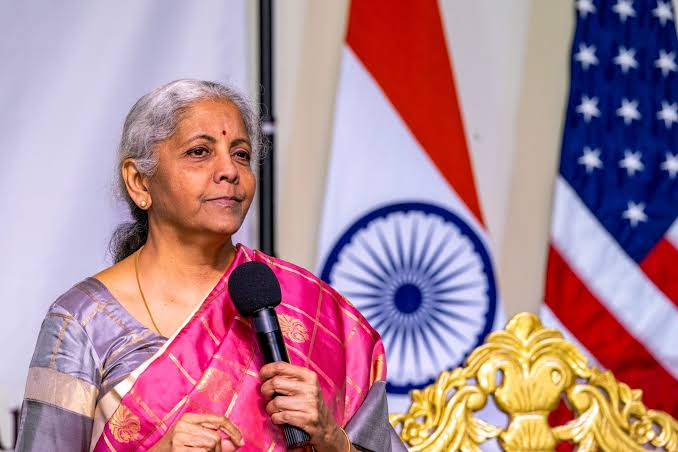
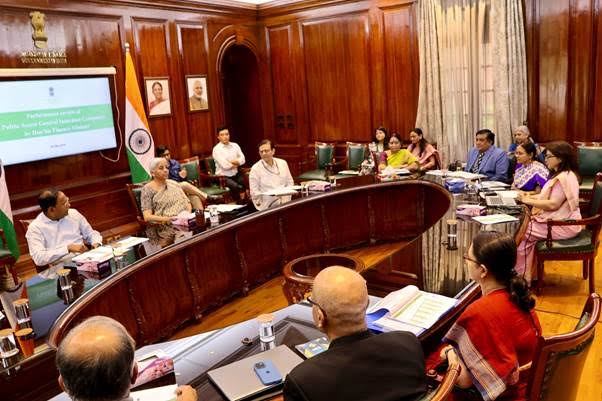
In a significant step towards strengthening the country’s insurance landscape, Union Finance and Corporate Affairs Minister Smt. Nirmala Sitharaman chaired a comprehensive review meeting of the Public Sector General Insurance Companies (PSGICs) in New Delhi today. The meeting was attended by key officials, including the Secretary of the Department of Financial Services, Shri M. Nagaraju, and the Managing Directors of New India Assurance, United India Insurance, Oriental Insurance, National Insurance, General Insurance Corporation of India, and Agriculture Insurance Company of India, among others.

Despite these gains, the Finance Minister expressed concern over the relatively low insurance penetration in India, which currently stands at just 1% of GDP, compared to the global average of 4.2%. However, insurance density has improved, rising from \$9 in 2019 to \$25 in 2023. Smt. Sitharaman called for continued efforts to boost both penetration and density, making insurance more accessible and meaningful for all sections of society.
A five-year analysis of the health insurance segment presented during the meeting revealed consistent growth in premium collections across all categories, including private insurers, standalone health insurers (SAHI), and PSGICs. While claims ratios had surged during the peak of the COVID-19 pandemic in FY21, they have now moderated to healthier levels. By FY24, the incurred claims ratio stood at 103% for PSGICs, 89% for private insurers, and 65% for SAHI.
There was a sense of cautious optimism as it was noted that all PSGICs have returned to profitability. This marks a major turnaround, especially for companies like United India Insurance, which reported profits in Q3 of FY 2024–25 after a seven-year gap. Oriental Insurance and National Insurance have also started posting quarterly profits recently, while New India Assurance continues to lead the sector as a consistently profitable market player.
Looking to the future, Smt. Sitharaman underlined the need for urgent digital transformation across all PSGICs. She called for the adoption of cutting-edge technologies such as AI-driven claims processing, especially in Motor Own Damage and Health insurance, to ensure faster and more accurate claim resolution. Innovation in product development was also a key focus, with a specific call to design insurance solutions for emerging risks such as cyber fraud and other evolving threats.
The Finance Minister stressed the importance of strengthening customer engagement and responsiveness. She urged PSGICs to enhance grievance redressal mechanisms, actively engage on social media platforms, and integrate fully with the Account Aggregator framework to streamline the digital KYC process. These measures aim to simplify customer onboarding and elevate service standards.
Encouraging collaboration was another priority, as the Minister highlighted the potential of partnerships with intermediaries, fintech firms, and insurtech startups to expand market outreach and bring insurance to underserved populations. She also emphasised the role of data analytics and AI in refining pricing strategies and risk assessment models—key elements for ensuring long-term stability and resilience in the insurance sector.
Smt. Sitharaman directed that all proposed initiatives be implemented in a time-bound manner, with regular reviews to track progress. Her guidance reflected not just a vision for growth, but also a sincere commitment to making insurance a more effective safety net for India’s citizens, especially in an age of rapidly evolving risks and needs.