
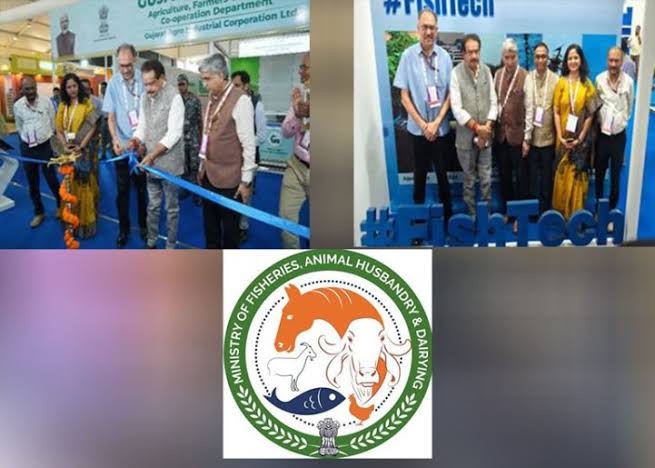


Shri Sagar Mehra, Joint Secretary, DoF, emphasized the transformative impact of FishTech in reducing post-harvest losses, ensuring quality, and promoting exports. Highlighting that over 3 crore Indians depend on fisheries for livelihood, he underscored women’s crucial role in the sector and stressed the development of a National Framework for Traceability in collaboration with MPEDA and the Export Inspection Council (EIC) to meet global standards.
Dr. B.K. Behera, Chief Executive, National Fisheries Development Board (NFDB), showcased advanced technologies including Recirculating Aquaculture Systems (RAS), Biofloc, Aquaponics, inland cage culture clusters, and AI-enabled systems. Drone applications for sustainable aquaculture were also discussed to boost productivity and quality.
Mr. Kari Logason, General Manager at Icelandic firm Nautic, joined virtually to share insights on modern deep-sea fishing vessels and AI-integrated processing systems, expressing interest in designing customized vessel technologies for India.
Emphasis on Quality, Safety, and Traceability
Dr. J.S. Reddy, Additional Director, EIC, highlighted the importance of quality standards and food safety, detailing the implementation of a Residue Monitoring Plan for compliance with international norms. Dr. Bindu J., Principal Scientist, ICAR-CIFT, presented innovations in fish processing and packaging, including tuna traceability, advanced chilling, automation, and smart sensors for product integrity.
Dr. Geethalakshmi, Principal Scientist, ICAR-CIFT, discussed the export potential of freshwater fisheries, identifying high-demand species and product forms, while noting infrastructure gaps and the need for increased value addition.
Integrating ESG and Sustainability for Viksit Bharat
The session underscored the importance of integrating Environmental, Social, and Governance (ESG) principles in fisheries to align with Viksit Bharat and global sustainability goals. Discussions highlighted retail transformation under “Blue Revolution 2.0”, strengthening cold chain infrastructure, modern processing facilities, digital market access, and promoting value-added seafood products from underutilized species.
The technical session emphasized that combining innovation, traceability, ESG compliance, and value addition is key to reducing post-harvest losses, boosting exports, and ensuring the long-term prosperity of India’s fishers.