

The scheme guidelines have been approved by the National Steering Committee, and a landmark Memorandum of Understanding (MoU) has already been signed with Singapore to establish the NCoE at NSTI Chennai in the Advanced Manufacturing sector. To ensure industry relevance, an Expression of Interest (EoI) has been floated for onboarding Lead Industry Partners for all five centres.
Each centre will be managed by an Institute Management Committee (IMC), chaired by the nominated Lead Industry Partner. The IMC will include representatives from the central and state governments, industry experts, academia, and industry associations such as FICCI and CII. The committee will design and implement training programs tailored to industry needs, ensuring that students are equipped with globally competitive skills.
Hub-and-Spoke Model for ITI Upgradation
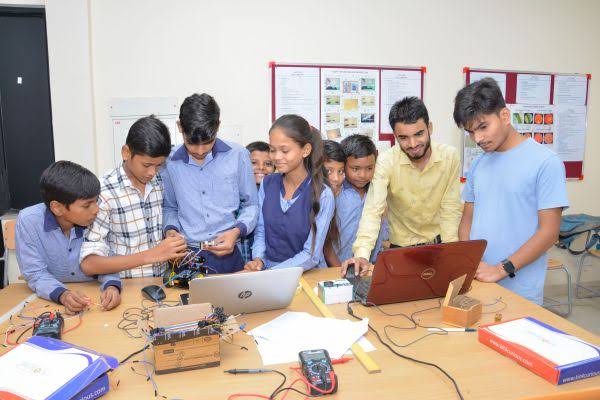
Alongside the Centres of Excellence, the PM-SETU scheme also envisions upgrading 1,000 Government Industrial Training Institutes (ITIs) under a hub-and-spoke model. This model will allow states to propose skill interventions aligned with local economic needs. Specialized centres in agriculture, food processing, dairy, and other regional sectors may be established, including in underdeveloped regions such as Seemanchal-Kosi in Bihar.
The flexibility provided to states is expected to create a decentralized skilling ecosystem, where local industries can directly influence training modules. This approach is designed to bridge the gap between education and employability, ensuring that India’s workforce remains future-ready.
Composition of Institute Management Committees
According to the approved guidelines, the IMC for each NSTI will comprise 9 to 15 members, including:
- Chairperson nominated by the Lead Industry Partner
- Two or more nominees from the Central Government
- One or more representatives from the respective State Government
- Industry experts with technical expertise and financial contributions
- Director of the Institute as ex-officio Member Secretary
- Representatives from industry associations such as FICCI, CII, or Sector Skill Councils
- Academia representatives to strengthen industry-academia collaboration
This structure is intended to ensure balanced representation and effective decision-making, combining government oversight with industry-driven innovation.
Government’s Vision for Skilling
Minister of State (Independent Charge) for Skill Development and Entrepreneurship, Shri Jayant Chaudhary, informed the Lok Sabha that the Centres of Excellence will serve as benchmarks for quality training and global collaboration. He emphasized that the initiative is part of India’s broader vision to empower youth with employable skills and strengthen the country’s position in the global workforce.
The PM-SETU scheme reflects the government’s commitment to aligning skilling initiatives with industry requirements, thereby enhancing employability and fostering economic growth. With international partnerships and industry-led governance, the five Centres of Excellence are expected to set new standards in vocational education and training.