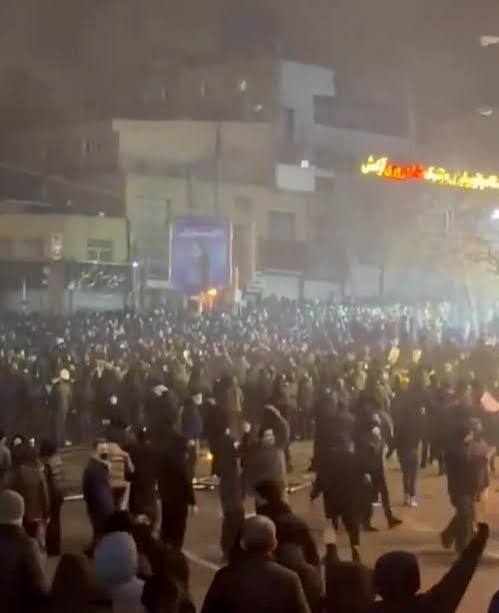
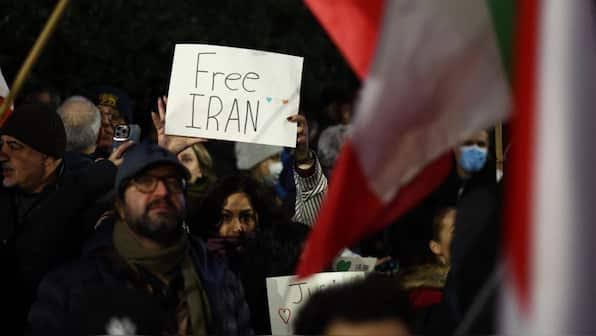
 In Iran’s capital, Tehran, protesters assembled in northern neighbourhoods, setting off fireworks, banging pots, and shouting anti-government slogans. Videos verified by international agencies showed crowds expressing open defiance, even as security forces increased their presence across key districts.
Similar demonstrations were reported in cities including Mashhad, Tabriz, Qom, and Hamedan. In some locations, protesters were seen waving the pre-revolution Iranian flag featuring the lion and sun, a powerful symbol of opposition to the current regime.
Internet Blackout Deepens Fears
Rights groups have expressed alarm over a nationwide internet blackout that has lasted nearly 48 hours. According to global internet monitoring organisations, access to digital communication was severely disrupted, limiting the ability of protesters to organise and document events.
Residents in Tehran reported being unable to access emails, messaging services, or news platforms. Journalists on the ground described deserted streets during the day, followed by sudden eruptions of protests after nightfall.
Deadly Crackdown and Rising Casualties
Human rights organisations have warned that the blackout may be enabling a harsher crackdown. Norway-based Iran Human Rights has reported that at least 51 people have been killed so far, cautioning that the actual toll could be significantly higher.
Images circulated by rights groups allegedly showed bodies of protesters with gunshot wounds inside hospitals in eastern Tehran. Amnesty International stated it was examining “distressing reports” of security forces using lethal force unlawfully against demonstrators.
Political Reactions Inside and Outside Iran
Iran’s Supreme Leader Ayatollah Ali Khamenei has taken a defiant stance, accusing foreign powers, particularly the United States, of instigating the unrest. State television aired images of funerals for security personnel killed during clashes, alongside footage of damaged buildings and burning structures.
Meanwhile, Reza Pahlavi, the US-based son of Iran’s deposed shah, called on citizens to organise more targeted protests and seize key city centres. His message resonated with some demonstrators, though the movement remains largely leaderless.
Global and Indian Responses
International reactions have been swift. U.S. President Donald Trump said Washington was “ready to help” the Iranian people, while European Union leaders condemned the violent repression of protesters and urged restraint.
India has stated that it is closely monitoring developments in Iran, emphasising the importance of stability in the region. The Ministry of External Affairs regularly issues updates on West Asian affairs through official platforms such as mea.gov.in.
A Nation at a Crossroads
The ongoing protests underscore deep-rooted economic and political frustrations within Iranian society. With inflation soaring, employment shrinking, and public trust eroding, many citizens see the current unrest as a turning point.
As night falls each day, the streets of Iran’s cities become arenas of resistance and repression. Whether the movement will lead to meaningful reform or further entrench authoritarian control remains uncertain, but the resilience of protesters signals a profound shift in public sentiment.