
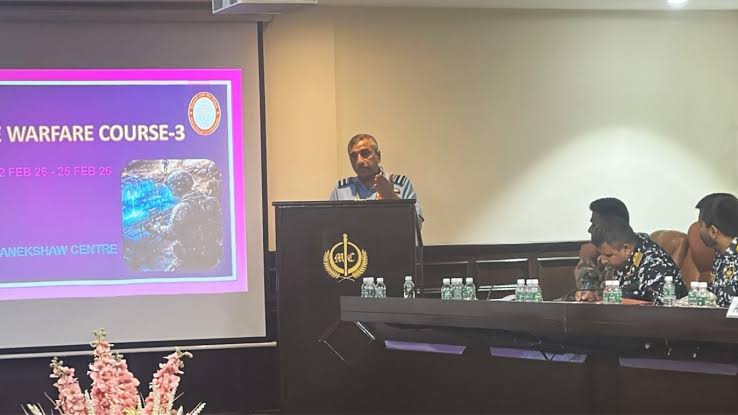
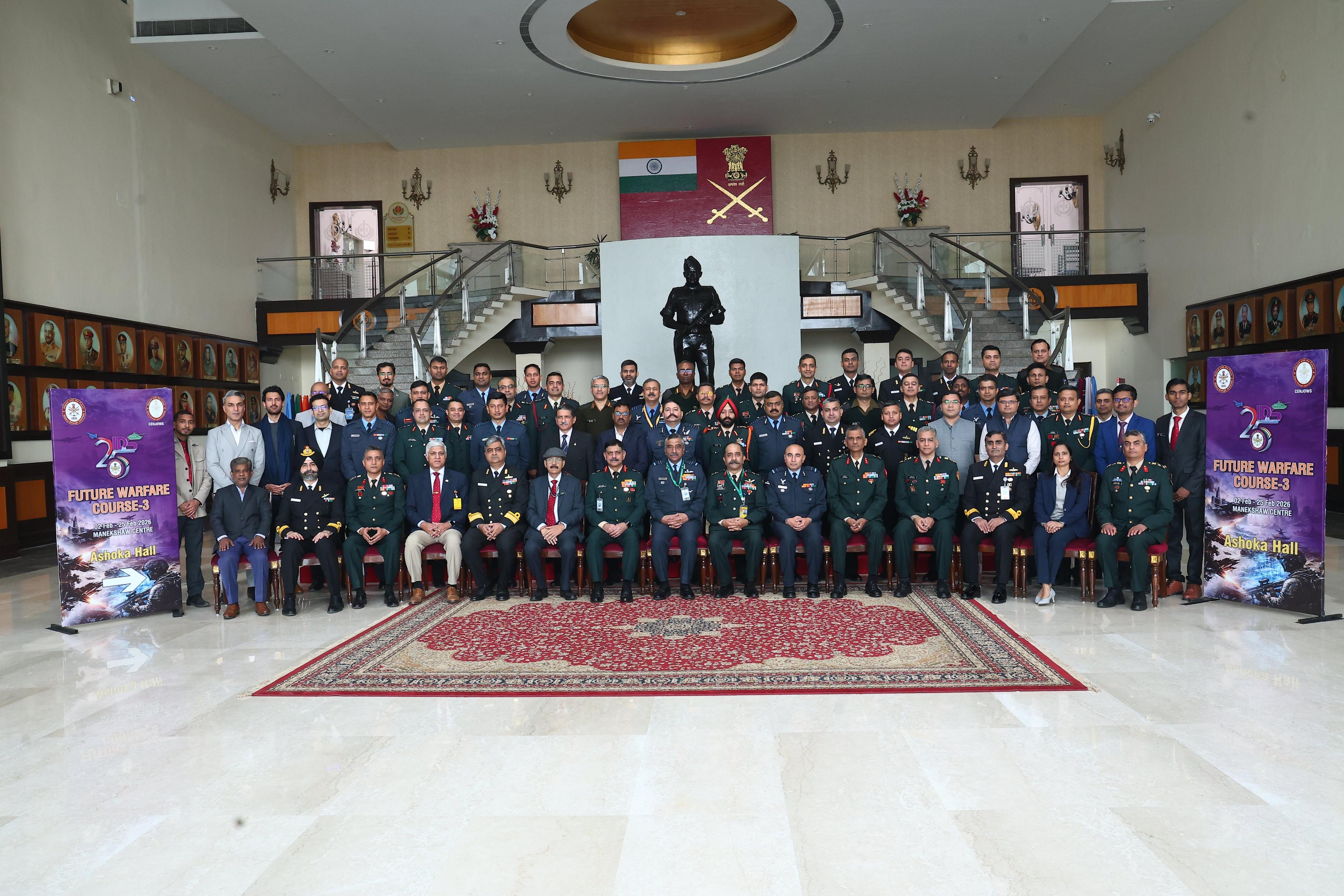

FWC 3.0 aimed to create a balanced blend of operational strategy and technological proficiency. As warfare increasingly shifts into complex, technology-driven domains, the course emphasised the need for integrated thinking across land, sea, air, space and cyber domains.
The curriculum was structured in two phases. The first phase highlighted civil-military fusion by involving startups, MSMEs, private industry leaders, academia and Defence Public Sector Undertakings (DPSUs). This interaction reflected India’s broader push towards self-reliance in national security and indigenous defence innovation.
Participants engaged with innovators and defence manufacturers to understand how emerging technologies such as artificial intelligence, autonomous systems and advanced surveillance platforms are shaping future battlefields.
Exposure to Cutting-Edge Technologies
During the second phase, officers travelled to Hyderabad from February 15 to 17, where they interacted with subject matter experts and representatives from space technology firms and counter-Unmanned Aircraft System (C-UAS) companies. Field demonstrations of advanced systems provided practical insight into operational applications.
These visits were designed to bridge the gap between conceptual military doctrine and on-ground technological capabilities. Officers witnessed live demonstrations and engaged directly with developers to assess real-world performance parameters.
The participants also visited the Information Fusion Centre – Indian Ocean Region (IFC-IOR) in Gurugram to understand maritime domain awareness and regional security cooperation. A visit to the Indian Institute of Technology (IIT) Delhi further exposed them to cutting-edge academic research relevant to defence innovation.
Understanding Cognitive and Information Warfare
Recognising that future conflicts extend beyond conventional battlefields, the course incorporated modules on cognitive warfare. Officers were exposed to media and social media interfaces to understand how information operations and perception management influence modern conflicts.
This segment highlighted the strategic importance of narrative control, digital ecosystems and psychological dimensions of warfare. The objective was to prepare military leaders to navigate information-driven environments effectively.
Strategic War Gaming Exercise
The course culminated in a two-day Strategic War Gaming Exercise focused on Multi Domain Operations. The exercise was mentored by retired ambassadors and representatives from the Ministry of Home Affairs (MHA), ensuring a whole-of-government perspective.
Through scenario-based simulations, officers examined complex geopolitical and internal security situations. The exercise reinforced the interplay between foreign policy, internal affairs and military strategy, encouraging participants to adopt a holistic approach to national security.
The war gaming component tested decision-making skills under simulated crisis conditions, requiring participants to integrate technological tools with strategic judgment.
Preparing for Multi Domain Operations
Multi Domain Operations formed the core theme of FWC 3.0. The course underscored the necessity of synchronised action across conventional and emerging domains, including cyber, space and information spheres.
By combining academic engagement, industry interaction and strategic simulations, the programme aimed to cultivate forward-thinking military leaders capable of navigating future battle environments.
Officials noted that initiatives such as the Future Warfare Course reflect India’s commitment to adapting its military doctrine in line with evolving global security dynamics. The emphasis on jointness among the three services aligns with ongoing reforms in India’s defence architecture.
The successful conclusion of FWC 3.0 signals India’s continued focus on preparing its armed forces for future conflicts where technology, information and strategic foresight will play decisive roles.