
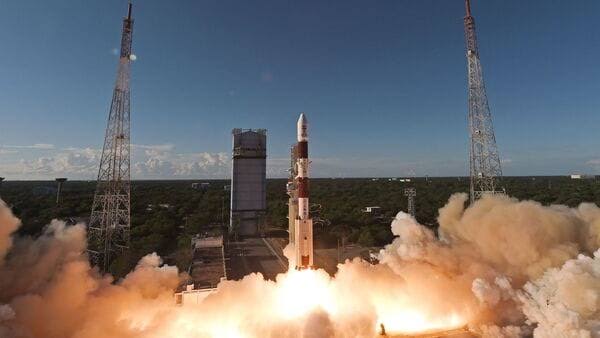
India’s ambitious human spaceflight programme, Gaganyaan, has now entered its final and most critical phase, with the country aiming to send its first astronauts into orbit by early 2027. Union Minister Dr. Jitendra Singh shared the encouraging update during a media interaction in New Delhi, expressing both pride and optimism as India moves steadily towards achieving this historic milestone.
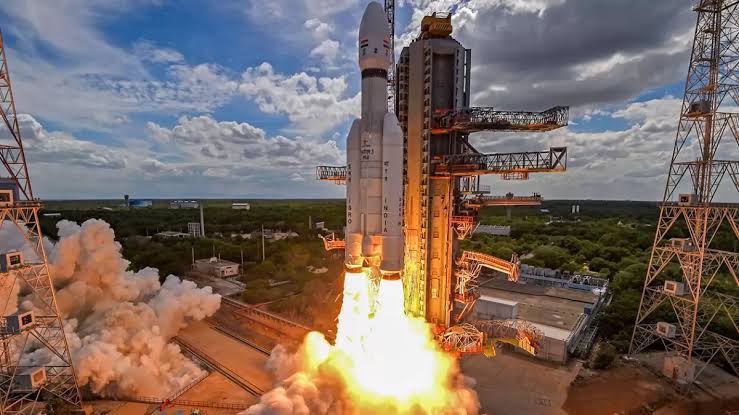

The Minister described Gaganyaan as much more than a scientific mission—it is a national endeavour that reflects India’s emergence as a global space leader. Built entirely on indigenous technology and executed with remarkable cost-efficiency, the mission is seen as a testament to India’s ability to achieve big dreams with focused determination and visionary leadership. He credited Prime Minister Narendra Modi’s long-term strategic outlook for giving India’s space sector renewed direction and scale, including future goals like the Bharatiya Antariksha Station by 2035 and a Moon mission by 2040.
Over the past year, the Gaganyaan programme has made significant strides. The successful completion of the first uncrewed Test Vehicle Abort Mission (TV-D1) has paved the way for more advanced trials, with the second test vehicle launch scheduled for later in 2025. This will be followed by uncrewed orbital missions that will rigorously assess systems ahead of the manned mission. The Human-rated LVM3 launch vehicle, Crew Escape System, and modules required for human spaceflight are all in advanced stages of testing and integration.
Adding to the momentum, four Indian Air Force pilots selected as astronaut-designates have already completed intensive training in Russia and are now undergoing mission-specific training in India. Every aspect of their preparedness—from physical endurance to psychological resilience—is being closely monitored at the astronaut training facility.
Dr. Singh highlighted how the mission, despite its scale, is being executed at a fraction of the cost compared to similar global efforts. This cost-effectiveness has become one of Gaganyaan’s most striking features, yielding high returns in innovation, industry participation, and national pride. The programme is already driving spinoffs in robotics, electronics, materials science, and even healthcare. Startups and private players are also finding new opportunities to contribute meaningfully, further energizing the space economy.
ISRO Chairman Dr. V. Narayanan echoed the sentiment, affirming that Gaganyaan represents a new chapter in India’s scientific journey—one that inspires youth, strengthens industry-academia collaboration, and deepens public interest in space science. The programme, he said, is not just about sending astronauts to space, but about preparing India for a self-reliant and vibrant space future.
With each new test and technological milestone, the Gaganyaan mission reinforces India’s confidence and capability. As the countdown continues toward the nation’s first human spaceflight, Gaganyaan is uniting scientists, engineers, and citizens in a shared dream—one that is set to place India among the few countries in history to have mastered the art and science of sending humans to space.