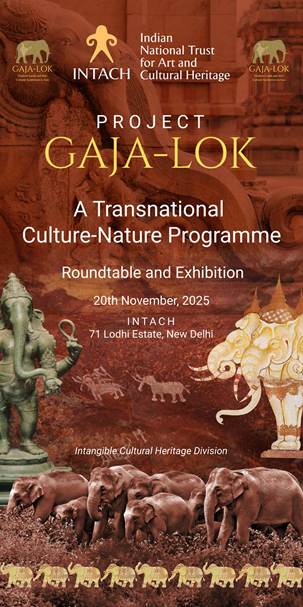
 Six thematic panels, one transnational story
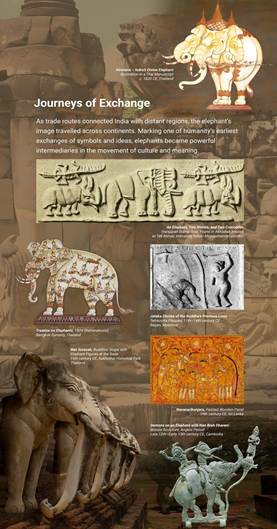
The Gaja-Lok exhibition presents six thematic panels that map the enduring human–elephant bond. Curated displays range from prehistoric rock art and ancient trade networks to temple rituals, elephant imagery in textiles and modern innovations such as Kerala’s robotic temple elephants.
Each panel emphasises continuity and change: how elephants have served as markers of power and piety, as trade companions on historic routes, and as motifs in regional crafts. Collectively, the panels invite visitors to reflect on coexistence, cultural memory and contemporary conservation challenges.
Scholars and conservationists convene
The Gaja-Lok Roundtable convened a distinguished roster of speakers, including ecologists, historians and leaders from conservation NGOs. Notable participants included Prof. Raman Sukumar (Centre for Ecological Sciences, IISc), Vivek Menon (Wildlife Trust of India), Dr. Vinod Mathur (former National Biodiversity Authority), Dr. Khalid Pasha (IUCN Asia) and Prof. Mahesh Rangarajan (Ashoka University).
Panel discussions explored overlapping themes of heritage protection, species conservation, community livelihoods and cross-border cultural ties. Speakers emphasised that research outcomes will feed into the Gaja-Lok Dossier, a planned multidisciplinary repository to support recognition of elephant-related heritage across Asia.
From temple rituals to Blue Economy links
Discussions highlighted the elephant’s multiple roles: sacred being in religious practice, labour partner in historic economies, and contemporary conservation icon. The exhibition also showcased modern adaptations such as the use of robotics in temple festivals — an example of innovation that responds to ethical concerns about captive animals while preserving ritual aesthetics.
Speakers advocated policy frameworks that integrate cultural heritage with on-the-ground conservation, arguing that safeguarding traditions and protecting elephant habitats are mutually reinforcing goals.
Transnational dialogue and future outcomes
Gaja-Lok positions the elephant as a bridge between nations, cultures and disciplines. INTACH said the initiative will continue with partner institutions across elephant-range countries to document regional practices and build comparative archives.
Outcomes from the roundtable — including curated essays, oral histories and field studies — will form the Gaja-Lok Dossier, intended as a resource for policymakers, scholars and communities seeking to advance heritage protection alongside ecological resilience.
Why Gaja-Lok matters
By linking culture and nature, Gaja-Lok reframes conservation as a cultural as well as environmental imperative. The programme underscores that effective stewardship of the Asian elephant requires cross-disciplinary research, community engagement and transnational cooperation.