
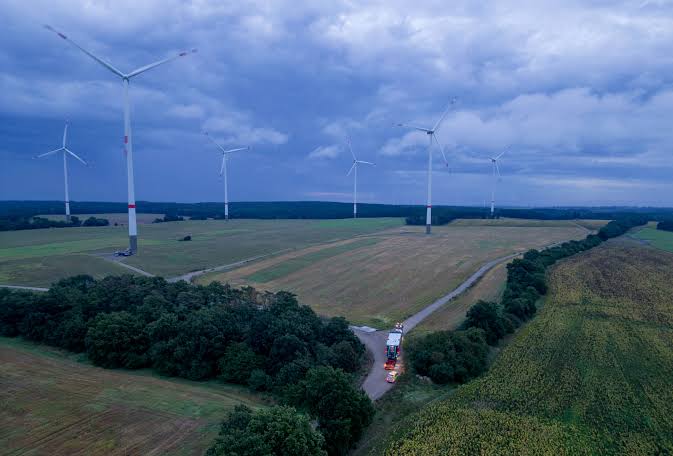

The key innovation lies in the rotor design. Traditional wind turbine blades are typically filled with foam and built for rigidity, making them heavy and less responsive in gentle winds. In contrast, the new German design uses hollow rotors that significantly reduce overall weight.
This reduction allows the blades to start rotating at wind speeds as low as 2.7 metres per second, compared to the industry benchmark of around 4 metres per second. As a result, energy generation becomes possible in many urban and semi-urban areas previously unsuitable for wind turbines.
The Science Behind the Technology
The development process relies heavily on advanced manufacturing techniques. Researchers first use 3D printing to create precise moulds for each half of the rotor. These moulds are then combined with an automated fibre placement system that lays composite fibre strips in carefully calculated layers.
Once fused, the laminate structure provides both flexibility and strength. The blades can endure storm-level winds while maintaining optimal aerodynamic performance, reducing the risk of structural damage.
Impressive Performance Results
During testing, the turbines reached speeds of nearly 450 revolutions per minute and produced up to 2,500 watts of power at a wind speed of 10 metres per second. Researchers say this makes them about 83 percent more powerful than many small turbines currently available.
The system also achieved an efficiency rate of approximately 53 percent, approaching the theoretical maximum defined by Betz’s Law, which states that no wind turbine can convert more than 59.3 percent of wind energy into usable power.
Lower Costs and Wider Applications
Beyond performance, cost reduction is another major advantage. The materials used in the lightweight rotors are easier to source and cheaper than those required for large, heavy turbines. Transportation and installation costs are also significantly lower.
Because of their compact size, these turbines can be installed at homes, small businesses, and emergency power sites. Their self-regulating blade structure reduces the need for complex control systems, lowering maintenance expenses over time.
A Step Toward Decentralised Energy
Experts believe small, efficient wind turbines like these could play a crucial role in decentralised energy generation. By producing power close to where it is consumed, households can reduce dependence on large grids and fossil fuels.
As countries across Europe and beyond accelerate their transition to clean energy, innovations that maximise output from limited natural resources could become essential to meeting climate goals.