
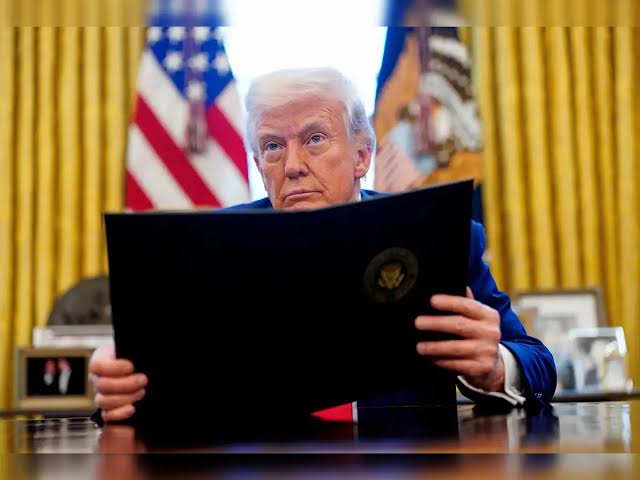
In a stunning shift that sent waves of cautious optimism through global markets, President Donald Trump has announced a 90-day pause on the sweeping tariffs he had imposed on dozens of countries—though notably, China has been excluded. This pause arrives after weeks of intense global criticism and growing concerns that the trade war was pushing the world economy toward recession. The announcement triggered a powerful rally in Asian markets, with Japan’s Nikkei 225 leaping nearly 9%, South Korea’s Kospi gaining over 5%, and Australia’s ASX 200 rising by a similar margin. It was a dramatic rebound that seemed to reflect a collective sigh of relief across Asia.
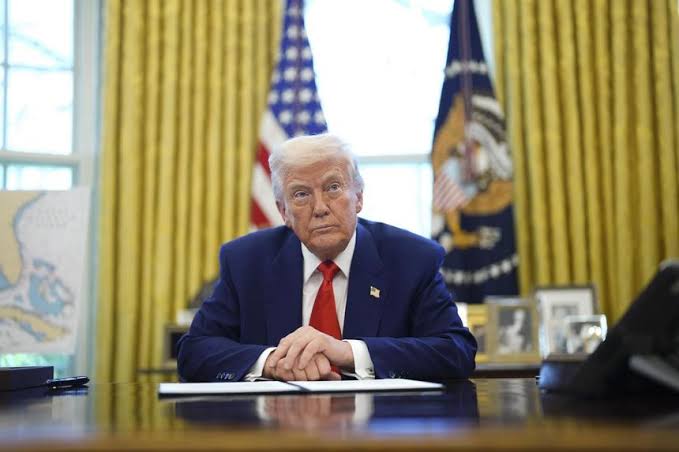

Back home, US markets saw a massive rally following Trump’s announcement, recovering steep losses from the previous week. The Dow Jones surged by nearly 3,000 points, the Nasdaq by more than 12%, and the S&P 500 posted one of its strongest gains in years. But behind the market euphoria lies a sense of unease. Investors and policy makers are grappling with an uncertain future, unsure whether this pause signals a path to compromise or merely a brief lull in an ongoing storm.
The economic ripples are being felt far and wide. India’s government, seeing a window of opportunity, is seeking to fast-track a trade agreement with the US. Indian exporters, particularly in the seafood sector, have expressed relief at the temporary halt in tariffs. Meanwhile, Japan is also adjusting its economic approach, nominating business veteran Kazuyuki Masu to the Bank of Japan board in a move seen as a shift toward more pragmatic policymaking amid rising global risks.
The broader outlook remains fragile. US inflation may have eased slightly in March, but tariff-driven cost pressures could soon reverse that trend. The Federal Reserve has signaled a cautious stance, with interest rates likely to stay high as officials wait to see how the situation unfolds. Energy markets, too, are feeling the strain. Oil prices fell despite the tariff pause, reflecting fears that the trade war’s drag on global demand may continue to deepen.
Perhaps one of the most vulnerable sectors is technology, particularly the fast-growing AI industry. The International Energy Agency warned that the growing web of tariffs could severely slow the expansion of data centers, a backbone of the AI revolution. Strain on power grids, combined with economic uncertainty, could delay or derail critical infrastructure development.
China, meanwhile, is contending with a deepening deflationary spiral and a weakening yuan, which has fallen to its lowest level since the global financial crisis. While a weaker currency may offer some cushion to exporters, it also risks triggering capital flight and further economic instability. The People’s Bank of China is walking a tightrope, trying to maintain confidence without letting the yuan slip too far.
Despite these challenges, diplomatic efforts are underway. China and the European Union have pledged to deepen economic ties in the face of US tariffs, aiming to promote stability and defend the multilateral trade system. Still, the uncertainty looms large. The question on everyone’s mind is whether this 90-day pause marks the beginning of a meaningful dialogue—or just the calm before the next storm.
For now, the world watches closely. In this high-stakes game of economic brinkmanship, millions of jobs, livelihoods, and futures hang in the balance.