Global Reactions to Israel’s Airstrikes on Iran’s Nuclear, Military Sites
In the early hours of June 13, 2025, Israel launched a sweeping airstrike across Iran, targeting over 100 sites including nuclear facilities and military installations. The Israeli army claims that 200 jets were involved in the operation, making it one of the largest strikes in the region’s recent history. The aftermath has left the world on high alert.
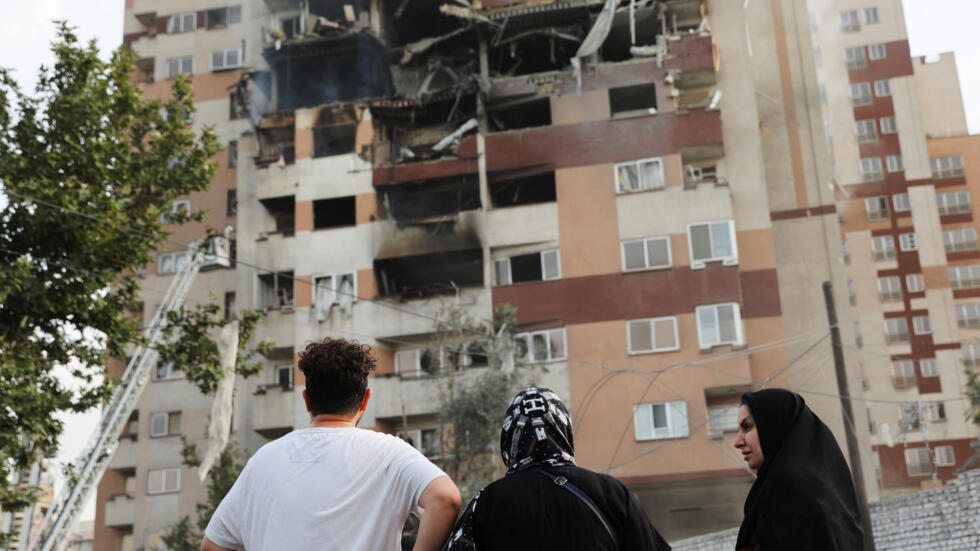
According to Iran’s semi-official Fars News Agency, at least 78 people have died — many of them civilians — as residential areas in Tehran and other cities were also struck.
🔗 Internal Link : For earlier coverage on the Air India Crash, click here.
Iran Vows Retaliation: Khamenei Issues Stern Warning
Iran’s Supreme Leader Ayatollah Ali Khamenei has condemned the airstrikes, calling them a “crime against humanity.” He vowed that Israel “must expect severe punishment.” Iran’s Revolutionary Guard Corps (IRGC) stated that the directive to respond has been issued and would be executed without delay.

Israel’s Standpoint: Operation Will Continue
Prime Minister Benjamin Netanyahu addressed his nation, stating that the operation will continue “for as long as necessary” to neutralize threats from Iranian nuclear development. He defended the attacks as a preemptive measure against what Israel perceives as Iran’s covert advancement of nuclear weapons capabilities.
United Nations: Call for Maximum Restraint
UN Secretary-General António Guterres expressed grave concern over the escalating situation. Through spokesperson Farhan Haq, Guterres condemned military action targeting nuclear facilities and emphasized the need for “maximum restraint to avoid deeper conflict.”
IAEA: Nuclear Sites Must Never Be Attacked
Rafael Grossi, Director-General of the International Atomic Energy Agency (IAEA), warned against targeting nuclear infrastructure. In a statement, he said, “Any military action that jeopardizes the safety of nuclear facilities risks grave consequences for Iran, the region, and beyond.”
The IAEA will hold an emergency meeting of its board of governors in Vienna this Monday, signaling the seriousness with which the international community views the attacks.
Global Powers React: US, Russia, China on Alert
While official statements from Washington, Moscow, and Beijing remain under wraps, diplomats indicate intense behind-the-scenes discussions. China has long opposed unilateral military action in the Middle East, while Russia has previously backed Iran in international forums. The U.S., meanwhile, finds itself in a delicate position due to ongoing talks with Iran regarding the nuclear deal.
🔗 External Link: IAEA Press Release on Iran
Middle East on Edge: Fears of Regional War Grow
Neighboring countries like Saudi Arabia, Iraq, and the UAE are closely monitoring the situation. Several Gulf nations have reportedly raised alert levels at military bases. Lebanon’s Hezbollah and Hamas in Gaza have both issued statements threatening countermeasures, should Israel continue its operations.
What’s Next? Possible Scenarios
Analysts suggest several outcomes ranging from diplomatic deadlock to full-scale regional conflict. Sanctions, counterattacks, or even international peacekeeping measures could follow. The world waits with bated breath as tensions simmer.
🔗 Related Article: Iran’s Nuclear Programme in Focus in China, Russia, and US
Suggested Featured Image
Image: Smoke rising over Tehran skyline after Israeli airstrikes
Caption: Israel-Iran Tensions Flare: Tehran under smoke after massive air raids.
Alt text: Smoke clouds over Tehran after Israeli airstrikes, June 2025
Description: Heavy smoke rises above Tehran’s skyline after Israel’s aerial offensive targeting nuclear and military sites.
Final Thoughts
The strikes mark a dangerous escalation in Israel-Iran relations, drawing the world’s attention to the fragile balance of power in the Middle East. With nuclear concerns at the forefront, the international community must act swiftly to de-escalate and restore peace.