
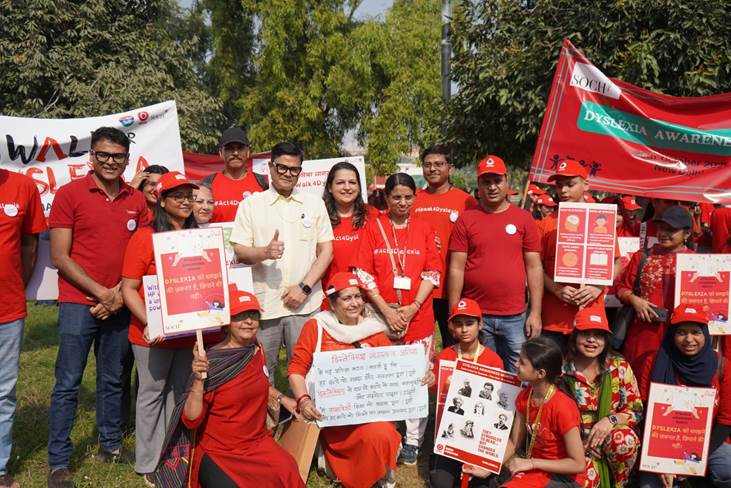


In solidarity with the movement, Rashtrapati Bhawan, the Secretariat, and several other prominent monuments across India were illuminated in red, symbolizing support for individuals with Dyslexia. The campaign, co-organized by Changeinkk Foundation, UNESCO MGEIP, Orkids Foundation, and Soch Foundation, engaged over 300 participants from diverse backgrounds to spread awareness and compassion.
Awareness, Early Detection, and Inclusion
Speaking at the event, Shri Sanjay Kumar highlighted the importance of recognizing Specific Learning Disabilities (SLDs) and emphasized that Dyslexia is a different way of learning, not a limitation. He stressed that early identification and support can enable children with Dyslexia to achieve remarkable success. The NCERT-developed PRASHAST 2.0 mobile app was highlighted as a key tool for early screening and intervention in schools.
The Secretary also commended civil society organizations for their role in raising visibility and providing support to children and adults with learning differences.
Government Measures to Support SLDs
Under the Samagra Shiksha Scheme, the Department of School Education & Literacy has implemented multiple initiatives:
- PRASHAST 2.0 mobile screening tool for early detection of disabilities including Dyslexia.
- Inclusive education modules in the Integrated Teacher Education Programme (ITEP).
- Customized learning support, assistive devices, and therapeutic interventions for children with SLDs.
- Block-level screening and identification camps in collaboration with Health & Family Welfare and DEPwD departments.
According to UDISE+ 2024–25, approximately 12.15% of children with special needs in schools have SLDs, although the actual numbers may be higher, reflecting children outside the formal education system.
Impact and Way Forward
The event reinforced the message that children with Dyslexia can thrive with support, inclusion, and timely intervention. As highlighted in NEP 2020 reforms, increasing focus on early identification, teacher training, and tailored accommodations is vital. The walk concluded with renewed commitment from government officials, educators, and civil society to make classrooms inclusive, compassionate, and responsive to every child’s needs.