

In a meaningful stride toward protecting public health and promoting transparency in traditional medicine, the Government of India has launched the Ayush Suraksha Portal, a digital platform designed to address misleading advertisements and adverse drug reactions (ADRs) in the Ayush sector. The portal was officially unveiled by Shri Prataprao Jadhav, Union Minister of State (Independent Charge) for the Ministry of Ayush, and Minister of State for Health & Family Welfare, during a press briefing at Ayush Bhawan, New Delhi.
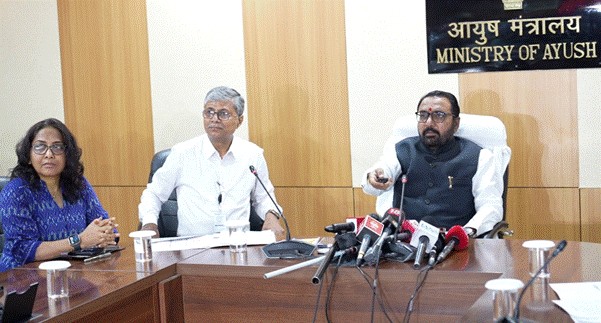

The initiative stands as a strong testament to the government’s commitment to safeguarding consumers and restoring trust in the ancient systems of Indian medicine. Shri Jadhav, in his address, described the portal as a “vigilant watchtower against misinformation,” underscoring its role in ensuring that only safe, credible, and scientifically backed Ayush products reach the public.
Developed in compliance with a Supreme Court directive, the portal brings to life a long-awaited mechanism that ensures coordinated monitoring and response across the country. The court, in its judgment dated July 30, 2024, emphasized the urgent need for a centralized system to track misleading advertisements and adverse effects of traditional medicines. With this launch, the Ministry of Ayush has not only met but exceeded the court’s expectations ahead of the mandated June 2025 deadline.
The Ayush Suraksha Portal integrates data from State Licensing Authorities, national pharmacovigilance centres, and a wide array of regulatory bodies. It offers real-time reporting and monitoring capabilities, allowing healthcare professionals, regulatory authorities, and ordinary citizens alike to contribute to the integrity of the system. Whether it’s a misleading advertisement seen on television or a suspected side effect from an Ayush product, individuals can now report their concerns directly on the portal with ease.
Vaidya Rajesh Kotecha, Secretary of the Ministry of Ayush, highlighted that the platform is not just a regulatory tool but a participatory one. He stressed its value in pharmacovigilance, regulatory convergence, and consumer empowerment. The involvement of multiple key stakeholders—including the Central Drugs Standard Control Organization (CDSCO), Ministry of Information & Broadcasting, Central Consumer Protection Authority (CCPA), and food and health regulators—ensures a unified and effective approach to enforcement.
In the weeks leading up to the launch, the Ministry organized training sessions for nodal officers from all participating bodies, ensuring that the system is fully operational and that users are well-equipped to handle cases efficiently.
This new digital initiative is more than just a technical innovation—it is a compassionate response to the concerns of citizens who turn to traditional medicine with hope and trust. It promises greater accountability and strengthens the bridge between traditional knowledge and modern-day governance. With this, India takes a major leap toward responsible and responsive health systems rooted in its cultural heritage.