 Advance Planning Through Zonal Conferences
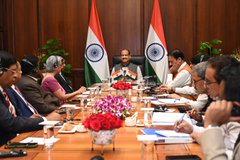
To prevent shortages during peak sowing periods, the DA&FW periodically assesses the requirement and availability of agricultural inputs in consultation with States, UTs and concerned agencies. These assessments are carried out through Zonal Conferences on Agricultural Inputs, organised well in advance of the cropping seasons. The conferences help align supply chains, identify potential bottlenecks and ensure that farmers receive essential inputs on time.
Affordable Seeds and Strengthened Infrastructure
The Government provides financial assistance for a wide range of seed-related activities to make quality seeds affordable for farmers. These include distribution of certified seeds, creation of a National Seed Reserve, strengthening seed infrastructure, farmer training programmes and field demonstrations. Free distribution of minikits containing new High Yielding Varieties of pulses and nutri-cereals further supports productivity enhancement.
These interventions are implemented under key schemes such as the National Food Security and Nutrition Mission, the National Mission on Edible Oils–Oilseeds and the Rashtriya Krishi Vikas Yojana. Public sector seed production has also been encouraged to ensure consistent availability of quality seeds at reasonable prices.
Price Regulation and Fertilizer Availability
To ensure fair pricing of Bt cotton hybrid seeds, the Government has notified the Cotton Seeds Price (Control) Order, 2015 under the Essential Commodities Act, 1955. Under this framework, maximum sale prices of Bt cotton seeds are fixed annually, protecting farmers from excessive pricing.
Fertilizer requirements are assessed based on cropped area, irrigation coverage, historical consumption patterns and soil fertility status. These assessments are communicated to the Department of Fertilizers to ensure seamless availability. The price of urea is notified by the Government to keep it affordable for farmers.
DBT and Digital Monitoring
Under the Direct Benefit Transfer system for fertilizers, 100 percent subsidy is released to fertilizer companies based on actual sales to farmers. Transactions are recorded through Aadhaar-authenticated Point of Sale devices at retail outlets, ensuring transparency, targeted subsidy delivery and uninterrupted supply of fertilizers at subsidised rates.
Seed Quality Control and SATHI Portal
To curb the sale of spurious and substandard seeds, the Seeds Act, 1966, along with allied rules and orders, empowers State Governments to appoint Seed Inspectors. These authorities can inspect seed outlets, draw samples and take enforcement action including cancellation of licences and prosecution of violators.
The SATHI portal has been launched to provide end-to-end digital traceability of seeds across the supply chain. This initiative enhances transparency and helps prevent circulation of fake seeds during critical sowing seasons.
Promotion of Organic and Traditional Seeds
The Government has notified organic fertilizers, bio-fertilizers, nano fertilizers and organic carbon enhancers under the Fertilizer Control Order, 1985. Their use is promoted through schemes such as Paramparagat Krishi Vikas Yojana and the Mission Organic Value Chain Development for the North Eastern Region.
Traditional seed varieties are supported under the National Food Security and Nutrition Mission through subsidised seed distribution, production incentives, capacity building and establishment of community seed banks. Farmers conserving indigenous varieties are recognised under the Protection of Plant Varieties and Farmers’ Rights Act, 2001.