
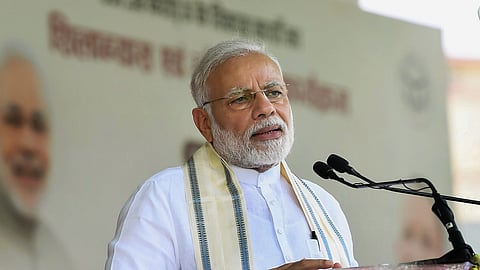
Calling the initiative “next generation reforms,” the Prime Minister said the move will bring “happiness to every family” by making essential goods cheaper, boosting consumer spending, and strengthening India’s economic momentum.
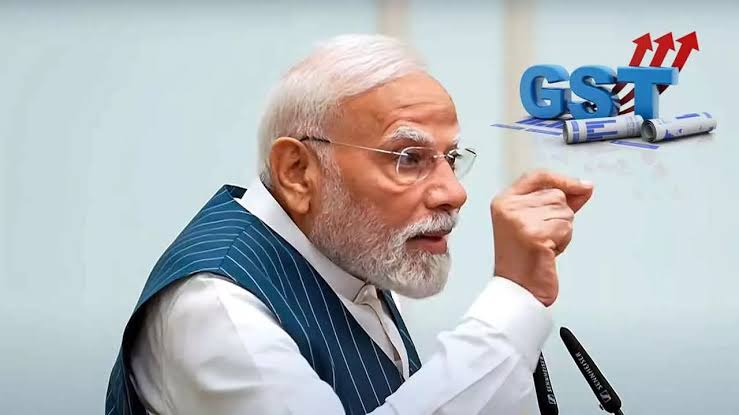

The new GST framework brings most daily-use items under the 5% slab, down from the previous 12%. This change, according to Modi, will directly benefit households and ease the financial burden on the poor, middle class, and the growing “new middle class.”
“Reform is a continuous process. With time, the needs of the country evolve, and so must our policies. From tomorrow, everyday objects will become more affordable,” he said.
Boost for MSMEs and Self-Reliance
Modi highlighted that Micro, Small and Medium Enterprises (MSMEs) will be among the biggest beneficiaries of the reform. Lower tax rates are expected to increase sales and reduce compliance burdens for these businesses, giving them a competitive edge.
“MSMEs have a huge responsibility in building a self-reliant India. With reduced GST rates, they will gain a strong push to expand and showcase Indian products in the global market,” he said, urging states to create investment-friendly ecosystems.
Swadeshi and Atmanirbharta Campaigns
Drawing parallels with the Swadeshi movement during India’s freedom struggle, Modi urged citizens to choose Made-in-India products. “India’s prosperity will gain strength from the Swadeshi mantra. We must free ourselves from excessive dependence on foreign goods,” he emphasized.
He called on state governments to actively promote local manufacturing and investments, saying joint efforts by the Centre and States are key to realizing the dream of a truly self-reliant India.
Double Bonanza for Citizens
The Prime Minister reminded citizens that earlier this year, the government exempted income up to ₹12 lakh from income tax. Combined with the GST cuts, households now stand to benefit from what he described as a “double bonanza.”
“In the last 11 years, over 25 crore people have emerged from poverty. This new middle class has aspirations, and these reforms are designed to support their growth,” Modi said.
Massive Savings Expected
According to government estimates, the combined impact of exemptions and lower GST rates could save Indian households more than ₹2.5 lakh crore annually. Modi said such reforms reflect the principle of “customer is God,” as shopkeepers themselves are eager to pass on the benefits to consumers.
“Your savings will rise, and you will be able to purchase your favourite items with ease. These reforms will accelerate the growth story of the country and make business easier,” he said.
GST Journey Since 2017
Modi recalled the introduction of GST in 2017 as a turning point in India’s economic policy. “Before GST, citizens were trapped in a web of taxes, forms, and checkposts. The reform was essential to unify the country’s market and make trade smoother,” he said.
The Prime Minister added that GST 2.0 builds on that foundation, aligning with India’s current needs and future aspirations.
Opposition and Global Context
The announcement comes against the backdrop of global trade tensions, including the U.S. decision to impose steep H-1B visa fees and tariffs. Opposition parties have questioned whether the government is prepared to tackle external economic pressures, but the Prime Minister remained focused on domestic reforms as the engine of growth.