
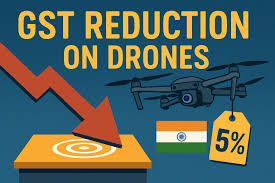
From 28% to 5%: A Game-Changer for Drone Industry
Until now, drones attracted a GST of 18% if they came with integrated cameras and up to 28% if used for personal purposes. The new reform replaces this with a simplified 5% slab across the board, eliminating classification disputes. This clarity is expected to make drones more affordable for commercial and personal use, aligning with the government’s vision of Atmanirbhar Bharat and Make in India.

Civil Aviation Minister Ram Mohan Naidu hailed the reforms, calling the two-slab GST structure of 5% and 18% “the biggest reform in India’s indirect taxation history.” He said the decision would not only enhance ease of doing business but also accelerate India’s ambition of becoming a global hub for transformative technologies such as drones. “A uniform 5% GST provides policy certainty and eliminates unnecessary disputes,” he noted, adding that the exemptions for simulators will strengthen the aviation training ecosystem.
Opportunities Across Sectors
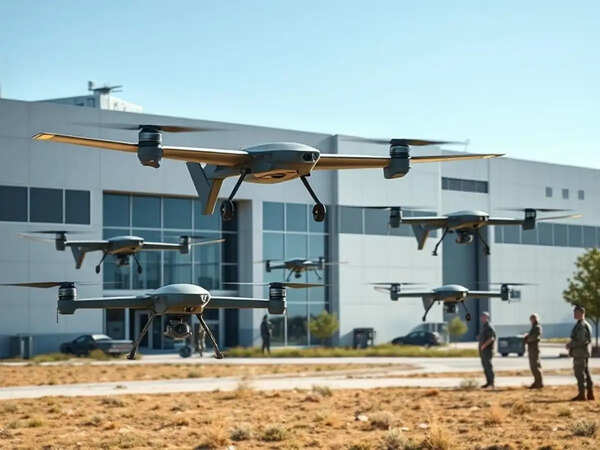
Affordable drones are expected to drive adoption in multiple industries. In agriculture, drones can help with crop monitoring and pesticide spraying. In petroleum and mining, they enable safer inspection of pipelines and assets. Infrastructure projects can benefit from faster surveying and mapping, while logistics firms can use drones for last-mile delivery. Defense and security agencies also see drones as vital for surveillance and rapid response operations.
Employment and Economic Growth
The reduced GST is also likely to spur job creation in areas like drone manufacturing, assembling, software development, data analytics, and field operations. Industry experts believe that policy stability and lower costs will encourage startups and large firms alike to scale operations. This, in turn, will help India tap into the global drone market, positioning the country as a competitive manufacturing and technology hub.
Supporting Make in India and Viksit Bharat 2047
The reform aligns with the government’s long-term vision of Viksit Bharat 2047, which places self-reliance and innovation at its core. By making drones more accessible, the policy supports the expansion of homegrown manufacturers while reducing reliance on imports. It also enhances efficiency in public services ranging from disaster management to healthcare delivery in remote areas.