
Steel and Heavy Engineering
Steel and heavy engineering form the backbone of Jharkhand’s industrial sector, contributing roughly 20–25% of India’s total steel output. Industrial hubs like Jamshedpur (Tata Steel) and Bokaro (SAIL-Bokaro Steel Plant) support over one lakh formal workers and a dense network of MSMEs engaged in fabrication and services. The state exports steel products to markets such as the USA, China, Japan, Nepal, Bangladesh, and Europe.
GST rate cuts for vehicles, tractors, tractor parts, commercial goods vehicles, and auto components reduce costs along the value chain by 7.8%–11%, boosting demand, production, and employment while strengthening Jharkhand’s industrial ecosystem.

Jharkhand holds nearly 26% of India’s iron ore reserves, supporting industries that produce kitchenware, stoves, milk cans, and artisanal products. Around 1 lakh people are employed in the iron sector, which supplies domestic steel mills and exports select ores to China, Japan, Europe, and Southeast Asia.
The GST reduction from 12% to 5% lowers costs by an estimated 6.25%, improving competitiveness, profit margins, and employment within the iron-based industries.
Agriculture and Foodgrains
Agriculture, dominated by marginal and tribal farmers, contributes 18.2% to Jharkhand’s GSDP, employing roughly half the working population. Key agricultural districts include Ranchi, Hazaribagh, Palamu, and Latehar. Farmers sell produce through domestic mandis, processing industries, and NTFP aggregators.
GST cuts from 12% to 5% on processed foodgrains reduce input costs by 3–8%, enhancing farm profitability, encouraging value addition, and stabilizing rural incomes.
Forest Products
With over 29% forest cover, Jharkhand relies on non-timber forest produce (NTFP) such as lac, tendu leaves, and honey for tribal livelihoods. About 20 lakh forest-dependent workers benefit from domestic and international demand, including Bangladesh, the USA, EU, Southeast Asia, and the Middle East.
GST reductions on tendu leaves and bamboo from 18%/12% to 5% lower costs by 6–11%, increasing producer margins and improving income security for tribal communities.
Tourism and Hospitality
Jharkhand’s natural landscapes, waterfalls, temples, wildlife sanctuaries, and cultural sites make it a growing tourist destination. Key spots include Deoghar (Baidyanath Dham), Parasnath, Rajrappa, and Jagannath temples. Local stakeholders benefit across hotels, homestays, guides, transport, handicrafts, and food services.
GST reductions on hotel rooms priced up to ₹7,500 per night from 12% to 5% reduce costs by 6.25%, making tourism more affordable and supporting small and mid-sized operators.
Conclusion
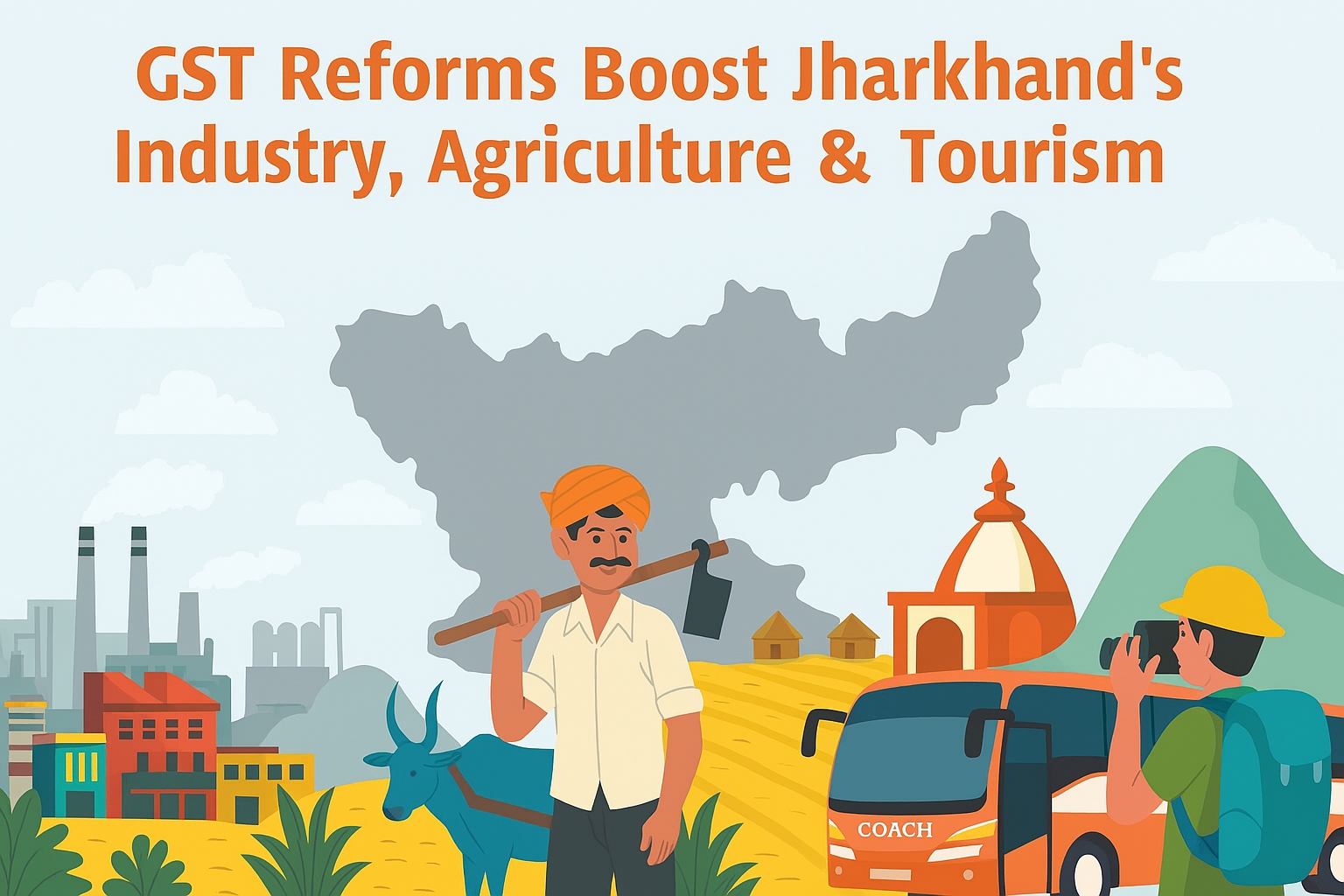
The GST reforms provide a holistic boost to Jharkhand, enhancing industrial growth, promoting mineral and agricultural productivity, securing forest-based livelihoods, and making tourism more accessible. Collectively, these measures improve competitiveness, generate employment, and make the state more investment-ready, positioning Jharkhand as a key contributor to India’s economic growth.