

BEL’s board cleared the signing of a Joint Venture Agreement to establish a private limited company under the Companies Act, 2013. The entity will operate with equal equity participation from both companies.
The company will initially have an authorised share capital of Rs 1 lakh, comprising 1,000 equity shares of Rs 100 each. This may later be expanded up to Rs 10 crore or more, depending on operational requirements and business growth.
The registered office is expected to be located in Pune or another mutually agreed location. The board will consist of four directors — two nominated by BEL and two by Safran. The chairman will be appointed by the board but will not hold a casting vote.
Focus on Guidance Kit Manufacturing
The joint venture will establish a dedicated “Center of Excellence” in India. Its core mandate will be manufacturing, supplying, maintaining and repairing the guidance kits of the HAMMER weapon system.
The Indian Air Force (IAF) and Indian Navy will be the primary end users, with provisions to include other Indian defence stakeholders subject to mutual agreement. Regulatory approvals in both India and France are required before the venture becomes operational.
This development aligns with India’s broader defence manufacturing reforms and self-reliance push outlined under the Ministry of Defence and Make in India framework. More details on India’s indigenisation roadmap can be accessed via the official Make in India portal: https://www.makeinindia.com/home.
What is the HAMMER Weapon System?
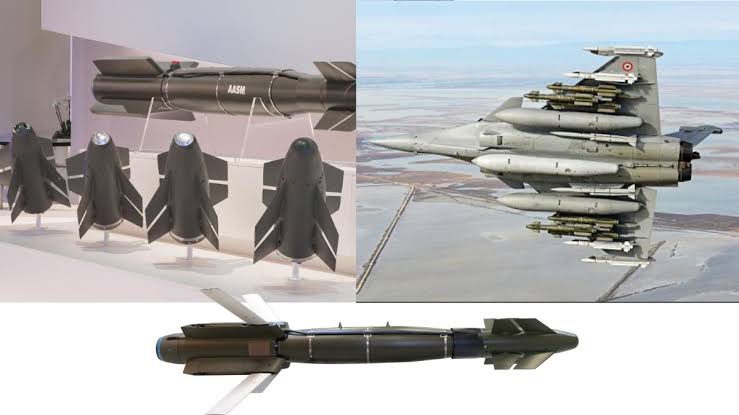
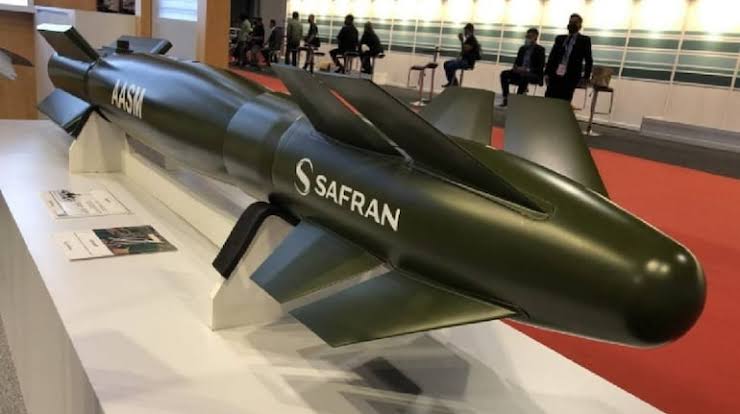
HAMMER stands for Highly Agile Modular Munition Extended Range. Officially known as AASM (Armement Air-Sol Modulaire), it is a French-designed precision-guided air-to-ground weapon system developed to bridge the gap between traditional gravity bombs and long-range cruise missiles.
Though often described as a missile, HAMMER is fundamentally a modular guidance kit attached to a conventional bomb. It transforms standard unguided bombs into precision-guided, stand-off strike weapons capable of high accuracy in complex operational environments.
The system comprises two primary components. The first is a nose-mounted guidance module. Depending on mission requirements, it can integrate inertial navigation systems (INS) and GPS for all-weather strikes, infrared imaging for fixed targets, or laser guidance for moving targets.
The second component is a tail-mounted range extension kit equipped with a solid-fuel rocket booster and manoeuvrable winglets. Once released, the booster enhances the stand-off range, while the winglets enable off-axis targeting and sharp manoeuvres, reducing aircraft exposure to hostile air defence systems.
Operational Role in Modern Warfare
HAMMER kits are compatible with bombs weighing 125 kg, 250 kg, 500 kg and 1,000 kg, including the widely used Mark 80 series. This scalability enables engagement of diverse targets — from lightly fortified structures to hardened bunkers.
The Indian Air Force has previously deployed HAMMER precision-guided weapons during calibrated cross-border operations, demonstrating their flexibility and stand-off capability. By pairing HAMMER with long-range cruise missiles such as SCALP, India showcased a layered strike doctrine combining deep-penetration capability with tactical precision.
Defence policy updates and official releases regarding such strategic procurements are regularly published by the Press Information Bureau at https://pib.gov.in.
Strategic Significance for India
The BEL–Safran partnership is more than a manufacturing agreement; it represents technology transfer, lifecycle support capability and domestic value addition in a critical segment of modern air warfare.
With increasing emphasis on reducing import dependence in defence equipment, the joint venture could strengthen India’s long-term capability in precision strike systems. It is also expected to generate high-technology employment and enhance indigenous expertise in advanced guidance technologies.
As geopolitical tensions evolve and air warfare becomes increasingly technology-driven, precision-guided modular systems like HAMMER are central to maintaining deterrence while ensuring controlled escalation. The new joint venture marks another milestone in India’s journey toward strategic autonomy in defence manufacturing.