
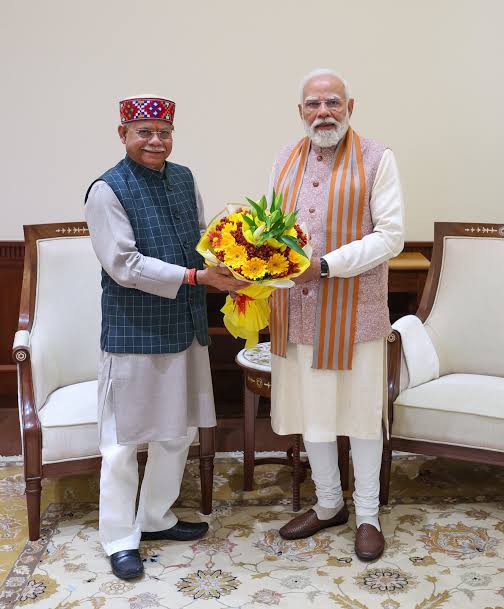
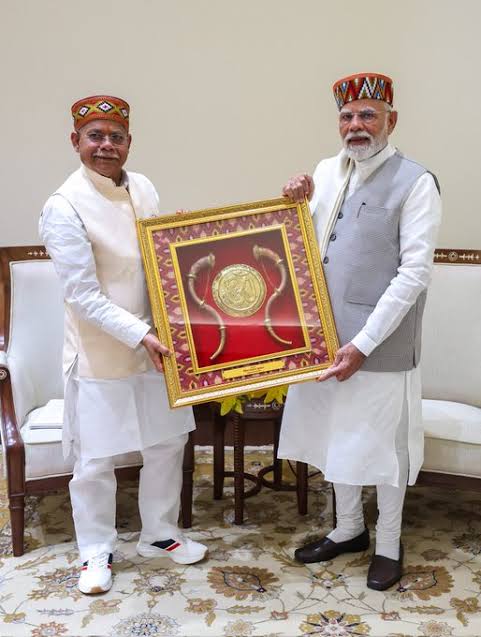

The meeting was acknowledged by the official PMO India handle on social media platform X. The post stated that the Governor of Himachal Pradesh had met Prime Minister Narendra Modi, lending formal confirmation to the interaction.
Official communication from the PMO typically accompanies such high-level meetings, ensuring transparency and public awareness regarding constitutional engagements involving state governors and the Prime Minister.
Role of a State Governor
The Governor plays a crucial role in India’s constitutional system, acting as the President’s representative in a state. Governors are responsible for ensuring that state governance functions in accordance with the Constitution and established democratic norms.
Meetings between governors and the Prime Minister often provide an opportunity to discuss broad constitutional matters, administrative experiences, and issues of public importance within the state. These interactions are an essential part of Centre-state relations.
About Himachal Pradesh Governance
Himachal Pradesh, a hill state in northern India, has unique administrative and developmental challenges due to its geography and climatic conditions. Governance in such regions often requires close coordination between state authorities and the Union government.
Although no specific agenda was made public, discussions during such meetings may typically include general observations on governance, welfare initiatives, and the overall constitutional functioning of the state.
Governor Shiv Pratap Shukla
Shri Shiv Pratap Shukla has been serving as the Governor of Himachal Pradesh, bringing with him extensive experience in public life. As Governor, he performs ceremonial duties while also playing a key constitutional role during critical political and administrative situations.
His meeting with the Prime Minister aligns with the established convention of governors keeping the Union leadership informed about broad developments and perspectives from their respective states.
Centre-State Constitutional Dialogue
India’s federal structure is built on cooperation and dialogue between the Centre and the states. Interactions between the Prime Minister and state governors contribute to maintaining this balance, especially in times that require constitutional clarity and administrative coordination.
Such engagements also reinforce the non-political, constitutional position of governors, who act as vital links between the Union government and state administrations.
Public and Political Significance
While brief in nature, meetings like these often attract public and political attention due to the constitutional offices involved. They serve as reminders of the structured mechanisms through which India’s diverse states remain connected to the central leadership.
The meeting comes at a time when cooperative federalism continues to be emphasised as a cornerstone of governance, particularly in addressing regional development and administrative coordination.
Continuity of Constitutional Practices
The meeting between Governor Shiv Pratap Shukla and Prime Minister Narendra Modi reflects the continuity of constitutional practices that underpin India’s democracy. Such interactions, though often held away from public view, play an important role in sustaining institutional dialogue.
As India’s governance framework evolves, regular communication between constitutional authorities at the state and national levels remains essential for effective administration and democratic stability.