
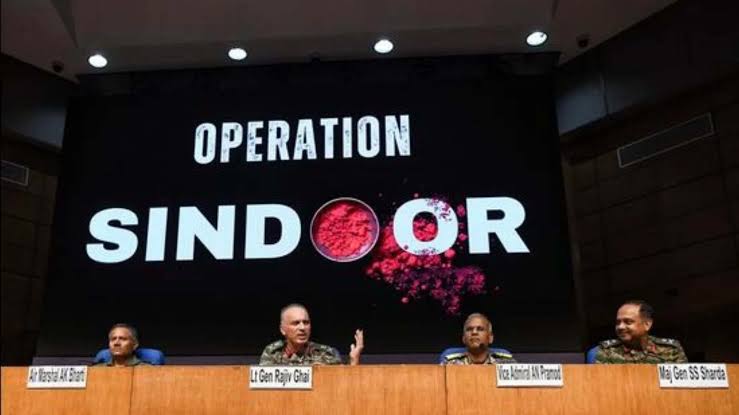
In a significant development that has brought a moment of calm to a region long plagued by tension, top military officials from India and Pakistan are set to speak today to discuss the details of the ceasefire that was agreed upon over the weekend. The ceasefire, brokered by the United States, has held firm overnight following four intense days marked by aerial incursions and heavy shelling from both sides.

President Donald Trump had announced the ceasefire, emphasizing that it was time to put an end to the escalating aggression that was threatening countless lives and could have led to large-scale destruction. Since then, both nations have halted active hostilities but remain on high alert, each warning the other of consequences in case of any violations.
India, showing cautious optimism, has reopened 32 civilian airports that were previously closed due to safety concerns. This move indicates a tentative return to normalcy while acknowledging the fragile peace. The flare-up in hostilities is a continuation of the decades-long conflict between the two nuclear-armed neighbors, who have already fought two wars over Kashmir, a region they both claim but administer separately.
The immediate trigger for this recent conflict was a horrific militant attack in Indian-administered Kashmir’s Pahalgam valley on April 22, which claimed the lives of 26 people. In response, India carried out targeted strikes on May 7, hitting multiple locations in Pakistan and Pakistan-administered Kashmir. These included militant training facilities, which Indian officials say killed over 100 militants, including those linked to previous high-profile attacks.
What followed was a rapid and dangerous escalation. Both countries traded accusations of cross-border shelling and claimed to have downed each other’s drones and aircraft. India said it struck 11 Pakistani air force bases, while Pakistan countered with claims of targeting 26 Indian military installations. Pakistan also claimed that its drones flew close to Delhi, though India has not publicly commented on this specific claim.
Despite these serious allegations and counter-allegations, both nations are now observing the ceasefire and engaging in dialogue. While Pakistan denied capturing any Indian pilot during the conflict, India has maintained that all its personnel are accounted for and safe.
The recent turn of events has once again highlighted the precarious nature of peace in the region. The pain of the Pahalgam attack still lingers, and many on both sides of the border are mourning the lives lost and living in fear of what might come next. Yet, today’s scheduled talks offer a glimmer of hope. Amid sorrow and suffering, the dialogue is a welcome step, a small but meaningful move toward restoring calm and avoiding further devastation.
In times like these, the human cost of conflict cannot be overlooked. Every missile fired and every airstrike launched affects countless lives—soldiers, civilians, children. As leaders and diplomats work behind the scenes, many pray this ceasefire will not just hold, but eventually lead to a more lasting peace in a region that has endured far too much turmoil.