
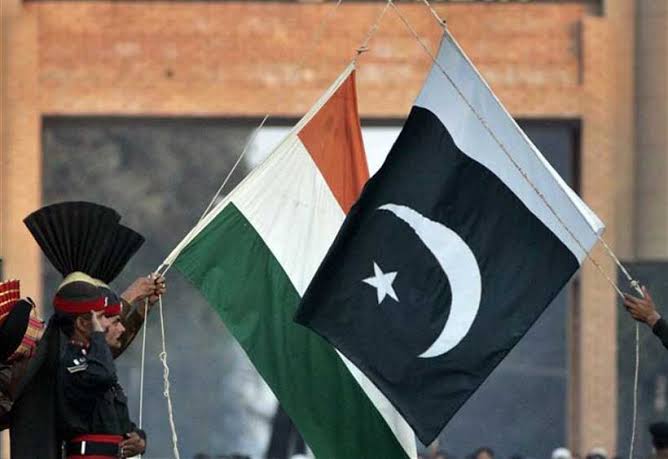
In a significant sign of de-escalation after days of heightened tension, India and Pakistan are set to hold Director General of Military Operations (DGMO)-level talks today, aiming to uphold the fragile ceasefire agreement reached on May 10. The move follows intense cross-border hostilities that rattled border regions and left civilians caught in the crossfire. After nights marked by drone strikes, missile attacks, and aerial combat—particularly on May 7, 8, and 9—Monday brought the first peaceful night across Jammu & Kashmir and areas along the International Border.

The Indian Armed Forces on Sunday provided clarity through a joint press conference on Operation Sindoor, announcing the elimination of over 100 terrorists and the targeting of nine terror hubs in Pakistan. Some of those neutralized were reportedly involved in major attacks such as the IC 814 hijacking and the Pulwama blasts. This operation came in response to a series of provocations, including the devastating terror attack in Pahalgam earlier this month.
Despite an initial agreement to cease hostilities, there were violations just hours later, prompting renewed diplomatic efforts. Lieutenant General Rajiv Ghai of the Indian Army confirmed that his communication with Pakistan’s DGMO had resulted in a temporary halt to cross-border firing and airspace violations. The two sides are expected to resume their dialogue today to work out modalities for maintaining peace along the border.
The cost of this conflict has not been without heartbreak. The death of BSF constable Deepak Chingakham from Manipur in a shelling incident at R.S. Pura brought an outpouring of grief. Both the BJP and Congress in Manipur extended condolences, describing Chingakham as a symbol of courage and a proud son of the soil. His sacrifice, they said, would be remembered with deep respect and gratitude.
As the country reels from the emotional and physical toll of recent events, voices of caution and compassion have emerged. Former Army Chief General Manoj Naravane urged restraint, reminding the public that war is not a spectacle. “War is not a Bollywood movie,” he said, highlighting the enduring trauma faced by civilians and soldiers alike, including children forced into bunkers and families mourning their dead.
Civil aviation, which took a major hit with 32 airports closed across northern and western India, is now gearing up for a phased reopening. Flight operations are expected to resume soon, though authorities have warned of possible delays due to heightened security checks. Delhi airport, a major hub, reported smooth operations as of Monday morning.
Meanwhile, ISRO Chairman Dr. V. Narayanan assured the public that the nation’s security is being monitored round-the-clock with the help of 10 strategic satellites. Speaking from Imphal, he noted India’s growing space capabilities and reaffirmed ISRO’s commitment to national safety.
In the diplomatic sphere, Foreign Secretary Vikram Misri faced unwarranted online trolling for his role in facilitating the ceasefire. However, a wave of support from veteran diplomats and political leaders affirmed his integrity and the importance of diplomacy in navigating turbulent times.
As the dust settles, and talks between the two nations resume, there is a collective yearning across both sides of the border—for peace, stability, and the quiet dignity of everyday life. The hope remains that today’s conversations will lay the groundwork not just for a temporary truce, but for a more enduring understanding between two nations whose people have endured far too much.