
How Emergency Gave BJP a Political Weapon

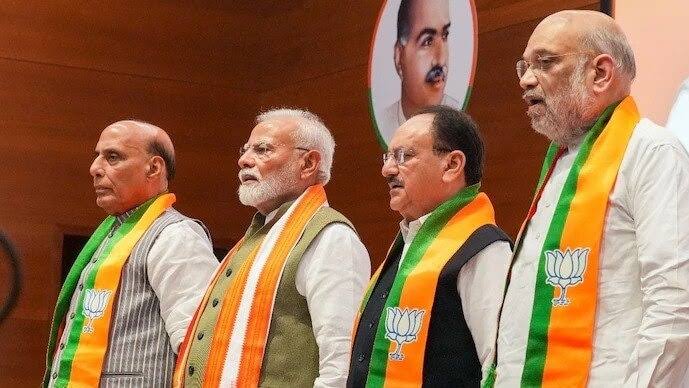
Though BJP officially came into existence in 1980, its ideological roots lie in the Jana Sangh, many of whose leaders were imprisoned during the Emergency. Prime Minister Narendra Modi and Home Minister Amit Shah regularly invoke this phase to highlight their Party’s resistance legacy.
“The Emergency was the darkest chapter in India’s democracy,” PM Modi recently said. “Those who stood against it are the true torchbearers of freedom.”
Why the Emergency Still Resonates
With over 80% of India’s population born after 1975, one might wonder why this past event holds such weight. The answer lies in its symbolic power. It allows the BJP to cast itself as a long-standing protector of democracy, even while it faces criticism for centralization of power in the present.
Indira Gandhi’s Emergency offers a convenient benchmark. It helps the BJP shift public discourse from current controversies to historical trauma. The Emergency becomes both shield and sword — a reminder of what “could happen again” under the Congress.
Congress’s Lingering Burden
Despite multiple Congress leaders apologizing for the Emergency, the BJP has ensured that this chapter never fades from public memory. BJP spokespersons, campaign speeches, and even NCERT textbook revisions regularly revisit the Emergency to remind voters of the Congress’s “authoritarian DNA.”
The Congress, meanwhile, struggles to build a compelling counter-narrative. Leaders like Rahul Gandhi speak of freedom and institutional integrity, but often find themselves cornered by history.
Legacy Politics in the Age of Memory Wars
As political narratives become more emotion-driven, history has become a battleground. BJP uses the Emergency not just to attack the Congress but to shape its own legacy. It’s not just about the past — it’s about owning the story of Indian democracy.
In a digital-first world, even events from 50 years ago can trend on social media. Campaign hashtags, YouTube documentaries, and speeches remind younger voters of the past, influencing how they see the present.


The Road Ahead: Memory as Political Capital
In India’s competitive political landscape, control over memory is as important as control over messaging. As BJP continues to use the Emergency as a cautionary tale, it not only targets Congress but also positions itself as the ultimate guardian of democracy.
Whether this strategy will hold in the face of rising unemployment, inflation, and governance issues is uncertain. But one thing is clear — for the BJP, Indira Gandhi’s Emergency remains the gift that keeps on giving.