
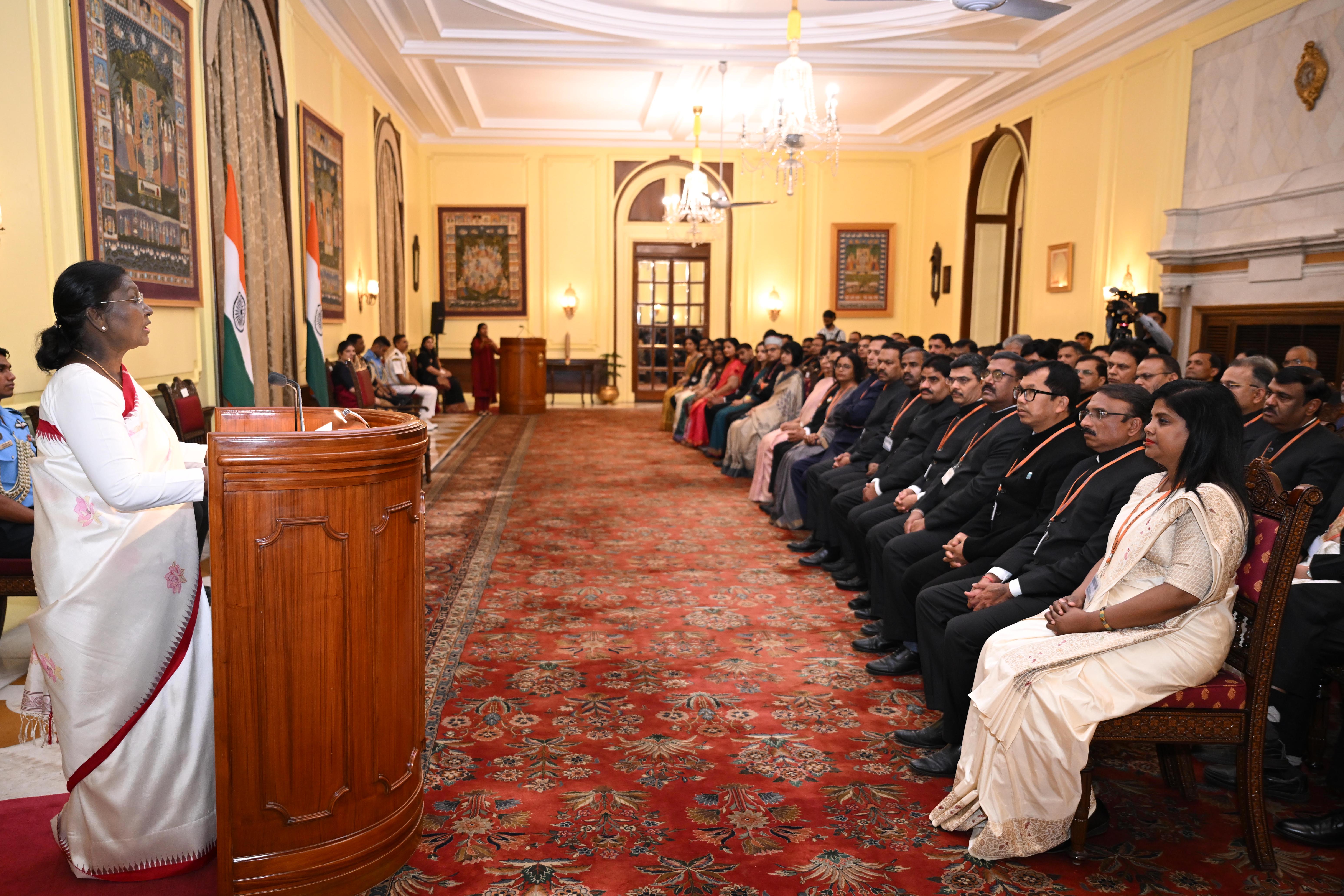
New Delhi, March 2, 2026: Officers of the Indian Administrative Service (IAS), recently inducted from State Civil Services and attending the 128th Induction Training Programme at Lal Bahadur Shastri National Academy of Administration (LBSNAA), called on President Droupadi Murmu at Rashtrapati Bhavan on Monday.
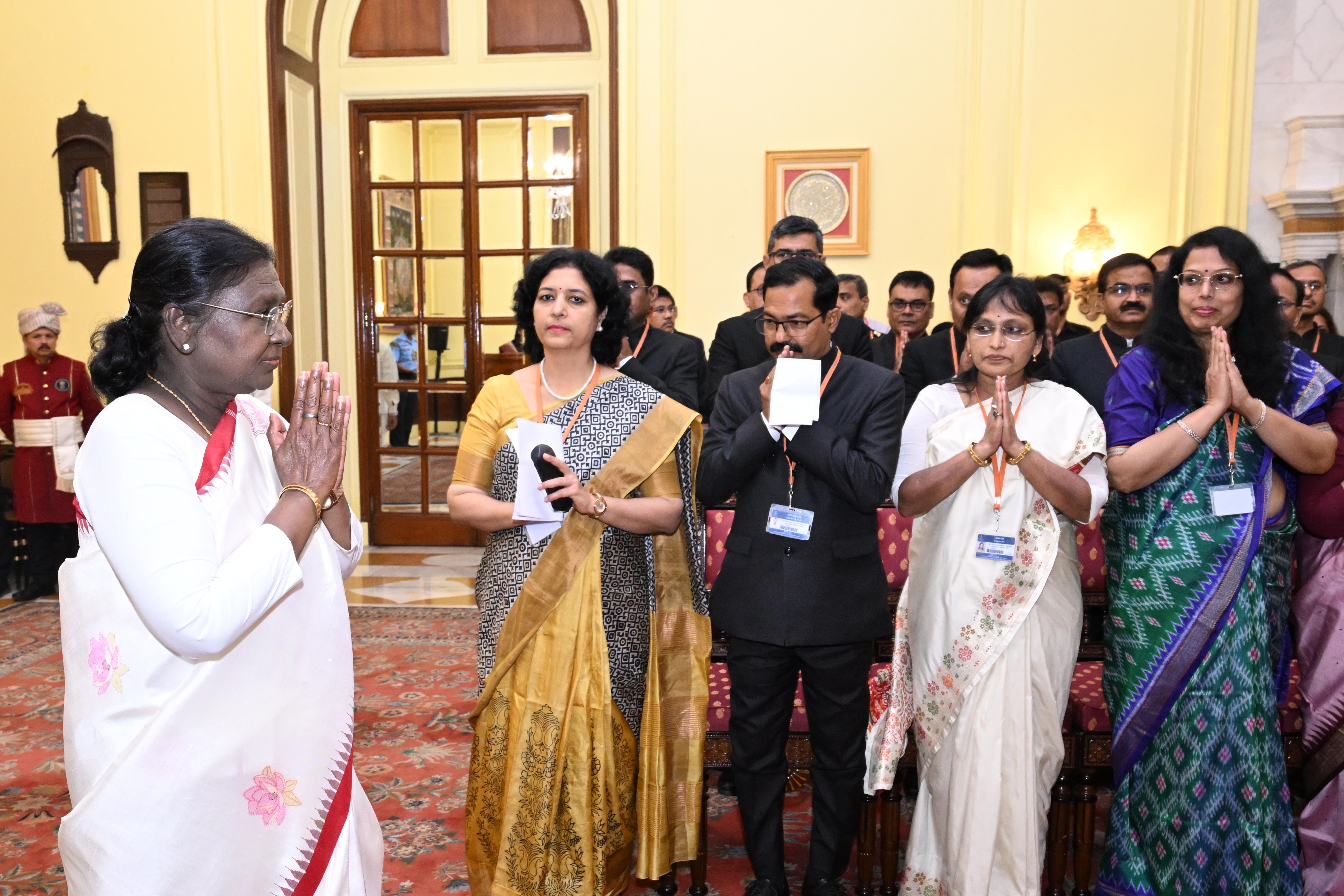

Addressing the officers, President Murmu underscored the importance of their role in India’s nation-building journey. She reminded them that their responsibilities now extend beyond district and state priorities, demanding a broader national outlook.
The President emphasised the need to rise above departmental silos and work collaboratively to enhance governance outcomes. She noted that effective coordination and institutional coherence are essential to strengthening the administrative machinery.
“You are no longer administrators of a particular region. You are custodians of governance standards across the nation,” she said, urging the officers to align their decisions with the larger vision of building a developed India by 2047.
Implementing Policy with ‘Nation First’ Spirit
The President highlighted that IAS officers are expected to ensure effective implementation of policies to meet the aspirations of citizens. She called upon them to use their valuable administrative experience while embracing the guiding principle of ‘Nation First’.
As senior civil servants, they will encounter complex governance challenges that require integrity, innovation, and people-centric approaches. President Murmu expressed confidence that their commitment and professionalism would help deliver meaningful development outcomes.
The 128th Induction Training Programme at LBSNAA equips officers with updated knowledge in public administration, governance reforms, and leadership skills necessary for national-level responsibilities. Details of the engagement were shared by the Press Information Bureau (PIB) on its official portal.
Focus on Inclusive Development
President Murmu stressed that India’s transformation into a developed nation must be inclusive. She said progress would be meaningful only if its benefits reach the most vulnerable and deprived sections of society.
She urged the officers to ensure that no community is left behind due to geographical, social, or economic barriers. Inclusive governance, she observed, must remain at the core of policy implementation.
In her remarks, the President reiterated that equitable development and social justice are pillars of India’s democratic framework. Civil servants play a central role in translating these ideals into tangible change on the ground.
Sustainability and Climate Responsibility
Another key theme of the President’s address was sustainability and climate resilience. She called upon the officers to champion green practices and promote climate-adaptive governance models.
As administrators, they must integrate sustainable development principles into planning and execution. “Our collective actions today will determine the quality of life of future generations,” she remarked.
The emphasis on climate responsibility aligns with India’s broader commitments to sustainable growth and environmental stewardship. Officers were encouraged to incorporate innovative solutions that balance development with ecological preservation.
LBSNAA’s Role in Capacity Building
The Lal Bahadur Shastri National Academy of Administration, located in Mussoorie, serves as the apex training institution for India’s civil servants. The induction programme for State Civil Services officers facilitates their smooth integration into the IAS framework.
The curriculum blends field experience with advanced administrative training, focusing on policy formulation, leadership, ethics, and governance reforms. Such interactions with constitutional authorities offer officers valuable insights into national priorities.
The meeting concluded with a reaffirmation of the civil services’ pivotal role in shaping India’s administrative future. As the nation advances towards its 2047 goals, the responsibility on its senior bureaucrats remains both significant and transformative.