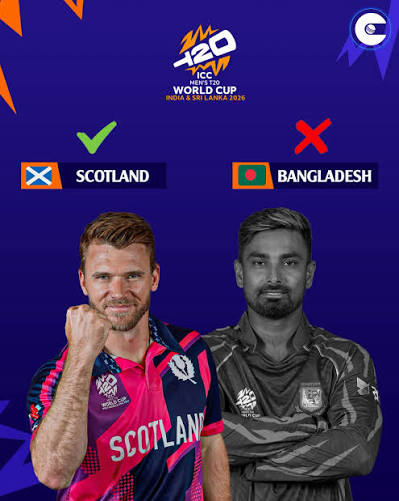
 Why Bangladesh Was Dropped
The BCB had maintained that the Bangladesh government had not granted clearance for the team to travel to India for the T20 World Cup due to security concerns. Despite repeated discussions with the ICC, the board stood firm on its position and declined to participate under the existing tournament schedule.
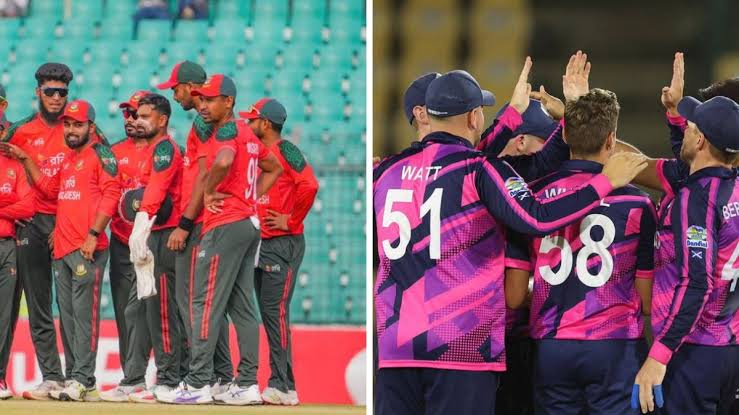
Bangladesh was placed in Group C and was scheduled to play its first three matches in Kolkata and its fourth in Mumbai. These fixtures will now be played by Scotland, which steps in as the replacement team.
ICC Board’s Emergency Meeting
The final decision followed an emergency ICC Board meeting held via video conference earlier this week. During the meeting, a clear majority of directors voted in favour of replacing Bangladesh if it did not agree to travel to India.
In a statement issued after the meeting, the ICC said changing the tournament schedule so close to the start date was not feasible. The board also noted that altering venues in the absence of any credible security threat could set a dangerous precedent for future ICC events.
Dispute Resolution Committee Option
The BCB had earlier indicated that it wanted to approach the ICC’s Dispute Resolution Committee (DRC) to challenge the decision. However, it remains unclear on what grounds the board would do so.
Under the ICC’s rules, the DRC does not function as an appellate body against ICC Board decisions but only examines the lawfulness of such decisions. Given the clear board vote, it is uncertain whether the BCB’s appeal would be admissible.
Security Concerns and Mustafizur Issue
The security debate intensified earlier this month after the Board of Control for Cricket in India (BCCI) instructed Kolkata Knight Riders to release Bangladesh fast bowler Mustafizur Rahman from their IPL 2026 squad.
Although no official reason was cited, the move came amid deteriorating diplomatic relations between India and Bangladesh. The BCB subsequently informed the ICC that it would not send its team to India, linking its decision to broader security apprehensions.
The ICC, however, rejected this argument, stating that linking tournament participation to a single domestic league-related issue had no bearing on the World Cup’s security framework.
Accusations of Double Standards
BCB president Aminul Islam accused the ICC of applying double standards, pointing to the BCCI’s earlier refusal to travel to Pakistan for the 2025 Champions Trophy.
The ICC has not publicly responded to this comparison but reiterated that its decision was guided by operational feasibility, tournament integrity, and the absence of any credible security threat in India.
Scotland Gets Historic Opportunity
Scotland’s inclusion marks a significant moment for the associate nation, offering it a rare chance to compete on cricket’s biggest T20 stage. The team will now take Bangladesh’s place in Group C and follow the same match schedule.
With the tournament fast approaching, the ICC is expected to coordinate closely with Cricket Scotland to ensure logistical and operational readiness.
The episode underscores the ICC’s firm stance on maintaining schedule integrity and reinforces its authority as the global governing body of the sport.