
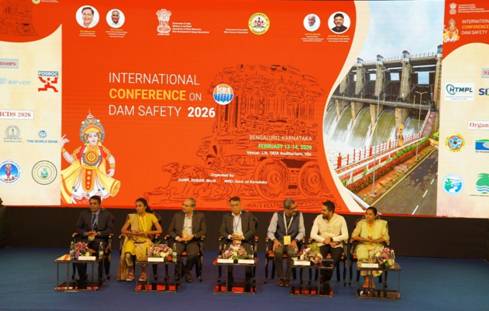
Participants emphasized that dam safety today goes far beyond structural inspections and must integrate climate resilience, technological innovation, accountability and risk-informed decision-making.
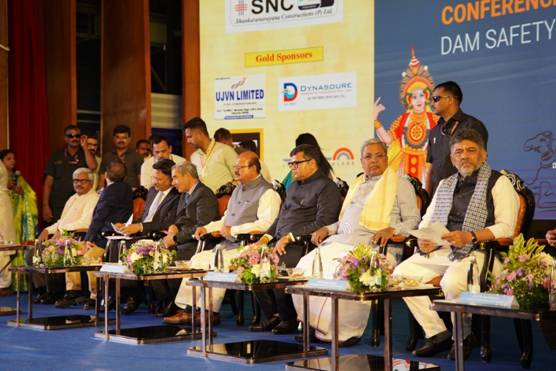

One of the key technical sessions addressed the growing challenge of ageing dams, many of which are approaching or have exceeded their original design life. Experts underlined the need for scientific rehabilitation supported by strict quality assurance and transparent governance mechanisms.
Speakers stressed that risk-based prioritisation is critical for managing large dam portfolios. Evidence-based assessment tools and structured maintenance planning were highlighted as essential to prevent distress and catastrophic failures.
Sediment Management as a Strategic Priority
Reservoir sedimentation emerged as a long-term threat to both dam safety and water security. Delegates called for a shift from reactive desilting measures to integrated and preventive sediment management practices.
Catchment area treatment, remote sensing technologies and policy-backed interventions were identified as effective strategies. Experts also discussed revenue-neutral models and commercial utilisation of dredged material to ensure sustainable sediment removal.
Risk-Informed Decision Making and Hydrological Safety
Sessions on risk-informed regulation focused on strengthening emergency preparedness and structured risk frameworks. Simplified risk screening tools, dam-break analysis methods and climate-aware assessment models were recommended for improved prioritisation.
Another major theme was hydrological safety and coordinated reservoir operations. Experts advocated forecast-informed reservoir management, dynamic rule curves and basin-level coordination to better manage floods and droughts under changing climate conditions.
Technology Transforming Monitoring Systems
An industrial session highlighted advances in real-time monitoring systems, digital dashboards and advanced sensing technologies. Delegates agreed that validated real-time data enables faster and more reliable operational decisions.
The conference also examined lessons from dam distress and failure events. Speakers reiterated that engineering diligence, strict compliance with design standards, effective Emergency Action Plans (EAPs) and institutional accountability are indispensable.
Valedictory Address Highlights Governance Reforms
The valedictory session was attended by Shri V. Somanna, Minister of State for the Ministry of Jal Shakti, along with senior officials from the Central Water Commission, World Bank, and the Government of Karnataka.
In his address, the Minister noted that the Dam Safety Act represents a landmark reform in ensuring accountability and strengthening regulatory oversight. He credited the Dam Rehabilitation and Improvement Project for modernising hundreds of dams through real-time monitoring and transparent reporting.
He observed that dam safety is fundamentally about public trust and reiterated the importance of climate resilience, sediment management and operational excellence.
Conference Recommendations
Presenting the conference recommendations, senior officials highlighted that over 85 percent of India’s dams are earthen structures, requiring cost-effective armouring solutions to prevent overtopping failures.
Delegates stressed the importance of enforceable Emergency Action Plans, public awareness campaigns, floodplain zoning and integration with disaster management authorities.
The need for phased, data-driven rehabilitation programmes and stronger collaboration between government, academia and industry was also underscored.
A Shared Commitment to Safer Dams
ICDS 2026 concluded with a reaffirmed commitment to building a resilient dam safety ecosystem in India. Participants agreed that dam safety must combine engineering excellence with governance reforms, community preparedness and climate adaptation.
The knowledge exchange and partnerships forged during the conference are expected to guide future policy and operational reforms.