
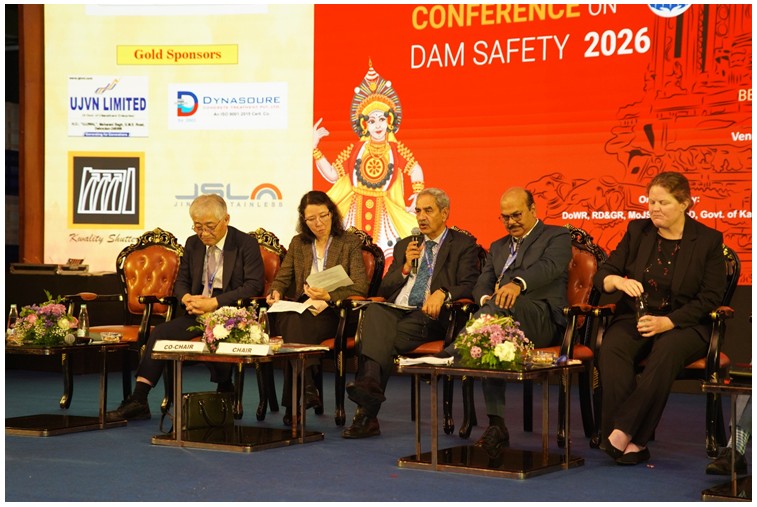

One of the key highlights was the launch of DAMCHAT, an AI-powered knowledge platform developed by the International Centre of Excellence for Dams (ICED), IIT Roorkee. The platform was launched by D. K. Shivakumar, Deputy Chief Minister of Karnataka.
India’s dam safety architecture has been strengthened in recent years with the enactment of the Dam Safety Act and detailed technical regulations. However, practical implementation requires quick access to regulatory documents and technical standards.
DAMCHAT addresses this need by enabling engineers, dam operators and field officials to query regulatory frameworks in real time and receive source-cited responses. The platform aims to bridge the gap between policy and field execution, enhancing compliance and informed decision-making across dam-owning agencies.
Jal Shakti Data Management Platform
The conference also witnessed the launch of the ‘Jal Shakti’ Data Management and Decision Support Platform by Raj Bhushan Choudhary, Union Minister of State for the Ministry of Jal Shakti.
Developed by the National Water Informatics Centre (NWIC) with technical support from BISAG-N, the platform integrates and visualises water-related data from multiple national and state agencies.
Currently, 59 use cases have been hosted across domains including water quantity, water quality, infrastructure, climate, ecosystem and planning. The platform offers user-friendly analytical tools for policymakers, administrators, researchers and the public, strengthening data-driven water governance.
New Guidelines on Design Flood Estimation
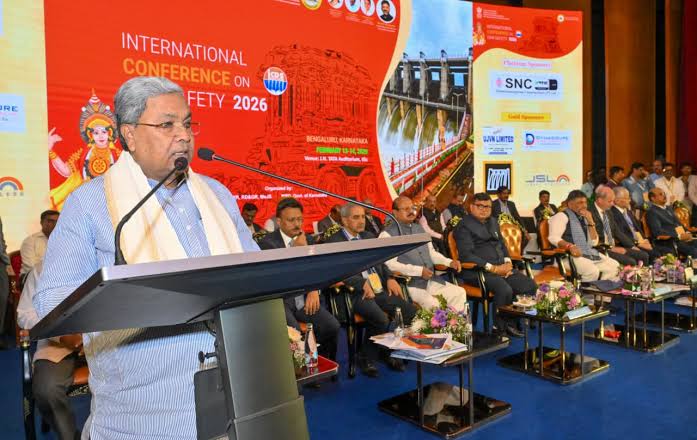
Another major development was the release of guidelines for Design Flood Estimation for dams with mini and micro catchment areas. The publication was formally released by Siddaramaiah, Chief Minister of Karnataka.
The guidelines have been developed by the Central Water Commission under the Department of Water Resources, Ministry of Jal Shakti, in line with the provisions of the Dam Safety Act, 2021.
The Act mandates periodic review of design floods, dam break analysis and flood inundation mapping. However, earlier practices in smaller catchments primarily focused on estimating peak flood values, often lacking a structured approach to generating complete flood hydrographs required for downstream risk assessment.
The newly released framework introduces a uniform, transparent and technically robust methodology for estimating design flood hydrographs. This is expected to improve consistency in flood studies conducted by states, consultants and appraisal agencies.
Strengthening Governance Through Technology
The combined launch of DAMCHAT, the Jal Shakti data platform and the new flood estimation guidelines signals a coordinated push to modernise dam safety governance in India. These initiatives emphasise digital monitoring, technical uniformity and risk-informed planning.
Officials noted that improved data access, standardised methodologies and AI-enabled knowledge tools will contribute to safer dam operations, better disaster preparedness and enhanced climate resilience.
Through its plenary discussions and technical sessions, ICDS 2026 is expected to facilitate capacity building and collaboration among stakeholders, reinforcing India’s commitment to safe, sustainable and resilient water infrastructure systems.