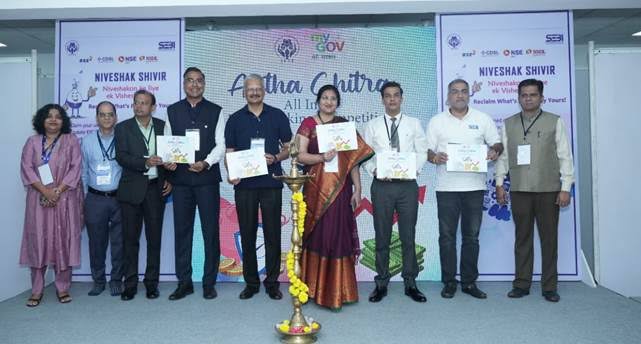
 Community-led CFLs expand reach
The Reserve Bank of India’s Centre for Financial Literacy (CFL) project is central to this outreach strategy. To date, 2,421 CFLs have been established nationwide, with each CFL covering an average of three blocks. These centres adopt community-led, participatory approaches to make financial education locally relevant and accessible, prioritising underserved and rural populations.
Financial Literacy Centres and monthly camps
Banks’ Financial Literacy Centres run regular camps focused on practical topics such as “Going Digital” through UPI and *99# (USSD). Rural bank branches are mandated to hold at least one camp per month, delivering the messages outlined in the FAME booklet which includes guidance on basic banking, digital transactions and consumer protection.
FAME and RBI’s multimedia push
The Financial Awareness Messages (FAME) initiative and the RBI’s multimedia multilingual campaign “RBI Kehta Hai” work in tandem to reinforce safe banking behaviours. These campaigns use television, radio, print and digital media to reach diverse audiences and demystify digital payment tools, fraud prevention and complaint redressal mechanisms. For background on RBI’s outreach, see the Reserve Bank portal.
Niveshak Didi brings financial education home
IEPFA’s Niveshak Didi programme is geared specifically towards women and local community mobilisers. Niveshak Didis conduct camps at Anganwadis, Self-Help Groups (SHGs), panchayat halls and women-only gatherings, and even visit households where mobility or access is limited. The scheme blends door-to-door engagement with group sessions to drive practical awareness on responsible investing and fraud prevention.
IPPB partnership and Phase II expansion
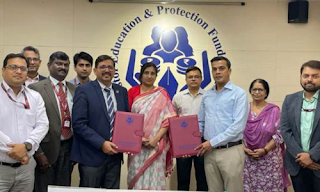
Under a strategic partnership with India Post Payments Bank (IPPB), IEPFA delivered 1,110 Niveshak Didi camps that reached over 68,738 beneficiaries across India. Building on that momentum, Niveshak Didi Phase II was launched on 7 April 2025, targeting 4,000 financial literacy camps at the PAN-India level. The Phase II rollout envisages training around 40,000 women postal workers as community financial educators, leveraging their deep rural presence to scale outreach.
Financial Literacy Week and targeted messaging
Financial Literacy Week (FLW), conducted annually since 2016, amplifies thematic messaging across institutions. During FLW and other campaigns, authorities focus on targeted audiences—students, women, senior citizens, farmers and small entrepreneurs—ensuring that sessions are tailored and action-oriented.
Impact on digital inclusion and investor protection
These layered interventions support Digital India objectives by expanding adoption of UPI and USSD, reducing dependency on cash, and equipping citizens to identify and report fraud. Concurrently, IEPFA’s Investor Awareness Programmes educate retail investors on safe investment choices and statutory protections, strengthening market confidence.
Collaboration and scalability
IEPFA’s model relies on partnerships—banks, postal networks, SHGs and local institutions—to amplify scale and credibility. Stakeholders say the approach balances central messaging with local ownership, increasing the likelihood of sustained behavioural change.
Looking ahead
With Niveshak Didi Phase II and an expanding CFL network, policymakers expect broader, more inclusive financial literacy outcomes. Continued monitoring, feedback loops from field workers and data-driven refinement of training material will be key to improving impact and reaching marginalised populations.