Policy Context and Urgency
Speakers linked the conclave’s priorities to existing national frameworks including the National Education Policy 2020 and the National Suicide Prevention Strategy 2021 and to UGC and Ministry of Education guidelines urging institutional counselling systems and accountability. Delegates also referenced recent analyses in the Economic Surveys (2023–24 and 2024–25) underscoring the economic imperative of a mentally healthy student population.
 Inaugural Session and Key Release
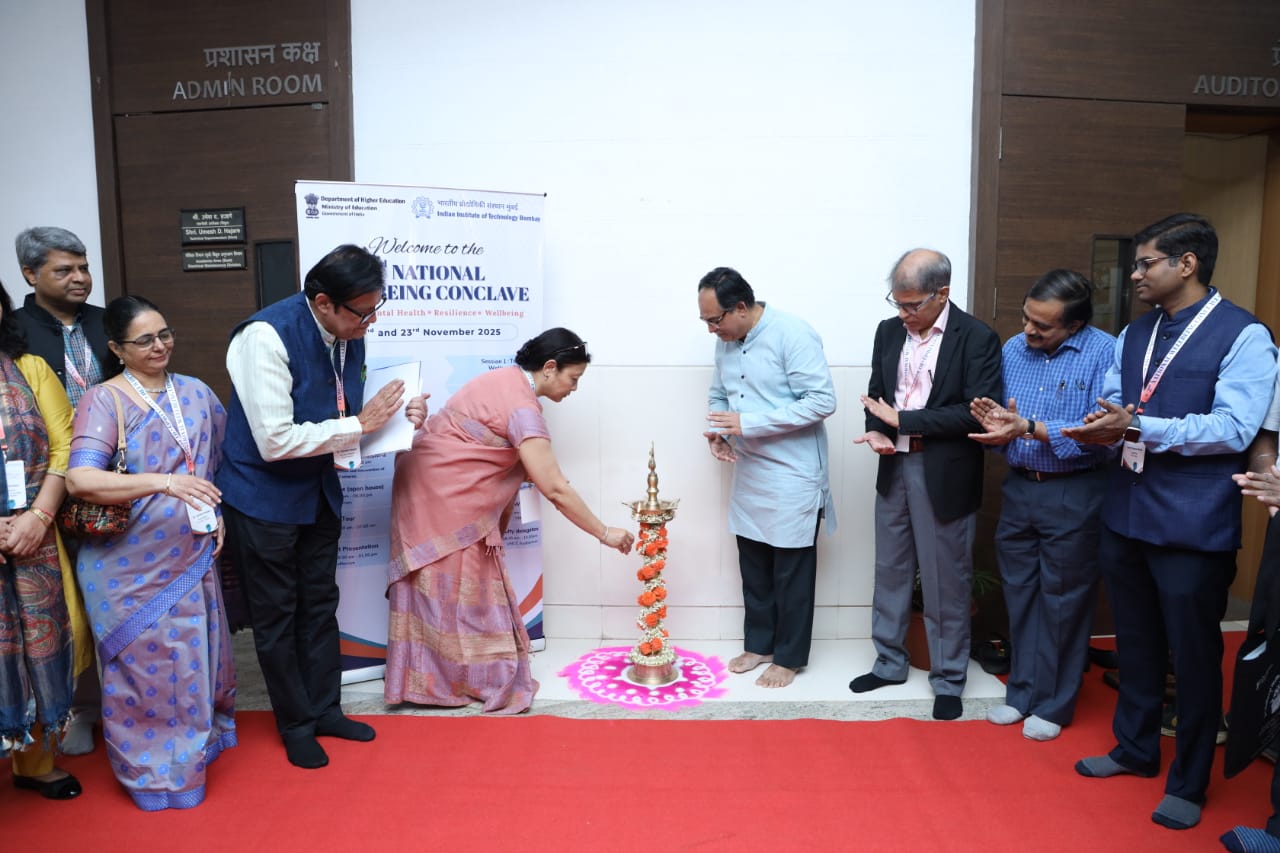
The two-day programme opened in the convocation hall with lamp-lighting and dignitary felicitations. Dr. Vineet Joshi, Secretary, Department of Higher Education, delivered keynote remarks. Prof. Shireesh Kedare, Director of IIT Bombay, delivered the opening address and Prof. Manoj Singh Gaur of IIT Jammu urged institutions to formalise well-being within governance structures.
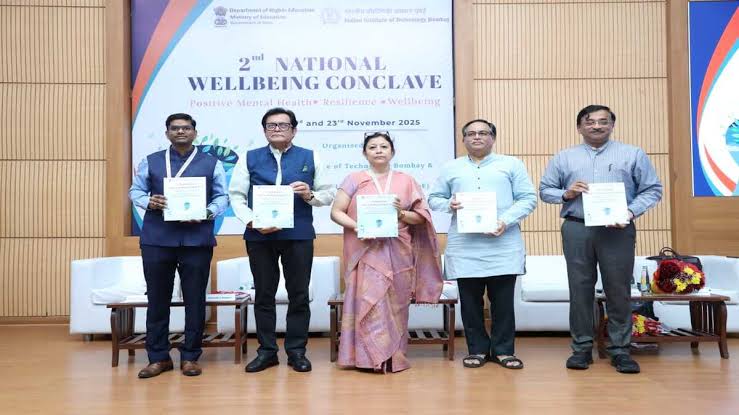
A major output was the launch of the Compendium of Emerging Best Practices of Well-Being Across the Country 2.0 a resource compiling replicable campus models for counselling, peer mentorship and digital well-being tools.
Conclave Themes: From Policy to Practice
Day-one symposiums and panels focused on practical systems: counselling frameworks, peer mentorship networks, digital well-being tools and early identification of psychosocial concerns. Sessions titled “Policy frameworks for well-being: From National guidelines to campus implementation” and “Thriving minds: From academic growth to lifelong well-being” delivered actionable guidance for administrators and faculty.
Experts highlighted three priorities: institutionalise professional counselling, develop peer support pipelines, and integrate digital screening and referral pathways. They emphasised measurable accountability tracking uptake of services, referral times, and student feedback to ensure continuous improvement.
Student-Centric Workshops and Walkathon
Day two began with a campus walkathon linking physical activity to mental resilience. Breakaway workshops trained students and faculty in life skills, counselling competencies and digital well-being. Student teams presented novel initiatives, from low-cost peer support apps to community-based wellbeing cells, many of which were shortlisted for cross-institution pilot funding.
Valedictory and the Inter-University Plan
The conclave concluded with a valedictory chaired by Ms. Rina Sonowal Kouli, Joint Secretary, Department of Higher Education. Final recommendations included a coordinated Inter-University action plan for 2025–26: institutional audits of counselling services, mandatory faculty training modules, student representation in wellbeing governance, and regional resource hubs for cross-institution referrals.
Organisers said the plan aims to convert policy intent into campus realities through shared toolkits, peer networks and monitoring dashboards for participating HEIs.
Building a Professional Well-Being Community
Delegates noted that the 2025 conclave builds on the foundation set by the inaugural gathering at IIT Hyderabad (9–10 Nov 2024), which mobilised 350 stakeholders from 100 institutions. The 2024 recommendations professional counselling systems, student representation and collaboration with external mental-health experts informed this year’s outcomes and align with the Supreme Court’s 15-point guidelines issued in July 2025.
Speakers argued that institutional change requires sustained funding, training pipelines for counsellors, and curricular integration of emotional resilience skills. Several HEIs committed to pilot inter-institution referral pathways and shared tele-counselling capacity in early 2026.
Looking Ahead
With the Inter-University action plan adopted, the conclave signals a coordinated national effort to place student wellbeing at the core of higher education reform. For institutions and policymakers seeking official guidance and updates, refer to the Press Information Bureau release and the Ministry of Education portal.