
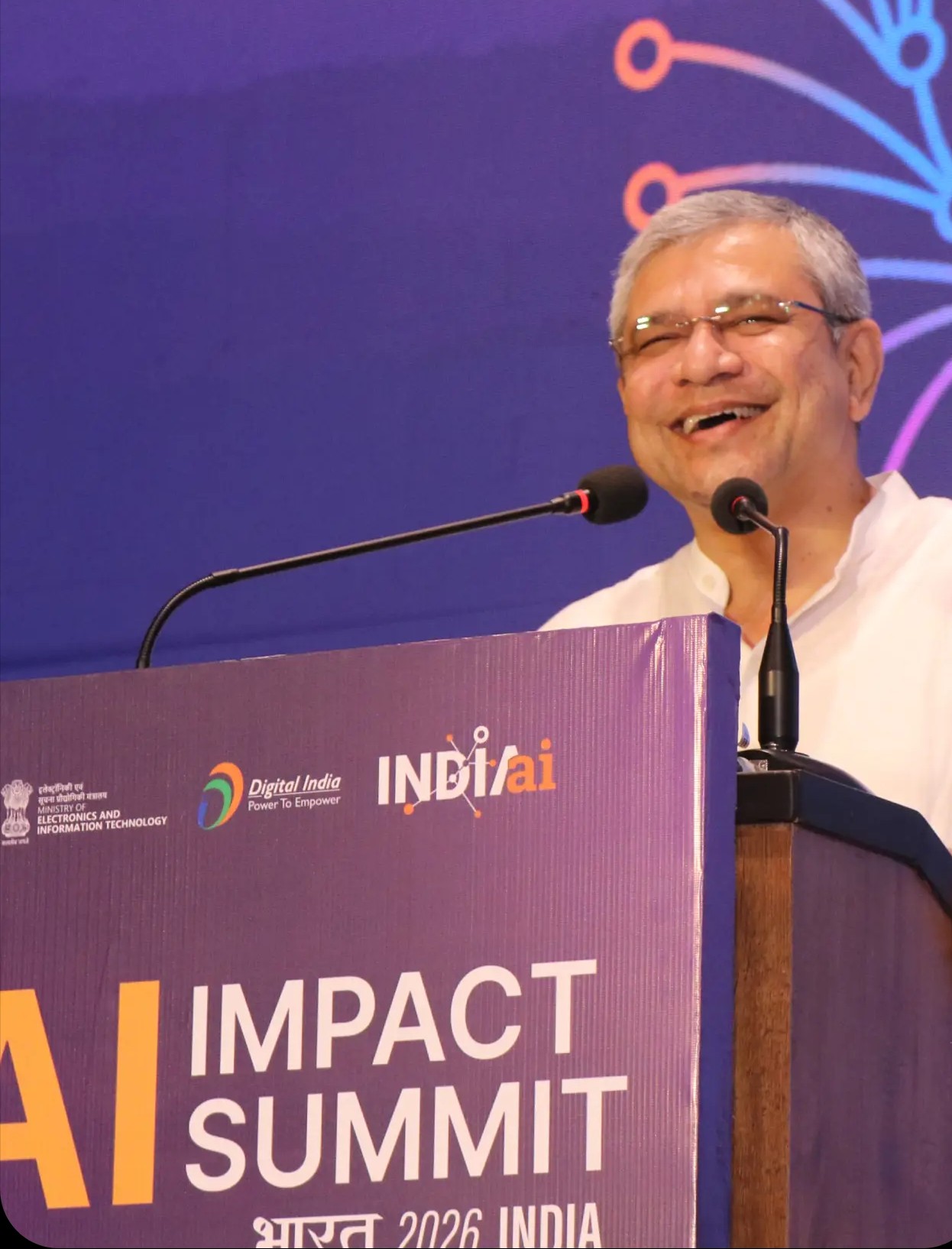

Officials participating in the episode included Shikha Dahiya, Joint Director (Emerging Technology), MeitY; Kartik Shobhan Suri, General Manager (Future Skills), IndiaAI; Swadeep Singh, General Manager (Data Science), IndiaAI; and Anshul Singhal, General Manager (Startups), IndiaAI. Together, they provided clarity on India’s evolving AI roadmap and addressed concerns raised by students, professionals, startups and citizens from across the country.
The experts explained that the India AI Impact Summit 2026 is built around three guiding pillars or ‘Sutras’ — People, Planet and Progress. These pillars aim to balance technological advancement with social responsibility, environmental sustainability and economic growth.
Working Groups to Shape Policy and Implementation
The Summit will feature focused working groups, referred to as ‘Chakras’, which will deliberate on critical aspects of artificial intelligence, including governance frameworks, skilling strategies, ethical deployment and sector-specific adoption. The outcomes of these discussions are expected to influence AI policies not only in India but across the Global South.
According to officials, the Chakras will play a crucial role in translating ideas into actionable strategies, ensuring that AI implementation aligns with national priorities and public interest.


India AI Impact Expo 2026: Technology with People at the Centre
A major highlight discussed during the episode was the India AI Impact Expo 2026, scheduled to be held at Bharat Mandapam, New Delhi, from February 16 to 20. The Expo will showcase real-world AI solutions across sectors such as education, healthcare, agriculture and governance, with a strong emphasis on practical impact and inclusivity.
The Expo aims to demonstrate how AI can address everyday challenges, improve service delivery and enhance citizen outcomes, moving beyond theoretical discussions to tangible benefits.
Opportunities for Youth, Startups and Tier-2 Cities
Experts highlighted multiple opportunities linked to the Summit, particularly for youth, women innovators, startups and learners from Tier-2 and Tier-3 cities. Initiatives such as AI and Data Labs, global challenges, pitch fests and the YUVAI Global Youth Challenge are designed to encourage grassroots innovation and participation.
Officials assured that IndiaAI is committed to creating open, secure and inclusive platforms that allow participation from individuals, small teams, startups and public sector organisations, even without advanced technical backgrounds.
Citizens’ Questions on Infrastructure and Inclusion
During the live session, citizens raised questions on AI infrastructure, access to open datasets, healthcare data availability, startup onboarding, governance frameworks and online participation. The experts responded by outlining ongoing efforts to expand AI infrastructure, enable secure data access and ensure that AI tools remain accessible to non-technical users.
They emphasised that inclusivity remains central to India’s AI strategy, ensuring that technological growth does not widen existing digital divides.
Call for Active Public Participation
The episode concluded with a call for citizens to actively engage with the India AI Impact Summit 2026 by registering and contributing through the official platform at impact.indiaai.gov.in. Officials encouraged viewers to become partners in India’s growing AI ecosystem rather than passive observers.
The full recording of Episode 38 is available on the Digital India YouTube channel, reinforcing the initiative’s goal of fostering informed and responsible use of digital technologies.