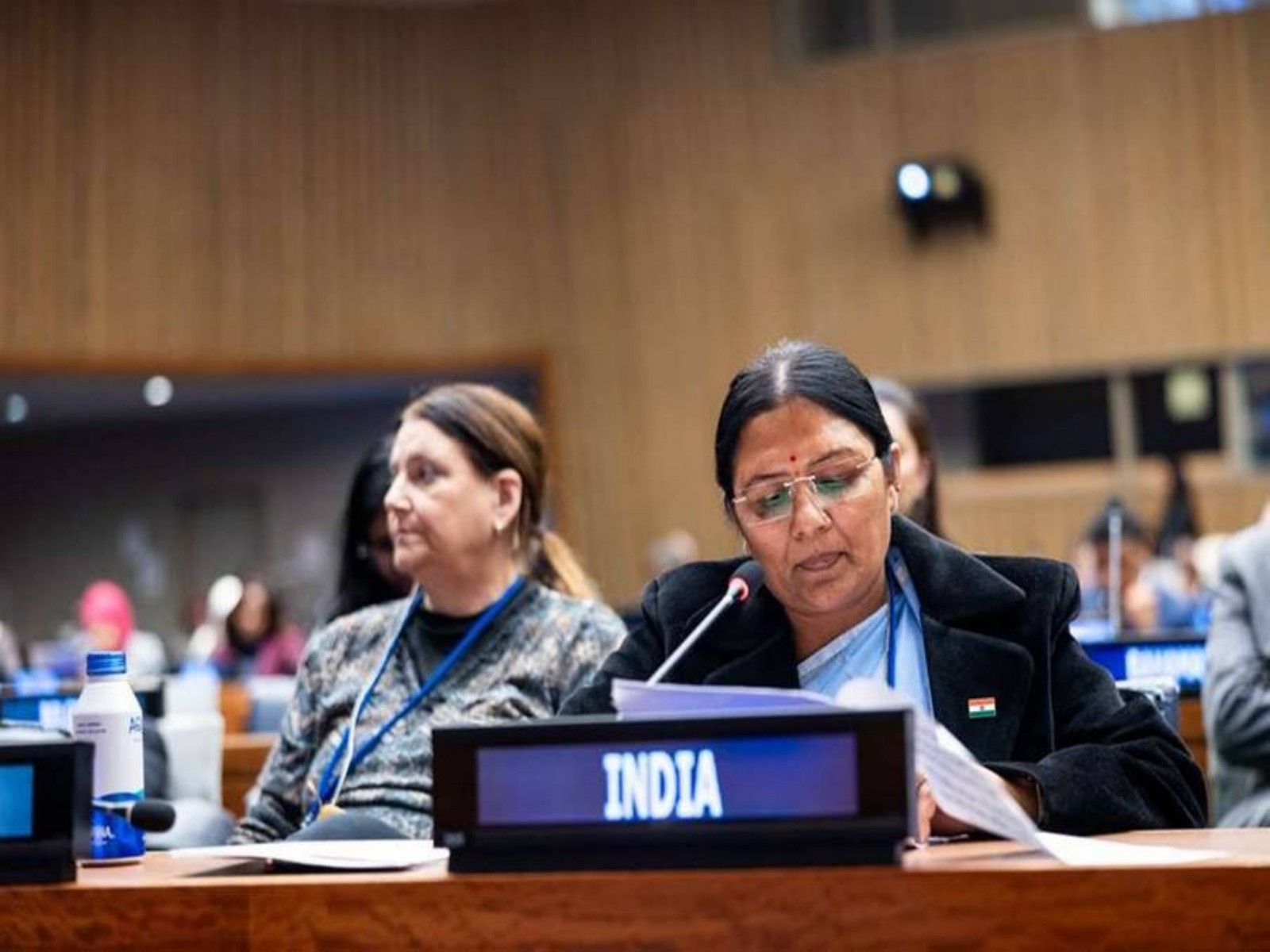
India has once again positioned itself as a global leader in equitable growth at the United Nations Headquarters in New York. During the 64th Session of the Commission for Social Development (CSocD), the Indian delegation reaffirmed its unwavering commitment to a rights-based approach to governance. The session focused on the theme of advancing social development and justice through coordinated and inclusive policies, a vision India has operationalized through its transformative national schemes.
Addressing a distinguished assembly, including Deputy Secretary-General Amina J. Mohammed and General Assembly President Annalena Baerbock, Smt. Thakur highlighted that social justice in India is not merely a policy goal but a constitutional guarantee. She noted that the nation’s development trajectory is built on ensuring dignity and equity for every citizen, regardless of their socio-economic background.
 Pillars of India’s Transformative Progress
The Minister outlined several key pillars that have defined India’s social revolution over the past decade. A primary focus has been the achievement of parity in education. Through enhanced school infrastructure and the establishment of residential schools in the most remote corners of the country, India has successfully bridged the gap between boys’ and girls’ educational participation. According to the [Press Information Bureau (PIB)](https://pib.gov.in), these efforts are crucial to breaking the intergenerational cycle of poverty.
Beyond education, the expansion of basic services has seen unprecedented scale. Millions of households now have access to piped drinking water, clean cooking energy, and modern sanitation facilities. These initiatives have particularly empowered women, reducing the drudgery of daily life and improving overall public health outcomes. The Minister also spotlighted the nation’s maternal and child health programs, which currently provide nutrition and healthcare support to over 100 million beneficiaries.
Financial inclusion remains a cornerstone of India’s social justice model. Smt. Thakur highlighted how hundreds of millions of bank accounts have been opened for the unbanked, with women emerging as the primary beneficiaries of entrepreneurship and credit schemes. This economic empowerment is supported by a robust protection mechanism, including dedicated helplines and integrated service centers for women and children in distress.
The Digital Revolution and Global Cooperation
A significant portion of India’s presentation was dedicated to its world-class Digital Public Infrastructure (DPI). The use of Direct Benefit Transfers (DBT) has fundamentally changed how the state interacts with its citizens. By eliminating middle-men and ensuring that funds reach intended recipients instantly, India has enhanced transparency and accountability in public service delivery. This model is now being shared with the global community as a template for efficient governance.
The 64th session, presided over by Ambassador Khrystyna Hayovyshyn of Ukraine, saw participation from over 100 UN Member States. India utilized this platform to call for strengthened multilateral cooperation. Smt. Thakur expressed India’s readiness to participate in South-South collaboration, offering its technical expertise and proven social development models to other developing nations facing similar challenges.
As the session concluded, the Indian delegation reiterated that global challenges from poverty to climate-induced displacement require collective, equitable responses. By focusing on the elderly, persons with disabilities, and the unorganized workforce through expanded social security nets, India continues to demonstrate that economic growth and social empathy must go hand in hand.