
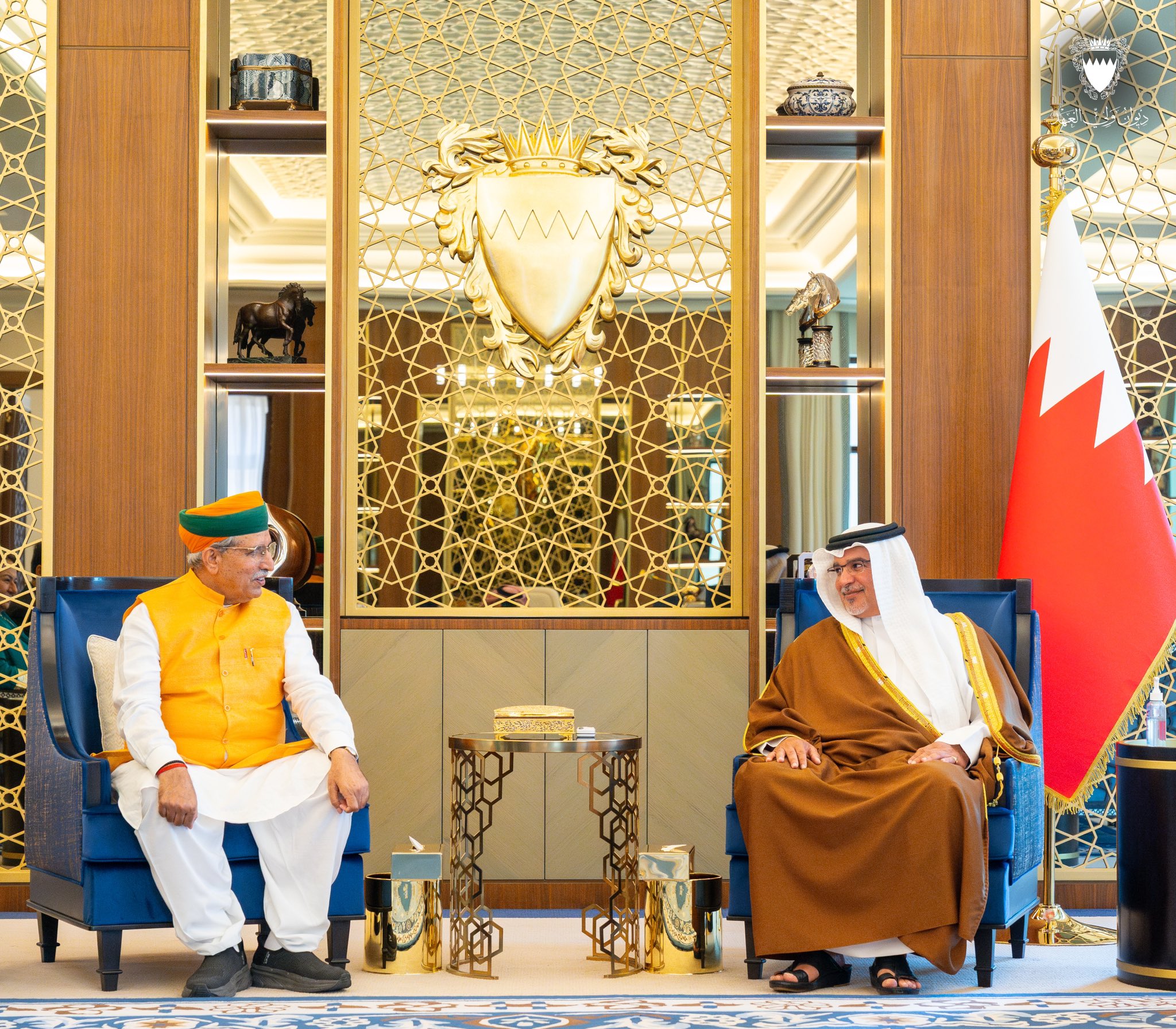
India highlights arbitration leadership at Bahrain event


Shri Meghwal will speak in a special session titled “Bahrain–India: Pathways Towards Successful Commerce,” delivering remarks on “Promoting Commerce Between Bahrain and India.” The session brings together senior jurists and arbitration experts, including Justice Surya Kant of the Supreme Court of India, Prof. Marike Paulsson (Secretary-General, CIDR Bahrain), and Dr. Pinky Anand, Senior Advocate, India.
Why the conference matters
The conference—organised by the Council for International Dispute Resolution (CIDR) of Bahrain under the patronage of the Ministry of Justice, Islamic Affairs and Endowments convenes international thought leaders to discuss the future architecture of commercial courts, mediation and institutional arbitration. For India, participation offers a platform to promote its recent legal and institutional reforms aimed at faster, neutral and more reliable commercial justice.
Focus areas: arbitration, mediation and mutual recognition
In his address, the Minister is expected to highlight India’s progressive steps to strengthen commercial dispute resolution ranging from legislative changes to institutional capacity building. The talk will emphasise collaboration areas such as professional training, exchange of best practices, and mechanisms for mutual recognition of arbitral awards to facilitate cross-border commerce.
Officials said India is keen to deepen cooperation with the CIDR and the International Investment Arbitration Centre (IIAC) in Bahrain on arbitration rules, accreditation of arbitrators, and cross-training programmes for legal professionals.
Bilateral cooperation and commercial justice reform
The session seeks practical pathways to boost India–Bahrain legal ties that underpin trade and investment. Shri Meghwal will underline India’s openness to institutional collaboration such as exchange programmes, joint workshops and training modules to strengthen arbitration frameworks and improve dispute resolution outcomes for businesses on both sides.
India’s message: neutral, efficient and credible justice
India’s participation reinforces a broader diplomatic message: commercial justice must be neutral, efficient and predictable to sustain cross-border commerce. By sharing its reform experience, India aims to demonstrate how legal reforms can reduce litigation delays, enhance enforceability of awards, and provide reliable dispute-resolution pathways for international investors and trading partners.
Notable speakers and institutional links
The Bahrain programme will include contributions from global jurists and policy-makers. Alongside Shri Meghwal, the presence of Justice Surya Kant, Prof. Marike Paulsson and Dr. Pinky Anand will lend judicial and arbitration expertise, while CIDR’s leadership provides a forum for institutional dialogue on international commercial courts.
Practical outcomes and follow-up
Officials expect the engagement to yield actionable outcomes agreements on capacity-building initiatives, frameworks for mutual recognition of awards, and pilot projects to test institutional cooperation. Such outcomes could help Indian and Bahraini businesses resolve disputes more quickly and with greater legal certainty.
Context and further reading
India has in recent years undertaken several reforms to strengthen commercial dispute resolution, including specialised commercial courts, amendments to arbitration laws and initiatives to boost alternate dispute resolution (ADR). This outreach at Bahrain forms part of India’s broader strategy to integrate domestic legal improvements with international standards.