

India Strengthens Offshore Security as ICG Chairs 137th OSCC Meeting
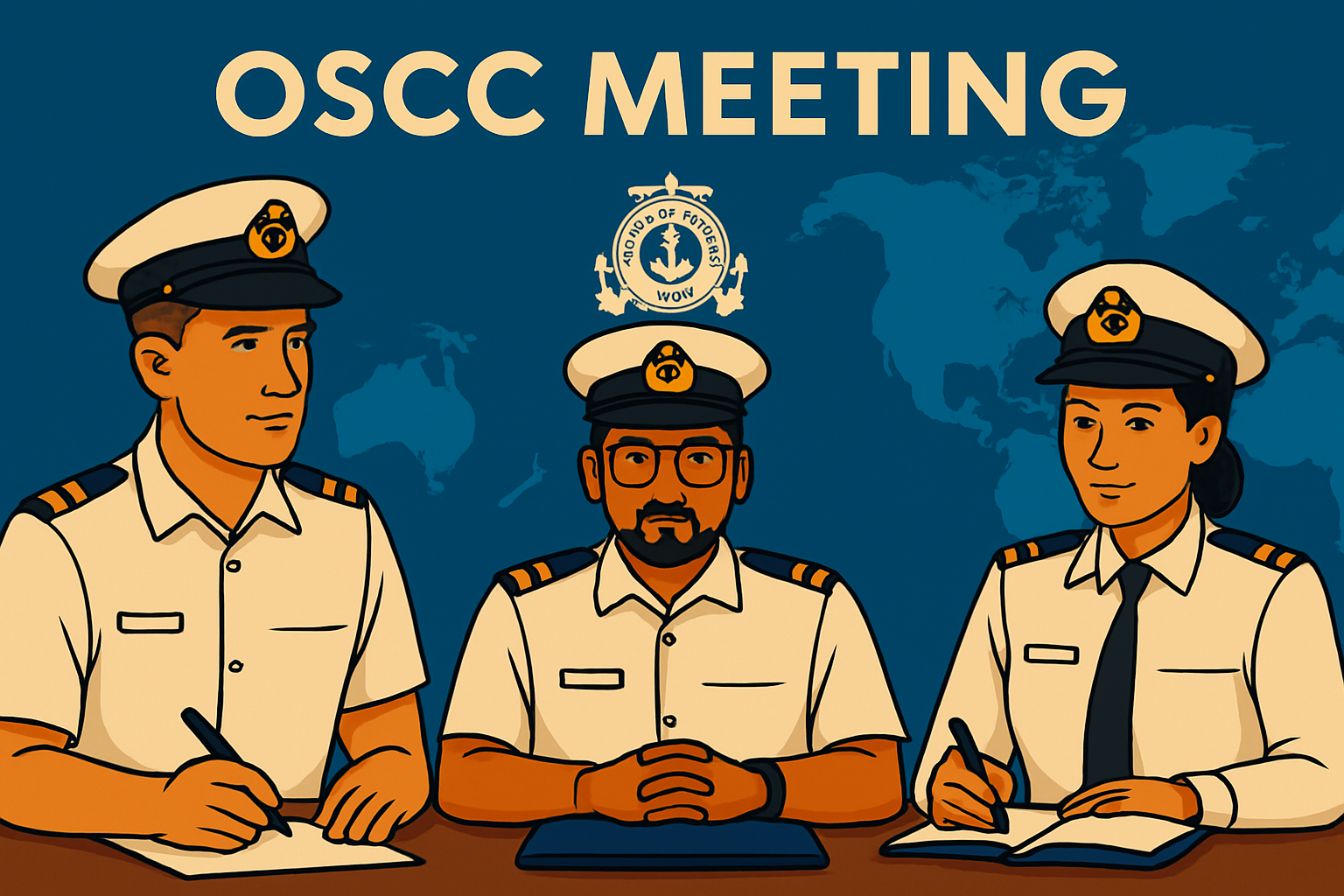
On June 12, 2025, the Indian Coast Guard (ICG) chaired the 137th Offshore Security Coordination Committee (OSCC) meeting in New Delhi, reaffirming India’s commitment to protecting vital offshore energy infrastructure.
Convened by Director General Paramesh Sivamani, the high-level meeting brought together officials from multiple ministries and agencies. Representatives from the Indian Navy, Indian Air Force, Ministry of Petroleum and Natural Gas, and major stakeholders like ONGC and state police forces from Gujarat, Maharashtra, and Andhra Pradesh participated.

Joint Strategy for National Energy Independence
In his address, DG Sivamani highlighted the growing importance of energy security and emphasized the need for enhanced joint responses to evolving threats. “India’s offshore installations are not just energy sources—they’re strategic assets contributing directly to our national growth and independence,” he stated.
As India aims to reduce energy imports and increase domestic production, the security of offshore rigs, refineries, and maritime facilities becomes more crucial than ever.
“Energy independence requires not just production but protection,” emphasized Sivamani.
Strengthening Multi-Agency Coordination
The OSCC meet focused on evaluating the existing preparedness of security frameworks and encouraged greater collaboration between civil and defence stakeholders. Officials discussed response protocols, technological upgrades, and inter-agency drills to mitigate threats—from terrorism to environmental hazards.
The emphasis was on:
-
Real-time intelligence sharing
-
Joint simulation exercises
-
Cybersecurity measures for offshore systems
-
Emergency evacuation protocols in case of attacks or disasters
Such integrated planning is essential, especially in times of increased geopolitical tensions in the Indian Ocean Region (IOR).
Legacy and Mission of OSCC
Established in 1978, the OSCC was tasked with coordinating offshore defence operations. Over the years, it has emerged as a key body for shaping offshore defence policy and ensuring secure energy infrastructure.
The committee’s evolution reflects India’s transition from an energy-deficient nation to one eyeing energy sovereignty through Make in India energy initiatives and investments in offshore wind and oil sectors.
Read more about India’s Green Energy Push (internal link if applicable)
Why Offshore Security Matters Today
With over 70% of India’s crude oil imports passing through maritime routes, and with growing exploration in the Krishna-Godavari Basin and Mumbai High, India’s offshore assets face complex security risks—from piracy to cyberattacks.
Thus, a cohesive defence strategy involving ICG, Navy, intelligence agencies, and private operators is critical. This alignment is what the OSCC meeting sought to reinforce.
Conclusion
The 137th OSCC meeting reaffirms that India’s offshore energy future is not just about production—but protection. As threats become multi-dimensional, only joint and timely action can ensure the security of India’s strategic maritime assets.
India’s journey towards energy self-reliance is closely tied to how well it can defend its offshore frontlines.