
Focus on the ROPE Framework
In his introductory remarks, Prof. Vivek Kumar Singh from NITI Aayog introduced the ROPE Framework Removing Obstacles, Promoting Enablers, the cornerstone of the government’s strategy for facilitating R&D. He explained that the framework identifies key institutional challenges faced by researchers while enhancing collaboration, flexibility, and capacity building to boost scientific innovation nationwide.
Prof. N.V. Chalapathi Rao, Director of NCESS, in his welcome address, emphasized the importance of regional institutions in advancing innovation-driven growth. He underscored that creating an enabling environment for scientific inquiry was essential for India’s transition toward a knowledge-based economy.
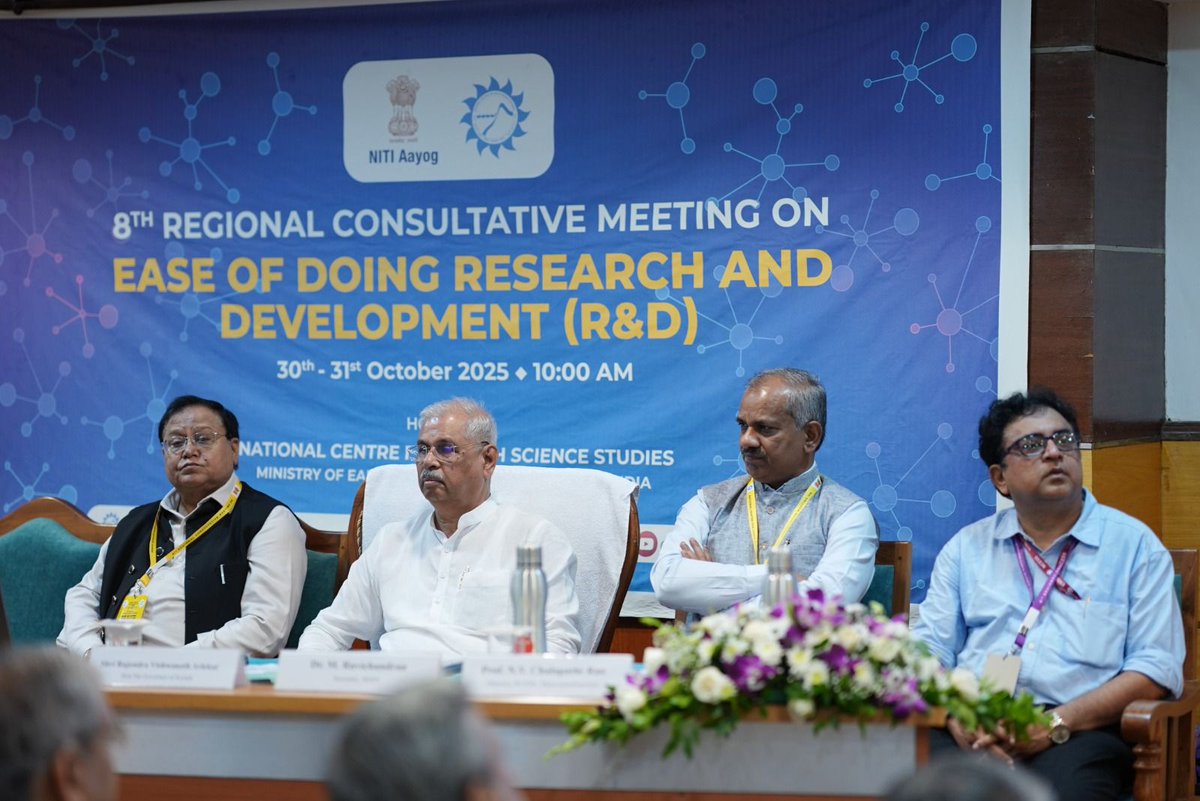

Dr. M. Ravichandran, Secretary, Ministry of Earth Sciences, recommended leveraging the expertise of retired scientists, strengthening the University-Industry-Government (UIG) linkage, and promoting data sharing to avoid research silos. He also stressed the importance of effective science communication to connect research outcomes with societal needs.
Dr. V.K. Saraswat, Member, NITI Aayog, elaborated on the dual factors influencing the ease of conducting research — internal institutional governance and external regulatory and funding mechanisms. He noted that “addressing both internal and external barriers in tandem is crucial for India to achieve global research leadership.”
Governor of Kerala Highlights People-Centric Science
Shri Rajendra Vishwanath Arlekar, Governor of Kerala, addressed the gathering, linking the concept of “Ease of Doing R&D” to improving the Ease of Living for citizens. He stated that scientific innovation must serve human development and inclusive growth, urging stronger collaboration among government, academia, and industry. “State development will lead to national development,” he remarked, reinforcing the role of region-specific innovation ecosystems in India’s growth story.
Strengthening Collaborative R&D Ecosystems
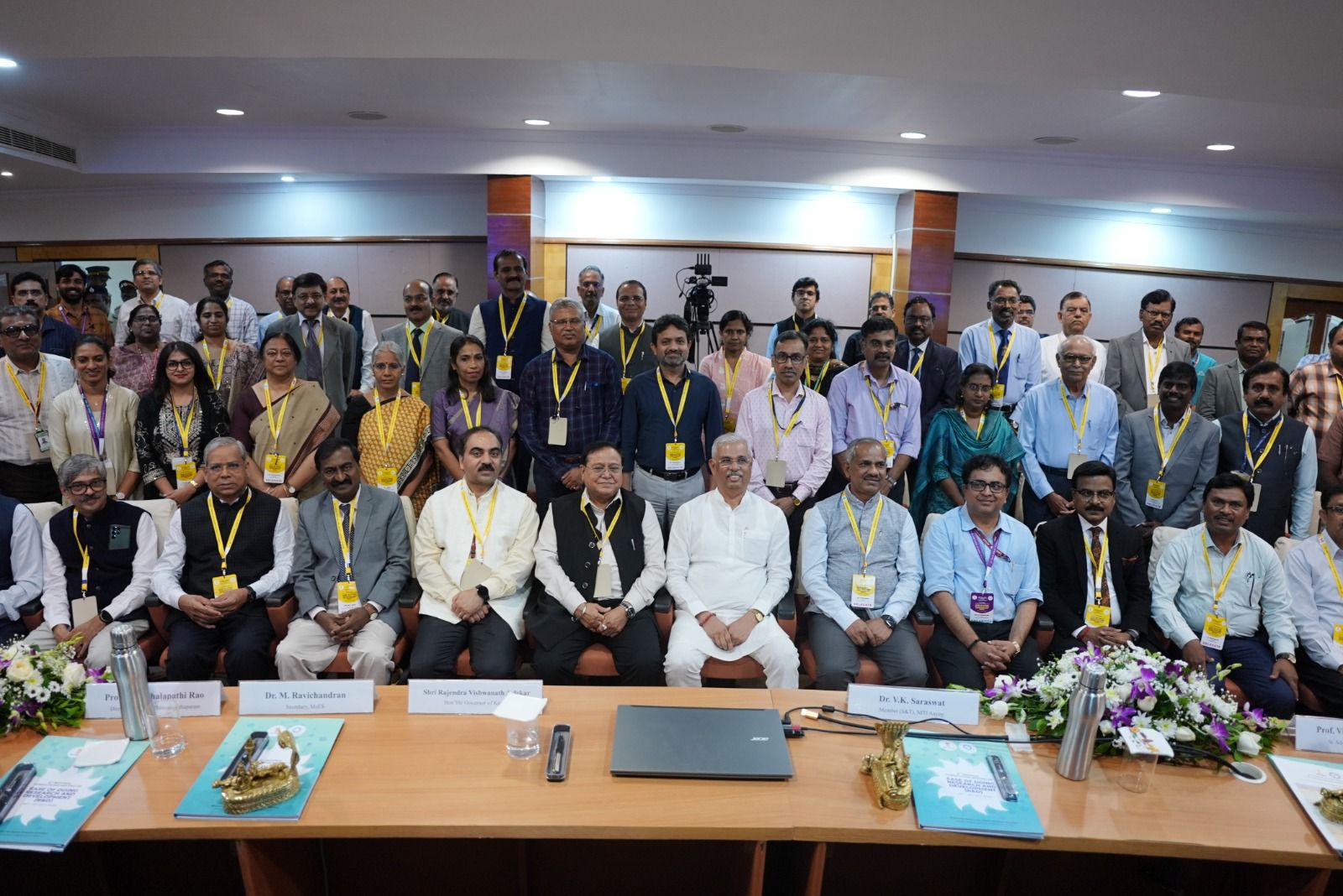
The meeting saw participation from Vice Chancellors, institutional leaders, and officials from various scientific departments. Interactive sessions explored issues such as streamlined funding processes, inter-agency coordination, and flexible research regulations. Participants reaffirmed their shared commitment to transforming India’s research landscape through cooperation, innovation, and systemic reform.
The consultation concluded with a collective pledge to create a more efficient, inclusive, and collaborative R&D environment aligned with India’s vision of becoming a global innovation hub.