
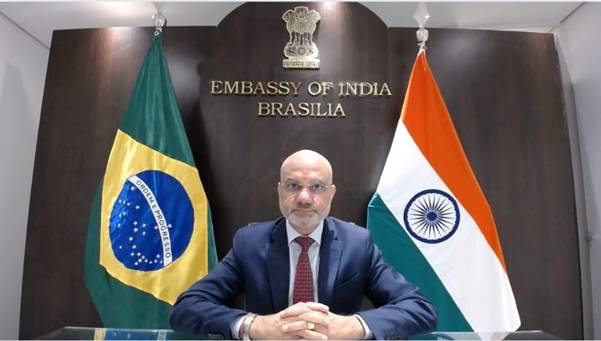
Diplomatic and institutional backing
Ambassador of India to Brazil H.E. Shri Dinesh Bhatia inaugurated the conference, stressing Brazil’s pioneering role in formally recognising Ayurveda in South America. He highlighted recent high-level exchanges, including Brazil’s Vice-President’s visit to the All India Institute of Ayurveda, and said stronger institutional links would boost research and education in traditional medicine.
The conference was organised with support from the Ministry of Ayush and ICCR, reflecting a coordinated diplomatic and cultural push to broaden Ayurveda’s scientific and regulatory footprint in Latin America.
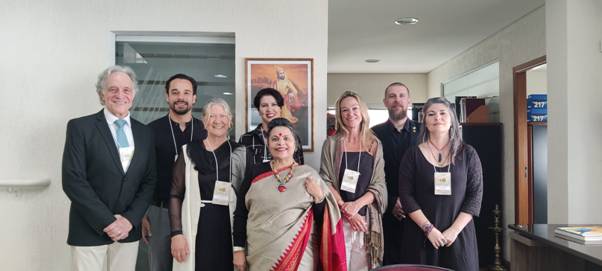

Delivering the keynote, Secretary, Ministry of Ayush, Dr (Vaidya) Rajesh Kotecha described Ayurveda as rooted in inclusivity, compassion and balance. He said the system’s growing global relevance rests on rigorous research, institutional cooperation and integration with mainstream healthcare where evidence supports outcomes.
Dr. Kotecha also reiterated India’s commitment, under the leadership of the Union Minister of Ayush, to support capacity building, teacher exchange and joint research programmes with Brazilian universities and institutes such as the National Institute of Ayurveda, Jaipur.
Thematic focus: diversity, inclusion and regulation
Under the theme “Diversity and Inclusion in Ayurveda: Caring for Everybody and Every Being,” panels addressed ancestral knowledge, professional regulation, and strategies for evidence-informed integration. Delegates discussed how traditional practices can be adapted safely and inclusively in multicultural settings.
Notably, organisers highlighted that Ayurveda has now been included in the Brazilian Classification of Occupations a milestone that opens regulatory and professional pathways for practitioners in Brazil.
Voices from the programme
Speakers included scholars and practitioners from Brazil and India. Presentations ranged from philosophical expositions such as “Daivavyapashraya: The Healing of the Soul” to practical workshops on Ayurvedic clinical approaches and education. Brazilian academics described collaborative pilot projects with Indian institutions focused on curriculum standardisation and clinical research.
Dr. Jyoti Kiran Shukla, Director of SVCC, emphasised cultural diplomacy’s role in strengthening wellness partnerships, while Consul General Shri Hansraj Singh Verma underlined the strategic value of preventive, natural healthcare solutions in bilateral cooperation.
Preparing for the WHO–Ayush Global Summit
Delegates positioned the São Paulo conference as a precursor to the WHO–Ministry of Ayush Global Summit on Traditional Medicine scheduled in New Delhi from 17–19 December 2025. Participants said learnings from Brazil’s four-decade experience will feed into discussions on best practices, regulatory frameworks and international research collaborations.
Ambassador Dinesh Bhatia and other panelists urged greater scientific exchange to help traditional systems meet global standards while preserving cultural authenticity.
What this means for global Ayurveda
The conference reaffirmed Ayurveda’s expanding global footprint and the need for evidence-informed approaches to scale traditional medicine responsibly. Inclusion in occupation classifications and institutional partnerships signal maturation of the field in Brazil and point to a model other countries might follow.
Organisers said collaborative research, shared curricula and joint regulatory dialogues will guide the next phase of internationalisation – combining cultural exchange with scientific rigour.