
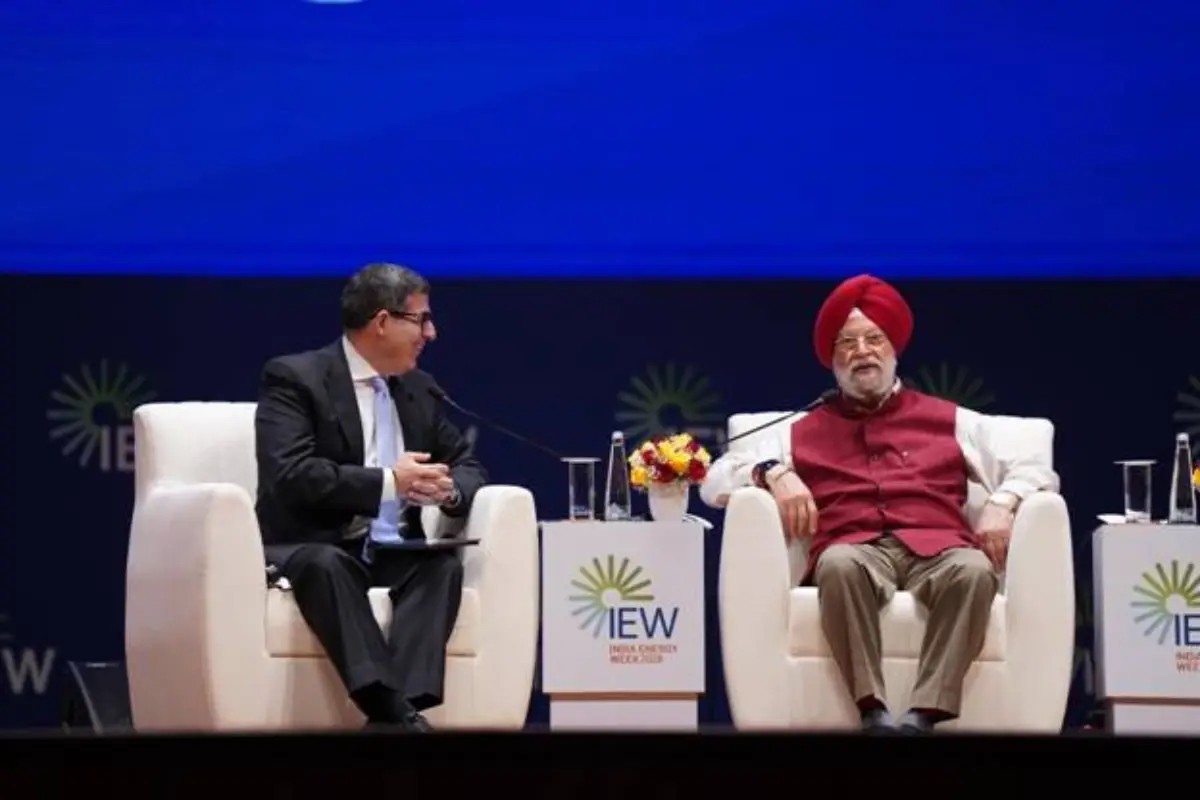


The renewed engagement follows directions given by the Prime Ministers of India and Canada during their interaction on the sidelines of the G7 Summit held in June 2025 at Kananaskis, Canada. At that meeting, both leaders had emphasized the need to restart senior ministerial and working-level engagements after a period of limited interaction.
The Goa meeting underscored the shared understanding that energy security and diversity of supply are critical for economic stability, public welfare, and long-term growth in both countries. Officials from both sides described the dialogue as a strategic reset in energy relations.
Complementary Strengths in Energy Markets
India and Canada highlighted the complementary nature of their energy sectors. Canada reiterated its ambition to become an energy superpower in both clean and conventional fuels, with a strong emphasis on export diversification. India, on the other hand, is emerging as the epicenter of global energy demand due to its scale, demographic growth, and expanding economy.
Canada’s growing liquefied natural gas (LNG) capacity, expanding crude oil exports through the Trans Mountain Expansion pipeline, and rising liquefied petroleum gas (LPG) shipments to Asia were identified as key areas of convergence with India’s energy needs.
India currently ranks as the world’s third-largest oil consumer, fourth-largest LNG importer, and third-largest LPG consumer, while also hosting the fourth-largest refining capacity globally. Projections indicate that India will account for over one-third of global energy demand growth over the next two decades.
Deepening Trade and Investment Flows
Both ministers affirmed their intent to deepen bilateral energy trade, including the supply of Canadian LNG, LPG, and crude oil to India, as well as the export of refined petroleum products from India to Canada. The joint statement also emphasized the importance of long-term commercial arrangements to ensure supply stability.
Investment cooperation featured prominently in the discussions. Canada highlighted its recent policy push to accelerate major energy and resource projects, including the launch of a Major Projects Office in 2025 and the advancement of projects worth over $116 billion. India, meanwhile, outlined its own ambitious investment roadmap, estimating opportunities of nearly $500 billion across the energy value chain.
Clean Energy and Climate Commitments
Climate-related objectives formed a key pillar of the renewed partnership. The ministers acknowledged the need to reduce emissions across conventional energy value chains, including through technologies such as carbon capture, utilization and storage.
They also identified substantial scope for collaboration in clean energy domains, including renewable power, hydrogen, biofuels, sustainable aviation fuel, battery storage, critical minerals, clean technologies, and resilient electricity systems. The application of artificial intelligence in energy systems was also highlighted as an emerging area of cooperation.
The two sides noted ongoing collaboration under the Global Biofuels Alliance, where Canada currently participates as an observer, and reaffirmed support for multilateral efforts to advance the global energy transition.
Roadmap for Continued Engagement
In the concluding remarks of the joint statement, India and Canada reaffirmed their commitment to sustained government-to-government dialogue through the Ministerial Energy Dialogue, supported by regular expert-level engagement. They also expressed intent to promote business-to-business and business-to-government partnerships across the energy value chain.
The ministers emphasized that enhanced cooperation would not only benefit both countries but also contribute to global energy stability and climate goals. More details on implementation are expected to emerge through follow-up meetings and industry engagement in the coming months.