
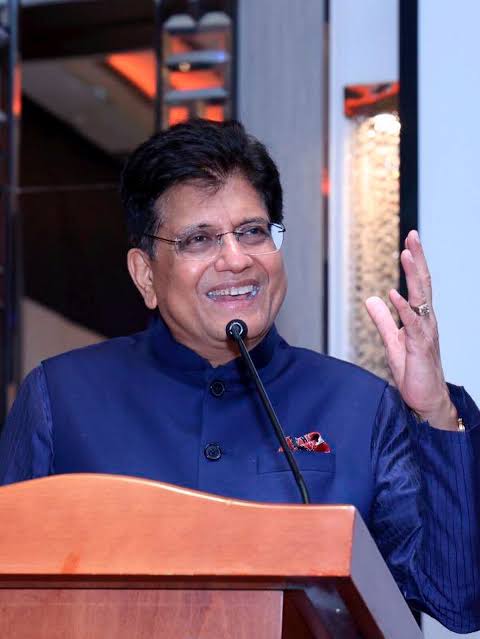
Speaking at the Indo-Canadian Business Chamber in New Delhi, Commerce and Industry Minister Shri Piyush Goyal said India and Canada will fast-track negotiations for a high-ambition Comprehensive Economic Partnership Agreement (CEPA). He identified critical minerals, mineral processing, clean energy, AI and supply-chain diversification as priority areas for collaboration to boost bilateral trade and investment.
Fast-tracking CEPA to double trade by 2030
Shri Goyal told business leaders that the recent G20 meeting between Prime Minister Narendra Modi and Canadian Prime Minister Mark Carney resulted in a mutual decision to begin high-ambition CEPA negotiations. The minister said the target is to double bilateral trade by 2030, and that the CEPA will strengthen investor confidence by creating a predictable, rules-based framework for commerce.
He framed the CEPA as a demonstration of the trust and shared democratic values between the two countries and a vehicle to convert diplomatic goodwill into measurable business outcomes.
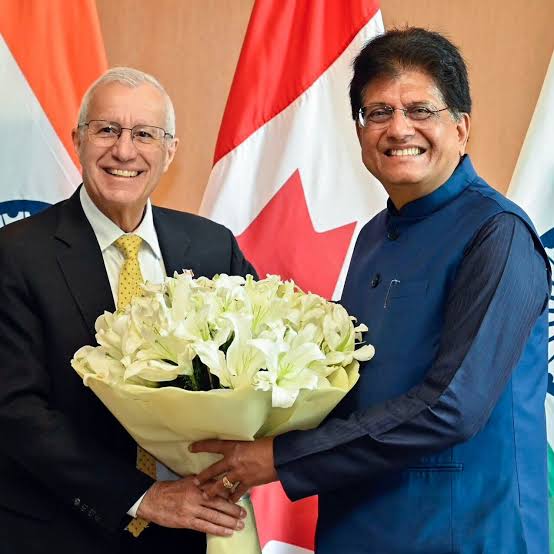

Goyal highlighted several priority areas where Canada’s strengths and India’s scale are complementary. These include critical minerals and mineral processing technologies sectors crucial for clean-energy transitions and advanced manufacturing.
He also flagged clean energy and nuclear energy cooperation, noting India’s ambitious national grid plans that underpin investments in AI-driven infrastructure and data centres.
Technology, talent and data
The minister emphasised India’s capabilities in emerging technologies: artificial intelligence, quantum computing, machine learning and next-generation data centres. He pointed to India’s large annual pool of STEM graduates as a competitive advantage for joint innovation and scale deployments.
Goyal urged Canadian firms to explore partnerships in research, co-development and commercialisation, citing India’s recently announced USD 12 billion R&D fund and strong intellectual property regime as enabling factors.
Energy credibility and reliability
Addressing energy concerns, Shri Goyal underlined India’s power-sector resilience: a national grid capable of delivering 24-hour power backed by a target of 500 GW of capacity, including plans to double clean energy to 500 GW by 2030. He argued this reliability makes India an attractive location for energy-intensive AI and data-centre investments.
Investment flows and business engagement
Goyal welcomed Canadian investments, particularly from pension funds, and called for reinvigorated business-to-business engagement. He proposed revitalising the CEO Forum, arranging sectoral roadmaps, and organising two-way business delegations to hasten project implementation.
He also invited Canadian participation in India’s upcoming AI Summit an overture aimed at linking Canadian capital and technologies with Indian scale and talent.
Five-point push: from dialogue to delivery
The minister outlined a five-pronged plan: convert dialogue into delivery, develop actionable sectoral roadmaps, revitalise CEO-level engagement, promote joint innovation, and set measurable milestones. He argued that such an approach would turn bilateral aspirations into trade, jobs and technology transfer.
Economic context and long-term outlook
Shri Goyal reiterated India’s positive macroeconomic trajectory — low inflation, robust banking, high forex reserves and a buoyant capital market — and projected India to become the world’s third-largest economy in the coming 2–2.5 years. He said India’s development model combines macro stability with inclusive growth, presenting long-term opportunities for foreign investors.
For Canadian businesses, the minister said, India offers a transparent, stable environment and an expanding market for green technologies, critical minerals processing and digital infrastructure.
Next steps
Officials said the seventh Ministerial Dialogue with Canada earlier in November set the stage for renewed momentum. The plan includes drawing sectoral roadmaps, enhancing CEO-level engagement, and scheduling business delegations. The CEPA negotiation timeline and modalities will be worked out by the two governments in the coming months.