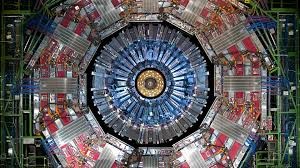
India is celebrating a moment of pride and recognition as the 2025 Breakthrough Prize in Fundamental Physics is awarded to the researchers behind CERN’s Large Hadron Collider (LHC) experiments—ATLAS, CMS, ALICE, and LHCb. This prestigious international honour acknowledges the groundbreaking research based on data collected during Run-2 of the LHC, advancing humanity’s understanding of the universe at its most fundamental level. Over 13,500 researchers from across the globe have contributed to these efforts, including a significant and heartfelt contribution from Indian scientists, engineers, and students.
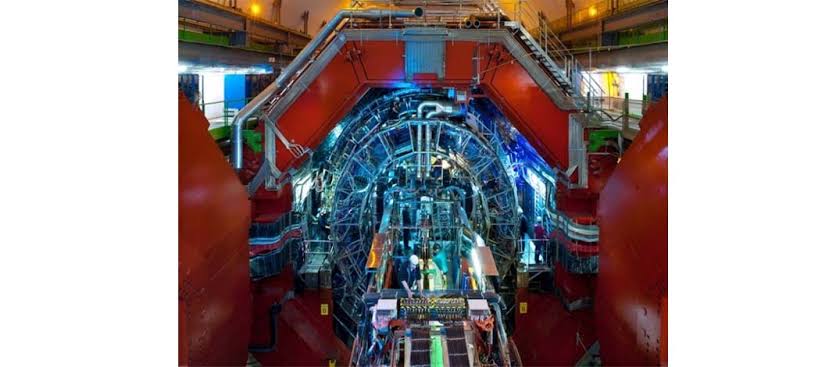
The award includes a $3 million grant, which will help fund doctoral students from participating institutions to gain hands-on research experience at CERN. This gesture not only supports the next generation of physicists but also strengthens global scientific ties. Indian researchers have been an integral part of this journey, particularly in the ALICE and CMS experiments. From designing crucial detector components to conducting high-level data analysis, Indian teams have shown dedication and brilliance. Institutions like TIFR Mumbai, BARC, RRCAT Indore, IISc, IITs, and several central and state universities have lent their expertise and resources to the mission.
This recognition is not just a nod to scientific achievement—it is a tribute to decades of tireless collaboration. Indian scientists have helped shape our understanding of phenomena such as the Higgs boson, quark-gluon plasma, matter-antimatter asymmetry, and other mysteries beyond the Standard Model. The journey began decades ago, with early collaborations between India and CERN in the 1960s. Since then, India’s role has only grown, culminating in its Associate Member status at CERN in 2017.
The cultural and symbolic connection also finds expression in the iconic Shiva Nataraja statue gifted by India to CERN in 2004. Standing at 2 meters tall, this statue beautifully represents the cosmic dance of particles, merging ancient Indian philosophy with the modern spirit of scientific inquiry.
Indian teams have taken up leadership roles within the LHC collaborations, particularly in designing and operating major components like the Photon Multiplicity Detector and Muon Spectrometer in ALICE, and the trigger and data acquisition systems in CMS. The CMS team has also contributed to critical components like the Resistive Plate Chambers and Silicon Preshower Detectors. These contributions were essential for producing the high-quality data that ultimately led to this global recognition.
India’s efforts extend beyond physical infrastructure. It has also made important strides in global scientific computing through its participation in the Worldwide LHC Computing Grid (WLCG). Centres in TIFR Mumbai and VECC Kolkata have processed millions of jobs and stored petabytes of data, while also developing software tools like GRIDVIEW and SHIVA.
The fruits of this collaboration are not limited to discoveries alone. More than 110 Indian Ph.D. theses and over 130 research publications based on ALICE and CMS data have emerged from this period, underscoring India’s active involvement in shaping global scientific knowledge.
Leaders in India’s scientific community expressed heartfelt pride and joy. Dr. A.K. Mohanty, Chairman of the Atomic Energy Commission, said the award is a tribute to years of perseverance and international solidarity. Prof. Abhay Karandikar, Secretary of the Department of Science and Technology, highlighted how this honour reaffirms India’s important place in the global scientific community.
Looking ahead, India continues to deepen its commitment. Indian researchers are actively contributing to upgrades in both ALICE and CMS experiments, developing next-generation detectors that will operate in the high-luminosity phase of the LHC. These initiatives promise even more refined measurements and potentially transformative discoveries.
The Breakthrough Science Award 2025 is more than a medal of scientific merit—it is a celebration of unity in pursuit of truth. For India, it marks a proud moment in a journey that blends ancient wisdom, modern technology, and a shared dream to understand the cosmos. As science marches forward, India remains at its heart, with eyes on the stars and roots deeply grounded in dedication and curiosity.