
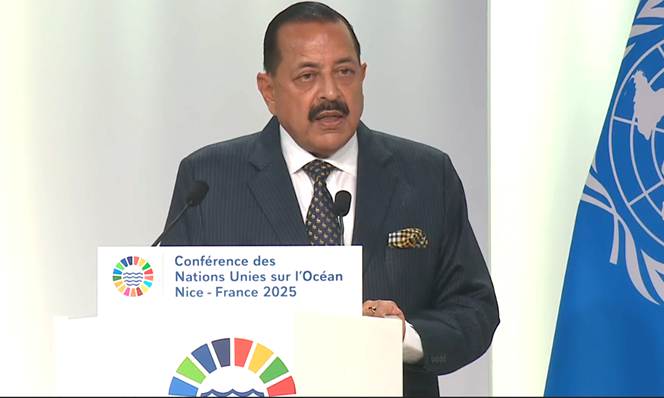
India Pushes for Global Pact at UNOC3, Showcases Blue Economy Wins
At the Third United Nations Ocean Conference (UNOC3) in Nice, India emerged as a key voice for global ocean sustainability. Union Minister Dr. Jitendra Singh led the charge, calling for swift global action to protect marine ecosystems and highlighting India’s robust ocean initiatives.
The conference, co-hosted by France and Costa Rica, focused on “Accelerating Action and Mobilizing All Actors to Conserve and Sustainably Use the Ocean.” India used this platform to pitch a multi-dimensional strategy—ranging from deep-sea missions to climate resilience.

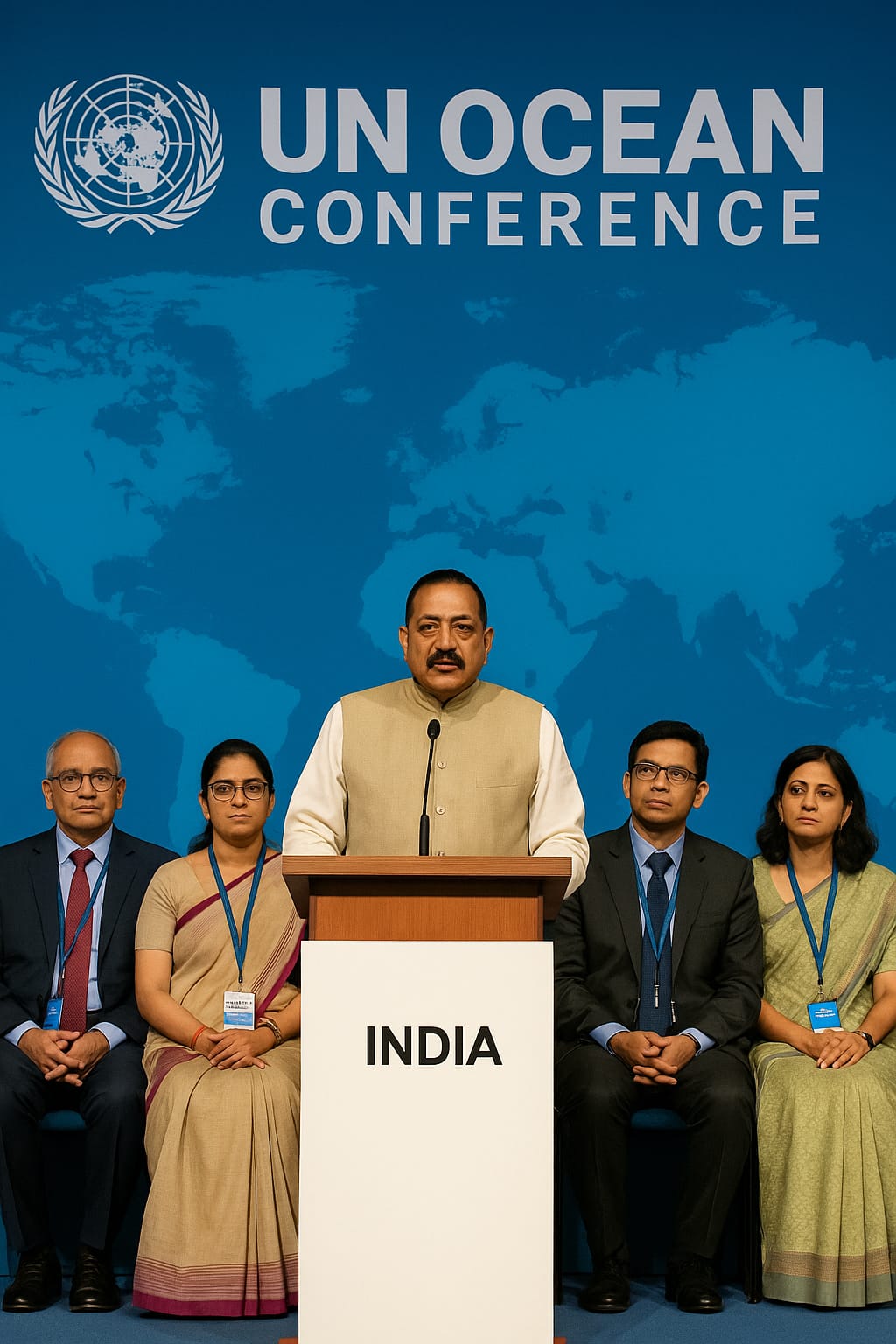
Key Announcements: Deep Sea, Plastic Ban, Marine Data
Dr. Singh unveiled major milestones of India’s Deep Ocean Mission, particularly the ‘Samudrayaan’ project. This manned submersible is expected to reach depths of 6,000 meters by 2026, marking a scientific breakthrough.
He also promoted India’s nationwide single-use plastic ban and progress on a draft marine litter policy. These are part of India’s support for a Global Plastics Treaty, which aims for a legally binding global framework to combat ocean pollution.
Another major development was the launch of the SAHAV Digital Ocean Portal. It provides open access to oceanic data and reflects India’s push for transparent, science-driven ocean management.
India’s Blue Economy: Port and Fisheries Surge
India is scaling its Blue Economy under two key programmes:
-
Sagarmala Programme: Over 600 port-led projects worth $80 billion are already operational.
-
Pradhan Mantri Matsya Sampada Yojana (PMMSY): $2.5 billion has been invested in the fisheries sector, with a 10% jump in fish production and 1,000+ fish farmer organizations since 2022.
These efforts show how India is integrating economic development with marine sustainability.
Tackling Marine Pollution and Boosting Biodiversity
The ‘Swachh Sagar, Surakshit Sagar’ campaign has cleaned over 1,000 km of coastline and removed 50,000+ tonnes of plastic waste since 2022.
Dr. Singh also emphasized India’s expanding Marine Protected Areas, now covering 6.6% of its Exclusive Economic Zone, supporting global biodiversity goals.
Climate Resilience Through Nature-Based Solutions
India reported the restoration of over 10,000 hectares of mangroves and the implementation of shoreline management plans. These nature-based solutions support India’s climate adaptation goals under its Nationally Determined Contributions (NDCs) from the Paris Agreement.
India’s Leadership in Global Ocean Governance
India is co-leading the “Blue Talks” with France and Costa Rica and participated in the India-Norway side event on Marine Spatial Planning. These engagements underscore India’s rising stature in marine diplomacy.
Dr. Singh advocated for a unified ‘Nice Ocean Action Plan,’ calling for investment in innovation, the ratification of the BBNJ Agreement, and finalization of the plastics treaty.
“The ocean is our shared heritage and responsibility,” Dr. Singh stated, reaffirming India’s readiness to collaborate with global partners for a sustainable ocean future.
Conclusion: From Coasts to the Deep Sea
India’s active role at UNOC3 signals its transition from a coastal nation to a marine policy leader. With ambitious missions, regulatory action, and international partnerships, India is setting the course for a resilient and inclusive Blue Economy.