
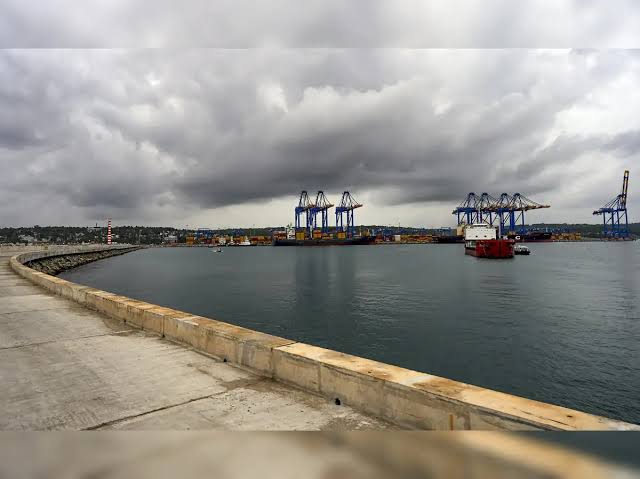
In a moment steeped in pride and promise, Prime Minister Narendra Modi today dedicated the Vizhinjam International Seaport to the nation, marking a historic milestone for both Kerala and India’s maritime ambitions. The inauguration, held in Thiruvananthapuram, resonated with emotion and vision, and comes on the auspicious occasion of Adi Shankaracharya’s birth anniversary—a poignant nod to Kerala’s rich spiritual and cultural legacy.

Addressing a large gathering that included Kerala Governor Rajendra Arlekar, Chief Minister Pinarayi Vijayan, and several Union Ministers, the Prime Minister expressed his heartfelt joy at being back on the sacred soil of Kerala. He invoked the legacy of Adi Shankaracharya, whose teachings awakened national consciousness centuries ago, drawing a parallel between that spiritual awakening and today’s economic resurgence symbolized by the port.
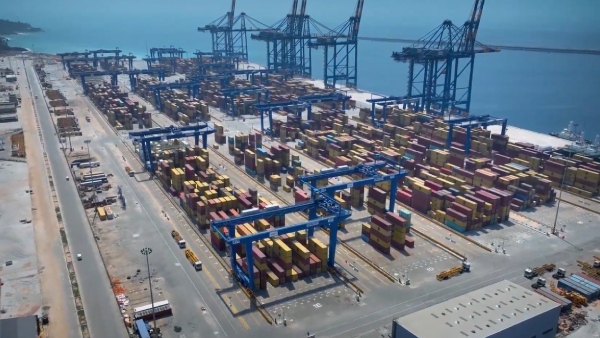
Built at a cost of ₹8,800 crore, Vizhinjam Port is set to become a key trans-shipment hub. Its capacity is expected to triple in the coming years, allowing the world’s largest cargo vessels to dock with ease. This shift is expected to significantly reduce India’s reliance on foreign ports, where nearly 75% of its trans-shipment used to occur—draining valuable revenue. Now, that wealth will circulate within the country, creating new opportunities and prosperity, especially for the people of Kerala.
The Prime Minister painted a vivid picture of India’s maritime past—when the subcontinent thrived on trade and seafaring. Kerala, in particular, was once a gateway to the world, bustling with ships and commerce. Today, that glory is being revived with purpose. The development of Vizhinjam is not just about infrastructure—it is about reclaiming India’s legacy and securing its place in the future of global trade.
He noted with pride the transformation of India’s maritime sector over the past decade. Ten years ago, long wait times and inefficiencies slowed down shipping. Now, ship turnaround times at major Indian ports have reduced by 30%, and overall cargo handling capacity has doubled. India’s national waterways have grown eightfold. Today, two Indian ports rank among the world’s top 30, and India is among the top three nations in terms of seafarer numbers, rising from 1.25 lakh in 2014 to over 3.25 lakh today.
The port’s success, the Prime Minister emphasized, is a reflection of coordinated efforts—combining improved infrastructure, ease of doing business, and public-private partnerships. The Sagarmala initiative and PM-Gati Shakti have laid the groundwork, boosting port connectivity and attracting investment. The private sector’s role, including the efforts of companies like Adani Ports, was acknowledged as instrumental in modernizing India’s ports to global standards.
He also touched on plans to develop a shipbuilding and repair cluster in Kochi, which is expected to generate significant employment and entrepreneurial opportunities. A new policy to boost the construction of large ships was also announced in this year’s budget—opening doors for MSMEs and reinforcing India’s manufacturing base.
Importantly, the Prime Minister reassured that development isn’t only about trade—it must touch people’s lives. He highlighted key projects in Kerala such as the Kollam and Alappuzha bypasses, the introduction of Vande Bharat trains, and the success of welfare schemes like Jal Jeevan Mission, Ayushman Bharat, and Ujjwala Yojana. The government has also prioritized the welfare of Kerala’s fishermen through initiatives like the Blue Revolution and the Pradhan Mantri Matsya Sampada Yojana, which have modernized harbors and provided vital credit support.
In a moving moment, the Prime Minister paid tribute to the recently deceased Pope Francis, remembering his compassion and dedication to unity. From Kerala—home to India’s first church and a long tradition of harmony—he offered heartfelt condolences to the global Christian community, sharing his personal memories of deep and meaningful conversations with the Pope.
As he concluded, the Prime Minister reaffirmed his commitment to Kerala’s development, emphasizing cooperative federalism and a shared vision of growth. The dedication of the Vizhinjam International Seaport marks not just the opening of a gateway to the sea, but also to a future of jobs, innovation, and pride for Kerala.
With a spirit of unity and ambition, he called upon all citizens: “Let us together build a developed Kerala—Jai Kerala, Jai Bharat.”