
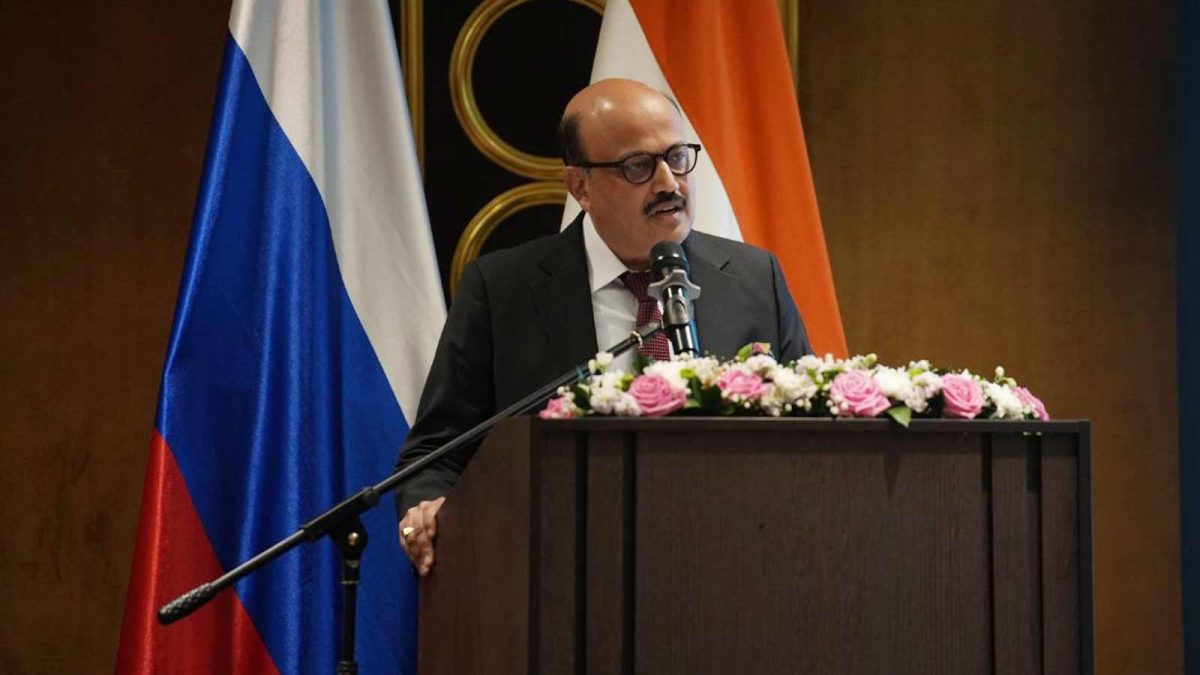
Meetings with EAEU and Russian counterparts
In Moscow, the Commerce Secretary met Minister in charge of Trade of the Eurasian Economic Commission, Mr. Andrey Slepnev, and Deputy Minister of Industry and Trade of the Russian Federation, Mr. Mikhail Yurin. Talks reviewed the Terms of Reference signed on 20 August 2025 and the agreed 18-month work plan for negotiating tariff and non-tariff provisions in goods.
Officials emphasised sectoral pathways to diversify markets for Indian MSMEs, farmers and fishermen while ensuring the FTA supports balanced growth. Both sides agreed on quarterly regulator-to-regulator engagement to resolve certification, standards and listing issues that often act as non-tariff barriers.


Agrawal’s discussions explored practical measures to ease trade: faster traceability and certification, logistics corridors, streamlined payments, and harmonised standards. The talks also covered cooperation on critical minerals – an agenda item of growing strategic importance for industrial and technology supply chains.
Participants identified priority sectors for time-bound pathways including pharmaceuticals, telecom equipment, heavy machinery, leather, automobiles and chemicals – sectors that can quickly translate negotiated tariff concessions into tangible exports and co-production opportunities.
Industry plenary and business roadmap
The Commerce Secretary addressed an industry plenary that brought together senior business leaders from India and Russia. He urged companies to align projects with the shared target of reaching USD 100 billion in bilateral trade by 2030, highlighting India’s logistics upgrades, digital public infrastructure and incentives for co-investment.
Private sector participants stressed the need for clear timelines, bankable projects and regulatory certainty so planned collaborations can convert into contracts and local employment. Both governments pledged to expedite engagement between regulators and industry associations to reduce implementation lag.
Services and investment tracks to follow
While negotiations in goods remain the immediate priority, Commerce Secretary Agrawal signalled an early start on services and investment chapters as the process advances. These tracks aim to create predictable rules for cross-border services, facilitate business visas and enhance investment protection — measures designed to boost two-way flow of capital and know-how.
Why the FTA matters for India
For India, an India–EAEU FTA can diversify export markets beyond traditional partners, open new avenues for MSMEs and agricultural exporters, and reduce dependence on single-source supply chains. The agreement also aligns with India’s strategic objective to deepen ties with Eurasia while promoting Make-in-India manufacturing and technology collaboration.
Officials noted that regulatory predictability and improved standards cooperation are as important as tariff concessions for enabling sustained trade expansion.
Next steps
Both sides committed to advance the 18-month work plan, deepen regulator exchanges and prepare practical roadmaps for priority sectors. India will also continue industry consultations at home to ensure that MSMEs and exporters can effectively leverage market access as negotiations progress.
The Commerce Secretary’s Moscow visit signals an operational push to translate political will into technical deliverables that firms can act upon a necessary step to meet the 2030 trade aspiration and deepen India’s economic partnership with the Eurasian region.