
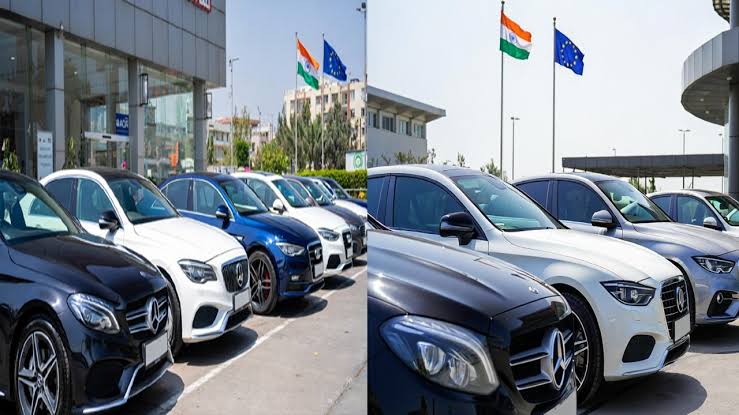

According to sources, the immediate tariff cut will apply to a limited number of cars imported from the 27-nation EU, primarily vehicles priced above €15,000. India is reportedly considering allowing around 200,000 internal combustion engine cars annually under the lower duty regime, though the final quota may still be adjusted before the agreement is ratified.
Over time, these import duties are expected to be reduced further, potentially reaching as low as 10% in later phases of the agreement. This phased approach is designed to give India’s domestic automobile industry time to adapt to increased competition while signalling openness to global manufacturers.
EVs protected to safeguard domestic investments
Battery electric vehicles will remain excluded from the duty cuts for at least the first five years of the agreement. The decision reflects the government’s intent to protect and nurture domestic investments in the electric mobility space, where Indian manufacturers have made significant commitments.
Companies such as Tata Motors and Mahindra & Mahindra have invested heavily in EV technology and manufacturing capacity. By keeping import duties high on electric cars initially, policymakers hope to ensure that local players are not undercut at a critical stage of the sector’s development. After five years, EVs are expected to follow a similar tariff-reduction path.
Boost for European automakers
Lower import taxes are likely to benefit major European automakers including Volkswagen, Renault, Stellantis, Mercedes-Benz and BMW. While several of these companies already manufacture vehicles in India, high tariffs on fully imported models have limited their ability to offer a wider product range.
Industry experts say cheaper imports will allow these brands to test Indian consumer demand with new models before committing to additional local manufacturing. This could lead to more competition, better technology offerings and potentially more choices for Indian buyers.
Impact on India’s auto market
India is currently the world’s third-largest car market by sales, trailing only the United States and China. However, it remains one of the most protected markets, with domestic brands and Japanese automaker Suzuki dominating sales. European manufacturers together account for less than 4% of India’s annual car sales of around 4.4 million units.
With the Indian market projected to grow to nearly 6 million units a year by 2030, the proposed tariff cuts could reshape competitive dynamics. Analysts believe increased foreign participation may push domestic manufacturers to accelerate innovation, improve quality and enhance global competitiveness.
Broader trade implications
Beyond automobiles, the India–EU free trade agreement is expected to expand bilateral commerce across multiple sectors. Indian exports of textiles, jewellery and manufactured goods could receive a boost at a time when exporters are facing higher tariffs in other major markets.
The agreement also aligns with India’s broader trade strategy of securing deeper market access with key partners while balancing domestic economic priorities. More details are expected once the final text is released and the pact moves toward ratification.